The IAEA has released the third edition of its Strategic Master Plan for Environmental Remediation of Uranium Legacy Sites in Central Asia — specifically in Kyrgyzstan, Tajikistan, and Uzbekistan. This reference document describes the measures taken by the involved organizations to bring these sites to a safe state. Rosatom is one of the key contributors to this goal.
The need for remediation programs arose because, following the collapse of the USSR in the 1990s, the newly formed Central Asian states were unable to independently remediate the territories of former uranium mines. After uranium deposits were depleted and operations ceased, not all sites were brought to a safe state. The program aims precisely to assist Central Asian countries in the remediation of these sites, preventing threats to the health of local residents and the environment.
Goals of the Strategic Master Plan
The Strategic Master Plan aims to create a systematic, coherent, and transparent framework for the remediation of legacy sites in Central Asia. It supports national strategies and programs for the long-term and sustainable management of legacy sites and remediated areas. The Master Plan will help achieve such Sustainable Development Goals (SDGs) as Good Health and Well-being (SDG 3), Clean Water and Sanitation (SDG 6), Sustainable Cities and Communities (SDG 11), Life on Land (SDG 15), and Peace, Justice and Strong Institutions (SDG 16).
The document covers the period from 2025 to 2030.
CIS cooperation
Remediation activities at some of the legacy sites are funded by member states of the Commonwealth of Independent States (CIS). To this end, the CIS adopted an Interstate Targeted Program (ITP) for the Rehabilitation of Territories Affected by Uranium Mining in Kyrgyzstan and Tajikistan. It was on their territory that the USSR began to mine its first uranium. The Interstate Council of the Eurasian Economic Community approved the program in 2012, and implementation started in 2013. Its goals are to reduce the risks of emergencies related to radiation impact on the environment and ensure safe living conditions for local residents. The program targeted the most dangerous tailings dumps near the villages of Min-Kush and Kajy-Say in Kyrgyzstan and the city of Istiklol (formerly Taboshar until 2012) in Tajikistan.
The program operated until 2025. Necessary surveys had been conducted, and the best technical solutions selected, with the required documents developed and projects approved. All planned activities were subsequently undertaken, while the experts engaged also improved environmental monitoring systems, and trained local staff to manage remediation projects and programs.
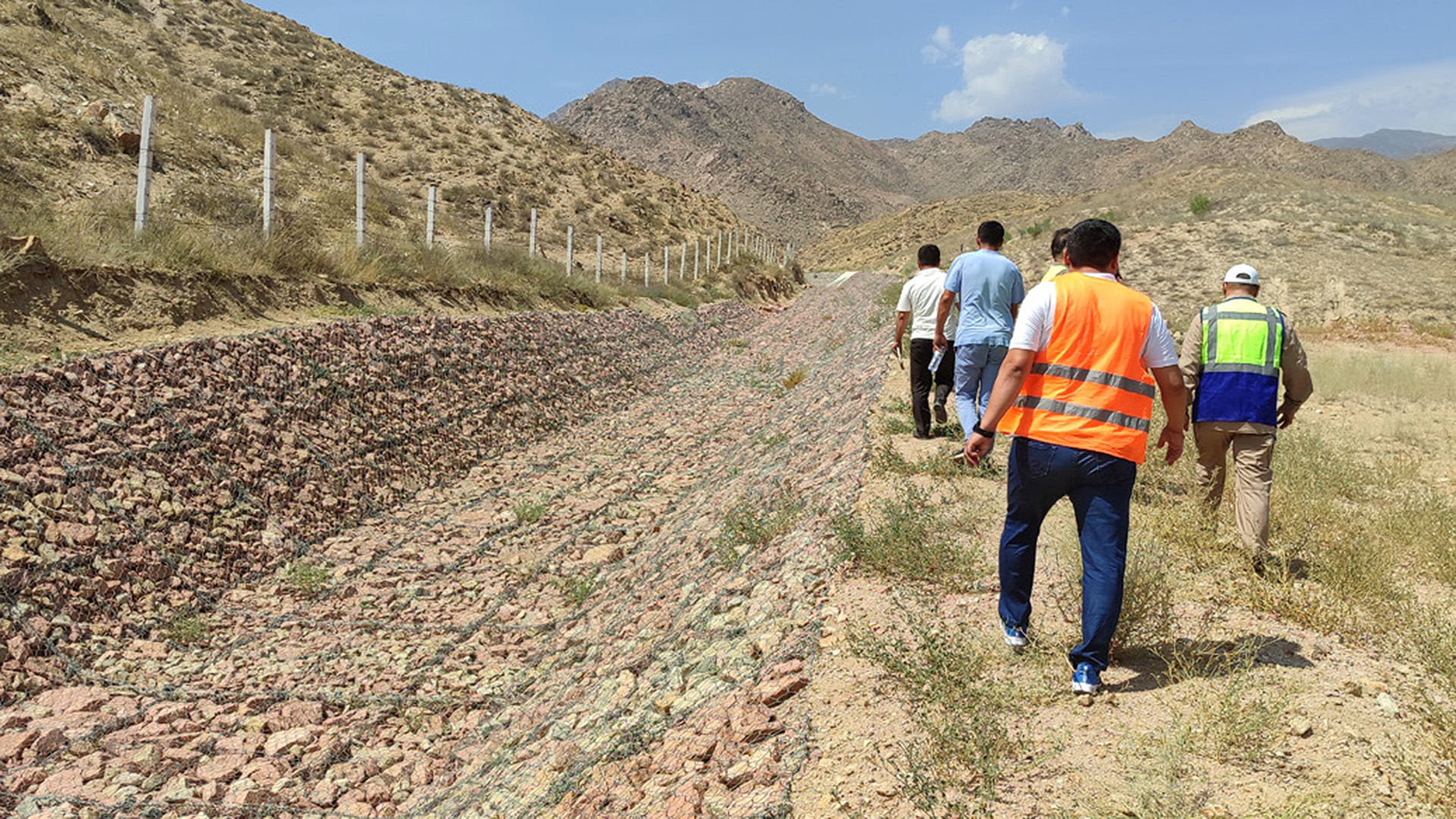
Rosatom is an active ITP participant. In 2019, the Russian nuclear corporation remediated the tailings dump near the village of Kajy-Say in Kyrgyzstan. In 2023, it completed the remediation of the Kak tailings dump and the liquidation of the Taldy-Bulak tailings dump (both near the village of Min-Kush). In August 2025, Rosatom liquidated the Tuyuk-Suu tailings dump and remediated the Dalneye tailings dump in Min-Kush.
In Tajikistan, Rosatom remediated the waste dump of the low-grade uranium ore processing factory and four tailings dumps at the industrial site of the Taboshar mine (Sughd Region). This task was completed in 2023, ahead of schedule. Background radiation at the mine and adjacent territories dropped to safe levels.
Funding for the program was provided by the participating CIS member states. Russia contributed 75%, Kazakhstan 15%, Kyrgyzstan 5%, and Tajikistan 5%. The total investment under the program amounted to EUR 32.2 million, according to the Strategic Master Plan.
Currently, the CIS primary organization for the management of spent nuclear fuel, radioactive waste and decommissioning of nuclear and radiation hazardous facilities (a role assigned to Rosatom’s TVEL Fuel Company) is developing a new draft model concept for CIS countries on bringing nuclear legacy sites to a safe state. It is expected to be approved in 2026 by the CIS Interparliamentary Assembly. The document will contain a description of the current state of nuclear legacy sites, basic principles of cooperation on bringing nuclear legacy sites to a safe state, and a registry of such sites.
Bilateral agreements with Russia
Since the Interstate Targeted Program ended in 2025, preparations for new, bilateral programs began in advance. In 2024, Russia and Kyrgyzstan signed an intergovernmental agreement on cooperation in the rehabilitation of territories affected by uranium mining and mining industries.
Under the bilateral agreement, Russia is rehabilitating mines and ash dumps in the villages of Kajy-Say (Issyk-Kul Region), waste rock dumps and mines in the village of Too-Moyun (Osh Region), and mining dumps and mines in the village of Kyzyl-Jar (Jalal-Abad Region).
Remediation of the sites in Too-Moyun and Kyzyl-Jar was completed in late 2025. Preparations are underway at the site in Kajy-Say, with remediation planned for completion by the end of 2026.
Russia has concluded a similar bilateral agreement with Tajikistan. In 2025, the parties signed an intergovernmental agreement on cooperation in the rehabilitation of Tajikistan’s territories affected by uranium mining and mining industries. The agreement provides for the remediation of the Adrasman tailings dump (Sughd Region) and the dumps of Workshop No. 3 at the Taboshar mine. Design and cost estimate documents are currently being developed.
EUR 21.4 million and EUR 15.6 million were allocated for the rehabilitation of sites in Kyrgyzstan and Tajikistan, respectively.
European Union activities
Another area of activity for uranium legacy site remediation described in the Strategic Master Plan is that of the European Union. The EU Instrument for Nuclear Safety Cooperation (INSC) is operational in Central Asian countries. Thanks to the INSC, environmental impact assessments (EIAs) and feasibility studies were commissioned for seven priority sites. The European Union finances work through the Environmental Remediation Account for Central Asia at the European Bank for Reconstruction and Development (EBRD). It has a mandate for the remediation of seven priority uranium legacy sites: Mailuu-Suu, Min-Kush, and Shekaftar in Kyrgyzstan; Istiklol and Degmay in Tajikistan; and Charkesar and Yangiabad in Uzbekistan. Between 2017 and 2025, Min-Kush, Shekaftar, Charkesar, and Yangiabad were remediated. Remediation continues at Mailuu-Suu; Istiklol has been partially remediated, and work has not yet begun at Degmay.
As noted in the Strategic Master Plan, EIAs and feasibility studies were completed for these seven sites in 2015 with EU support, and a portfolio of implementation projects was formed. The cost of preparing the EIAs and feasibility studies amounted to EUR 8 million. The total estimated cost of remediation under the program was assessed at EUR 113 million. By 2025, EUR 71.8 million had been raised. Of this, the European Commission allocated EUR 61.5 million, and other donors contributed EUR 9 million. The program is still short of EUR 43 million. “Addressing this gap is critical for the sustainability of the region-wide remediation,” the report says.
Post-remediation
IAEA experts note steady progress in completing the remediation of many legacy sites and observe that increasing attention is being paid to creating a post-remediation management system. This system, according to the authors of the Strategic Master Plan, is of great importance for the clear allocation of responsibilities and the transition to long-term institutional control of remediated sites. This requires money and trained personnel, the IAEA document notes.
Photo by: IAEA, Wikipedia