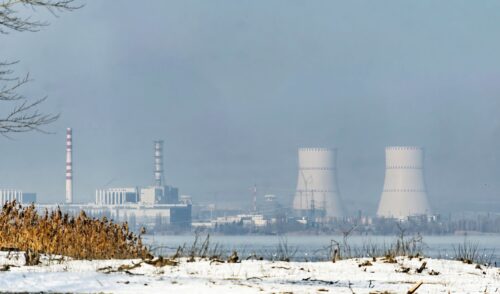
Here the work is going on, its pace in summer growing a great deal. The start-up of units 3 and 4 of the Rostov NPP is planned for the coming years already. The construction works here are going on schedule and there is no doubt that the units will be launched in a proper time.
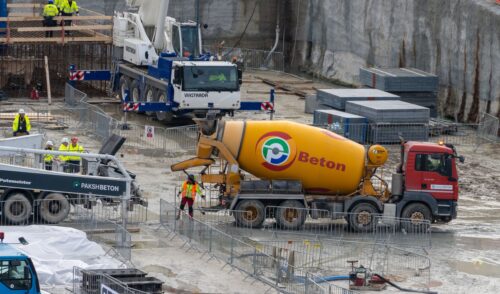
In July they started the concreting of the reactor containment’s first circle at unit 4. The pre-assembly of 12 elements of the second circle is going full pace, the mounters have installed reinforcement of the reactor pit. At the same time the builders are preparing for the first circle concreting of evaporative cooling tower of unit 4. The operation is expected to be completed by the end of August.
Equipment in due time
On-time deliveries of equipment help to maintain the good pace of work at the Rostov NPP a great deal. The equipment, as a matter of fact, is mainly produced by Rosatom as well, or rather Atomenergomash, its machine-building division, to be more precise. Not so long ago in Central Mechanical Engineering Design Bureau (part of Atomenergomash, its specialization creating of reactor systems and non-standard technological equipment for the nuclear power complex) the loading of another batch of equipment for the Rostov unit 3, where the GCNA-1391 main circulation pumps are to be installed, was conducted.
The loaded batch costing RUB 20 million includes two condensers – auxiliary equipment for circulation pumps. The CMEDB has a many-year experience in designing and producing of MCP. The devices are used for coolant recirculation in the heat transport main circuit of the reactor system and bear additional function of reactor cooling in case of electricity supply failure.
Preparation for physical start-up
The construction process at the Beloyarsk NPP is even closer to its end – here unit 4 with the BN-800 fast sodium reactor is at its termination stage. The physical start-up will take place in the end of 2013, while its power start-up is planned for 2014.
In July they mounted an air pipe of the main unit. The pipe was preliminarily assembled from metallic parts near the main building, then raised and installed in its proper location. Thus the mounting operations were completed in shorter time.
Mounting of air-pipe is one of the preparation stages for reactor’s physical start-up. The air, having passed special purification systems, will be extracted by means of it from the main reactor building.
The main unit building will have 4 pipes in total, one of them for ventilation, three more being part of additional safety system, allowing cooling down the reactor if necessary by natural air circulation, with no pumps used.
After the ventilation pipe mounting works are completed, the light warning and radiation control devices installation will start.
Floating Off
Not so long ago they announced also the date of finishing of “Akademik Lomonosov”, the first floating NPP (FNPP) in the world. According to Alexander Voznesensky, the Baltic Shipyard General Director, the project will be realized in 2016.
“Today we are on adaptation stage: buying equipment and materials, – he says, – The new equipment installation is in process. We are contracting the equipment that needs to be contracted. Soon we’ll pass to reactors’ installation”.
The contract for the FNPP unit finishing was made between Rosenergoatom and Baltic Shipyard in December 2012.
Reactor on its proper location
By the end of the year they plan to install the reactor vessel of unit 1 at the Leningrad NPP. Today the mounting of jacket leg is already completed in the reactor pit. The leg is meant for reliable fixing of a reactor vessel and sensing of weight and seismic loads.
The leg belongs to the second class of safety. While assembled together it becomes a welded metallic structure of more than 10 meters in diameter and 3,8 meters high, with a total weight of 143 tons. The equipment designer and supplier is AEM-technologies (part of Atomenergomash, machine-building division of Rosatom). The first two details of the equipment – the bearer of the jacket leg and its section – were assembled as early as last year.
Construction as a university
Rosatom uses construction sites of nuclear power stations also as educational centers for future specialists. Thus, not a long time ago a team of students of Russian higher education institutions started working at the Novovoronezh NPP-2. It has been for three years already that that kind of students’ team worked at the station, with the amount of participants growing year by year. In 2011 there were only 12 people working on site, in 2012 – about 100, while this year there are as many as 155 students from Voronezh, Petrozavodsk, Nizhny Novgorod, Orel, Obninsk, Kabardino-Balkar Republic and Altai. Students are doing plaster and field painting works, take part in reinforcing, concreting, steel erection and estate maintenance.
“No doubt that while building such a complicated object as a NPP we pay major attention to quality and safety, – says Marat Mustafin, General Director of Atomenergoproyekt, Rosatom’s engineering company. – However along with works demanding high qualification and skills there are some tasks quite apt for students under supervisors’ control. What matters is desire for work and responsibility”.
According to Mustafin, today the whole industry, including Atomenergoproyekt, is in a big need of qualified specialists. Being sort of a talent foundry is what the company sees as its social task.
Even if in their future lives the students decide not to become builders, the skills acquired at the site will be applicable anyway. While several kids after finishing their studies might want to come back and start making their careers as staff members at the NPP construction.
The students are accommodated in comfortable rooms of the Novovoronezh NPP-2 construction camp. The team members are provided with uniform and meals. Besides there are some entertaining activities organized in the students’ free time, such as festivals, contests and games.