— What’s Rosatom’s place at the international stage today?
— It has a leading position in the world. We need to respect our rivals, to understand our and their strong points. Rosatom is a true leader in atomic energy; I have a strong reason to say so. We build more stations than anyone else in other countries, which shows high trust. Today Rosatom is first in NPP construction within the country in the world, the first in uranium enrichment and we are absolute leaders in fast breeder reactors. Besides, Russia is the only country in the world possessing nuclear icebreaker fleet. So we have the reason to be proud. However it’s not the time to relax. We have to understand that our rivals are strong and see their strong points and that’s what we are paying the main attention to these days. A few years ago, analyzing the situation at the markets, we realized that our weak-point is insufficient uranium resources with low self-cost, since Russia’s main resources had been mostly spent back in the Soviet times. That’s why we implemented a wide-scale geological exploration project within the country, which helped us increase the reserves by six in Russia, and acquired various very effective deposits in Kazakhstan, Africa, Australia and even America. That’s why today our company Uranium One Inc. is the first in low self-cost uranium reserves. We provided ourselves with uranium quite well.
There was a task concerning nuclear engineering division expansion. Today our Atomenergomash is one of the three major power plant companies in Russia and is able to provide five sets of equipment annually. That’s why we can be proud – our nuclear industry is the best in the world. However it shouldn’t hide our weak points from us, or this leadership will end very soon. Our rivals are strong; we can’t deny this – Americans. French, Japanese. Korea and China have been developing very dynamically as well, they are to catch up on us soon. Keeping the leading position is a very hard task.
— Just a few days ago the Hanhikivi-1 construction contract was signed. What does this project mean for Russia?
— The project is very interesting, since the plant will be constructed basing on the 3+ generation project. Building a Russian NPP with post-Fukushiman safety systems in a EU country is a very important decision for us.
Besides the NPP construction contract in Finland we signed the one for fuel supply. According to the EU rules this document is signed for a ten years period and can be further prolonged. The project will be important not only for designers and engineering companies – fuel and producer companies will also receive their orders.
— How were Rosatom’s foreign market obligations fulfilled this year?
— What is so special about nuclear industry is its longtermness. Thus, the station in Finland will be under construction for about ten years, taking into consideration all formal procedures. In ten years it will be put into operation and will be operating for another 80 years approximately. Then goes decommissioning. Which means, all the decisions we are making today are for a hundred years period. It’s more than a human life. That’s why the issue of trust and reputation is becoming a key one. The exact contract fulfillment is highly important for us. We can bring quite a few objects of the past year as a good example. One of them is the Bushehr NPP. It is unique. We took the station which had been started by Germans as early as about 30 years ago, then it was just abandoned. When our specialists first started working on the plant, there was a hole in the dome from a missile direct hit. After all, no one in the world has ever fulfilled such kind of a project – building a new plant using infrastructure and partly using late engineering structures. Nobody could be able to do that except our specialists, after all.
We did it no matter how hard it was technically. I’ve heard several times already, concerning this – not only from our Iranian colleagues, but from others as well: “If Russia managed to build Bushehr, it deserves trust. It means that you are able to manage any possible difficulties”. And we keep our word no matter how hard it is.
Another important project – this year we delivered the main unit of the Kudankulam NPP. It was put to capacity which now is more than 50%. Now we are getting ready for the second one which will be in the middle of the year. Our pace is growing. We have contracts signed for 20 units abroad and we are building 9 in Russia.
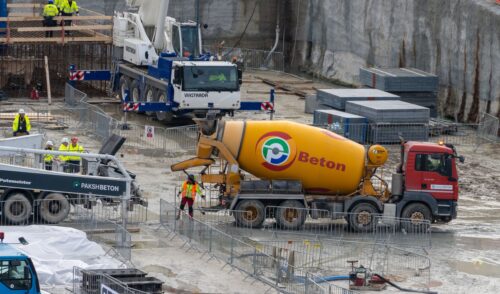
This year we have won the tender not only in Finland but in Jordan as well. The design works are already in progress at the first NPP site in Bangladesh; first concrete was poured at unit 4 of the Tianwan NPP in China. It tells a lot. Today China can build nuclear plants itself, moreover, there are Americans and Frenchmen building them there. There is such a guess that the Chinese take one plant from each country, watch technologies and further build the next plants by themselves. The thing that our Chinese partners asked us to continue our work, having their own project attached to the site, means a lot for us. Since such a decision is made not upon advertising. Our units various times were considered the best on the Chinese territory, the most safe and efficient. Another important event – in November the first concrete was poured at the fist NPP in Belarus.
— After completion of the HEU-LEU project what scope of contracts did you manage to get at the American market?
— The contract is over, Russia has totally fulfilled its obligations for a 20 years term. Speaking about American market, it was very important for us not to lose it after 2013, since it is the major one in nuclear energy. We managed not to do that. Our today’s contacts with American power companies amount to $11,5 billion. $5,5 billion are directly with companies – NPP owners, and $ 6 billion more – with USEC. We not only remained at the American market, but made companies trust us. Reputation is the most important thing in atomic energy. We expand the scope of supplies, we work on possibility of going further in technological chain. Supply not only enriched uranium, but also pass to supplying fuel assemblies. The technological problem of producing fuel for western design reactors is solved; today Russia is able to produce fuel not only for its own stations but for American ones as well. This is the next step of our partnership.
— Tell a few words about the BREST and BN projects. Why are they so important today?
— Fast breeder reactors are no doubt a breakthrough to the new technological generation. This is the type of reactor where we apply technologies of the 20-ies of this century and this time is quite near. It is possible that as early as in ten years the commercial use of fast breeder reactors will grow and Russia today is an undoubted leader in this kind of projects.
The so-called fast reactors are the new step in nuclear energy; however the question of a coolant is still open. We are looking through various options within our “Proryv” (breakthrough) project. There is BN – sodium coolant reactor and there is BREST – the lead one. This project is now under expertise and we are starting the preparation to constructing a reactor in Seversk, Tomsk region. At the same time we are looking through several more projects of less power with lead-bismuth coolant. What matters is that today Russia is an undoubted leader in all these directions. It will help us make a proper choice.
When we started our program of serial construction of nuclear units we were told many times that nobody had been doing it this way for quite a while, since Soviet times – and we wouldn’t be able to do that either. Even if we are, it would take more time and cost a lot more. What we started from was to match the deadlines no matter what and not always could we do that. Besides we had to strictly control every penny, since the risks to exceed the cost estimate were very high. Later we learned how to stay within terms and cost estimates. Many units that I number we are delivering with money saving. In BN while doing pre-commissioning works some additional expenses might appear, however, according to our preliminary estimates, BN-800 will be started saving more than RUB 10 billion compared to the approved cost estimate. In general we are fulfilling the main task for being competitive – manage terms and costs and be able to reduce both. That’s our task for our new projects.
— Rosatom actively enters new markets, such as a thermal power, for instance. Why?
— Speaking about elaborated values, one of ours is to be one step ahead. Not only ahead of our rivals, but ahead of ourselves as well. That’s why the things like competence, skills and experience of our enterprises, which further can be used in other sectors of national economy, are very important for us. Moreover, this is what gives jobs. Many of our enterprises are located in small towns and there are no more jobs to offer. Our task for Atomenergomash, our machine-building division, suggested the part of thermal power projects should be 35-40%. However the main order is still nuclear. Same for engineering companies. If they are able to build a nuclear plant, it wouldn’t be such a hard task for them to engineer a thermal power plant.
— We cannot omit the topic of nuclear legacy. What is being done to solve this problem? In the north of Russia, in particular?
— It would not be fair to say that large territories are polluted with RW. There was a lot of pollution in the north before, all right; however speaking about the Far North, today there are mainly abandoned empty AGO barrels and old equipment.
The decision was made for Rosatom to decommission nuclear submarines of the Russian Navy. We now are completing this project. There are 195 nuclear submarines of 200 already utilized; 5 are at the last stages of the process. During the last year our specialists reduced the utilization term by two and it became 30% cheaper.
— What are Rosatom’s plans for 2014?
— We have our strategy already elaborated; the big work is coming. The next year will commemorate 60 years of nuclear energy. Next summer it will be 60 years from the start-up of the first nuclear power plant in Obninsk. Its capacity was only 5 MW. It was jokingly called a “physicists’ toy”, since at that time atomic energy was meant for military defense purposes. Not after such a long time, today, nuclear energy is a dynamically growing reality of the world’s economy. That’s why Russia, being the first country to create nuclear energy, has its special responsibility. We have to do a lot to use this unique heritage properly. I believe that today’s team of the atomic industry is the one to fulfill the task well. The main task today is safety provision, nuclear shield of the country which Rosatom is responsible for. After Fukushima we increased the number of orders at the foreign market by two and I don’t think it’s our limit. Here are our ambitions for the next year. There are 4 start-ups waiting for us – something they couldn’t even dream of in the Soviet times.