The cooperation continues
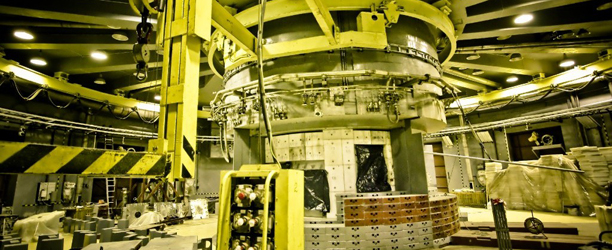
Russia and Germany will continue their joint work on research nuclear reactors. Such reactors are necessary for fundamental and applied research in the field of nuclear power, material science, medicine, and radioisotope production. The MFA of Russia says Berlin and Moscow have signed an intergovernmental agreement on the cooperation in operation of research reactors. The MFA’s statement specifies that the document provides for both technical and commercial aspects of the interaction of both countries.
A new President
A new person is to head the Rusatom International Network, which has been established to deploy and manage regional centers of ROSATOM across the world. Alexander Merten has been appointed the President of the company. Previously, he had the post of a Senior Vice President for Central and Eastern Europe. Until present, the Rusatom Internaional Network was led by Nikolay Drozdov who concurrently held the position of the Director of the International Business Department at ROSATOM. “Our company is charged to build up an effective system of ROSATOM’s global presence in terms of both the promotion of products and services of all divisions and the shaping up partnerships with foreign companies. One of our objectives is to reduce sectoral expenditures for conducting the foreign economic activities,” Alexander Merten said, commenting on his appointment.
The documents for Belarus
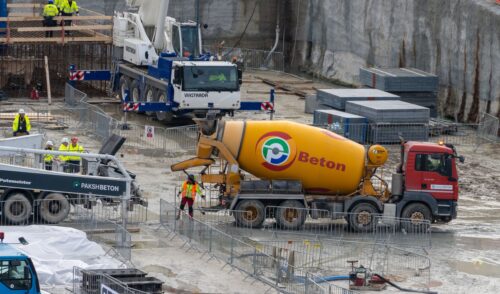
Before the end of this year, the engineering company of ROSATOM Atomproekt will supply working documents for construction in 2015 to Belarus NPP. Since the beginning of this year Atomproekt, which produces the Belarus NPP documentation on facilities of the nuclear and turbine islands, has sent the customer 880 sets of the working documentation, and the specialists are to produce 700 sets more before the end of this year. The project of Belarus’ first nuclear power plant, which is built in Ostrovets, has been also developed by specialists of St. Petersburg Atomproekt. By date, similar projects with AES-2006 technology, which uses VVER reactors of Generation III+, are built in Russia (Leningrad NPP Phase II) and Finland (Hanhikivi NPP Unit 1). Belarus NPP will consist of two power units totaling up to 2,400 MW. The first power unit of Belarus NPP is planned to commission in 2018 with the second one is to follow in 2020.