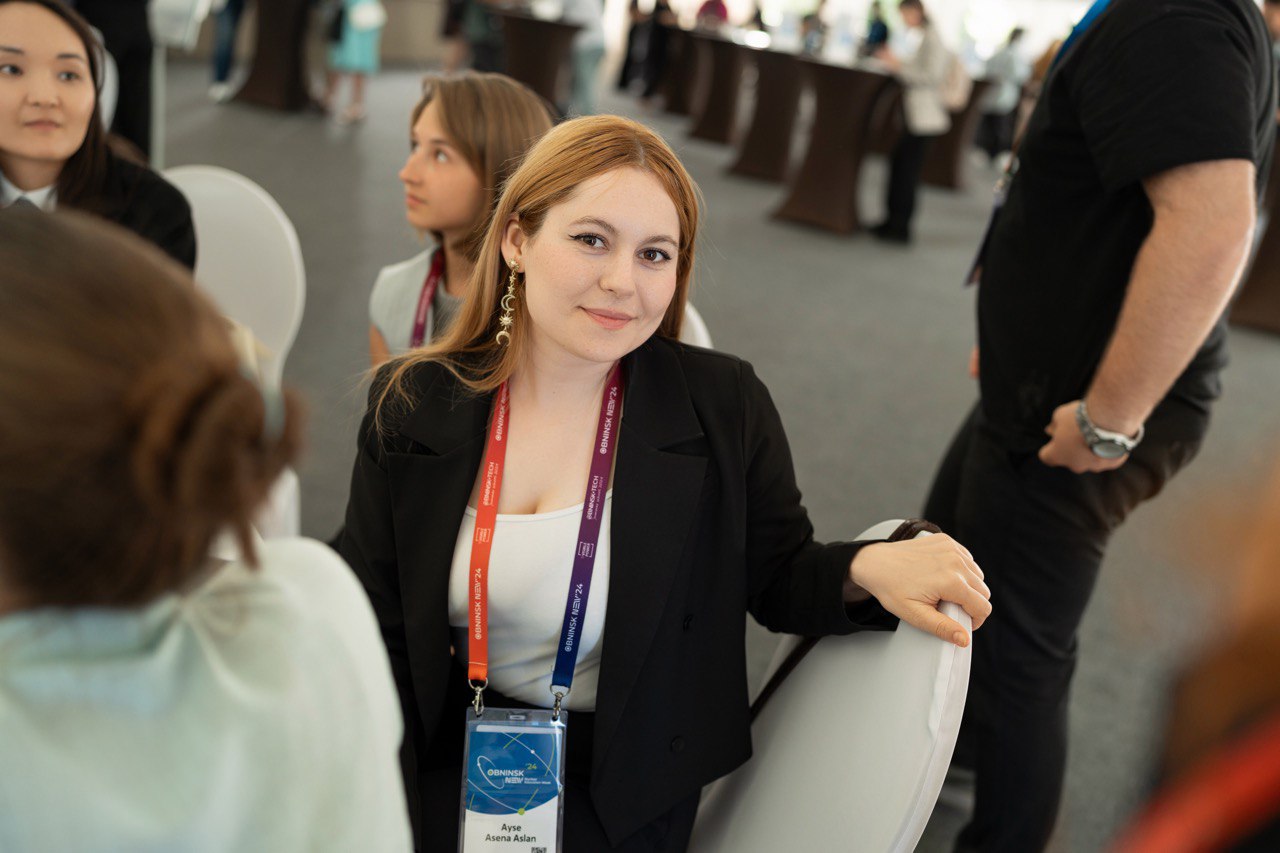
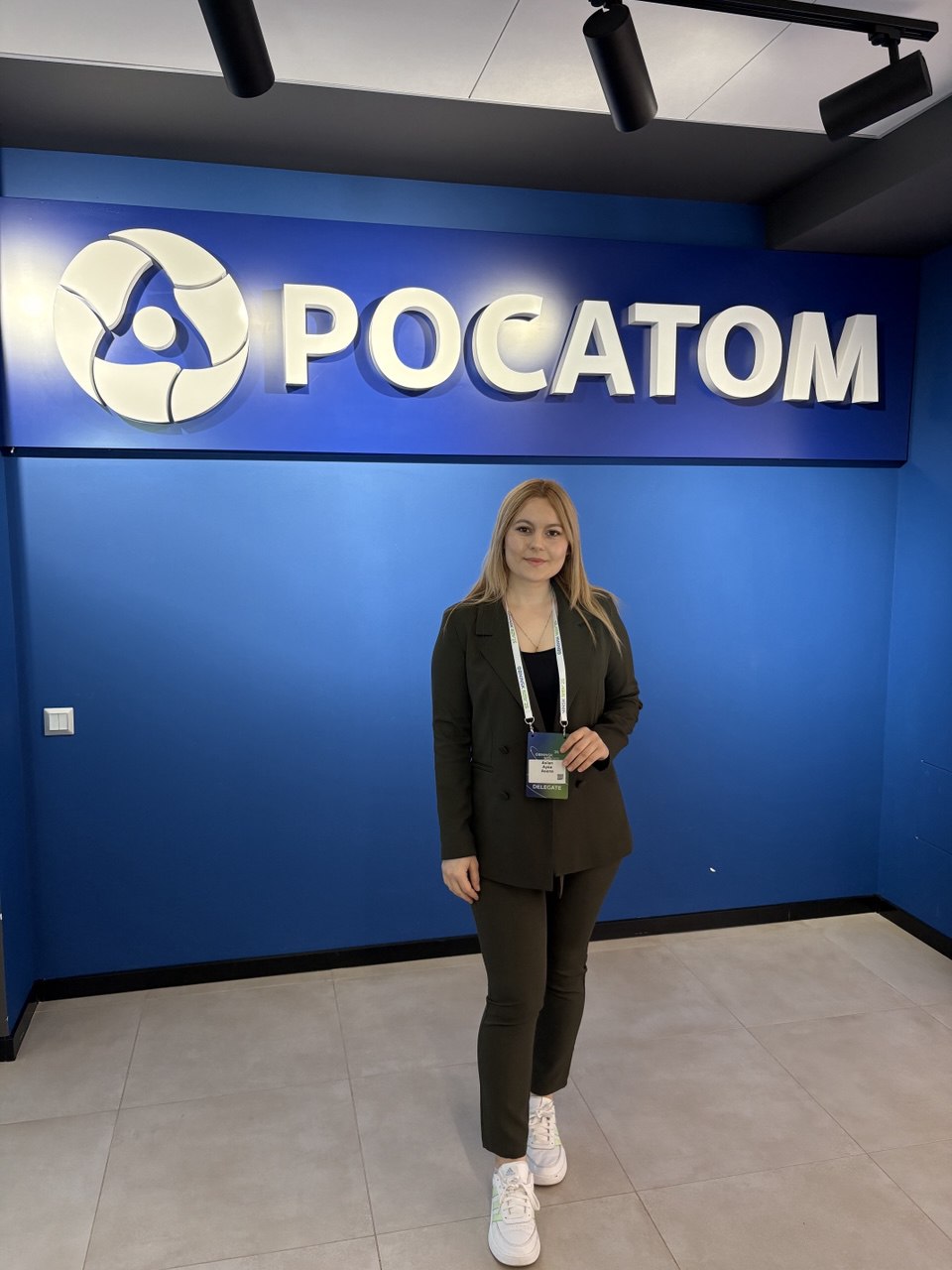
Ayşe Asena Aslan from Türkiye is one of the ambassadors for the Russian Nuclear Education Ambassadors Program aiming to increase the visibility of Russian universities and attract international students to study in Russia. Currently pursuing her master’s degree at the Moscow Power Engineering Institute, she dreams of working at Türkiye’s first nuclear power plant, Akkuyu. Ayşe shares why she chose a career in nuclear energy, how she earned an IAEA scholarship, and why she believes Russian education stands out.
Could you please tell us briefly about yourself?
My name is Ayşe Asena Aslan. I was born and raised in Izmir, Türkiye. Now I study for my master’s degree in Thermal Engineering and Technology at the Moscow Power Engineering Institute.
Why did you choose this profession?
Since childhood, I have been interested in engineering and energy. International programs—the Akkuyu NPP Specialist Training Program, for example—help me get my education. This was the program through which I was enrolled for my master’s degree in Russia. I will work at Türkiye’s first nuclear power plant, Akkuyu, after I finish my studies.
I have also won the Marie Skłodowska-Curie Scholarship from the International Atomic Energy Agency (IAEA). This scholarship is awarded annually to young women who are willing to pursue master’s degrees in nuclear-related fields at accredited universities.
What do you like most about your future profession?
I love working in a high-tech industry that impacts both energy security and the environment. My profession makes it essential to be responsible, precise, and open to continuous learning.
In your opinion, what are the advantages of Russian education?
Russia is a global leader in nuclear education. Members of my family—some of them are engineers—supported my decision. Studying in Russia provides hands-on experience and knowledge from leading experts.
Was it difficult to get admitted?
Yes, there was a rigorous selection process for both programs, involving exams and interviews. For instance, you have to be a student at one of Rosatom’s partner universities to receive the Marie Skłodowska-Curie Scholarship. What’s more, your major must be related to nuclear. The application period starts every year in summer. The beginning of the application process is announced both on the IAEA’s official website and on university websites.
How is your training going?
The training is intense—we do a lot of laboratory and research work. Overall, the classes are very interesting. This is a great opportunity for me to study specialized master’s level subjects and improve my proficiency in the Russian language. In addition, I continue working on my thesis.
Did you face any difficulties learning Russian?
Yes, Russian is a really difficult language, especially its grammar. But thanks to the teachers and friends at the university, I practice every day and gradually improve my skills.
What do you like about Russia?
What impressed me most was that people in Russia turned out to be much kinder, more responsive and sincere than I had expected. I have noticed that foreign students, and especially Turks, are treated here with great warmth and hospitality. I have felt more than once that people showed greater interest in me and made extra efforts to support me upon learning about my Turkish background.
I was also struck by how much Russian society values traditions, cultural heritage, and family bonds. In this regard, Russian culture felt very similar to Turkish culture, which helped me feel safe and at home here.
What are your hobbies outside studying?
I am an ambassador of Russian nuclear education and an active member of the Women in STEM RNEA (Russian Nuclear Education Ambassadors) community, which aims to support women in science and technology.
STEM is an interdisciplinary approach encompassing Science, Technology, Engineering, and Mathematics.
As part of this community, we organize webinars, podcasts, and educational online events to inspire young women interested in fields like nuclear energy and engineering.
We also strive to strengthen female representation in STEM and provide guidance to school and university students in their professional development.
Where do you plan to work after graduation?
I plan to work at the Akkuyu Nuclear Power Plant in Türkiye. It is the first nuclear power plant in my country. This is a strategic project that will benefit Türkiye in terms of clean energy it will produce. I want to contribute to its development and safe operation.
Photo by: From the personal archive