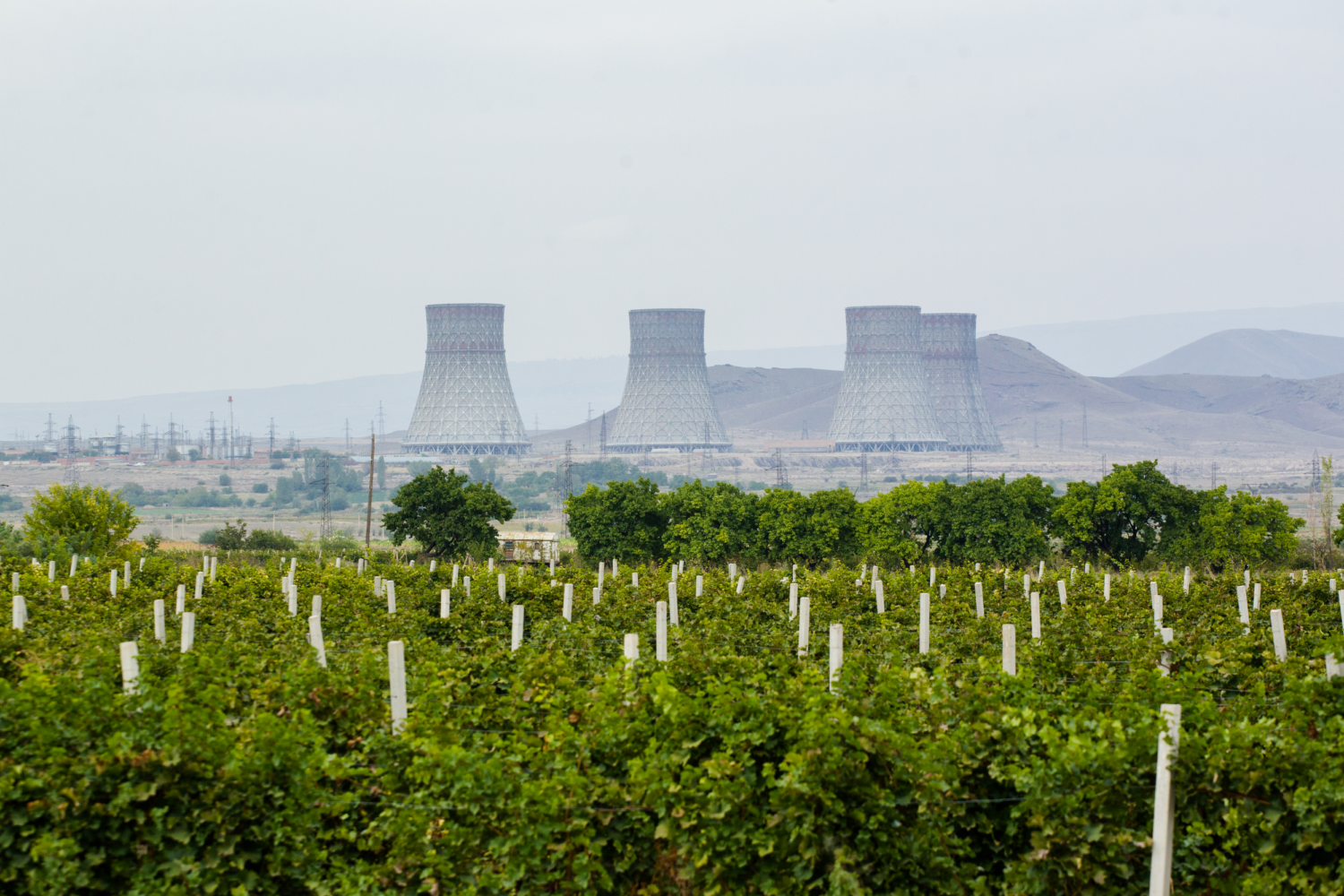
The Armenian Nuclear Power Plant operates a VVER-440 reactor, which this year marks its 45th anniversary of generating power safely, reliably and cost-efficiently. It is a pressurized water reactor, the most common design of nuclear power reactors in the world. Here’s our look at pressurized water reactor technology and Russian-designed reactors of this type.
Pressurized water reactors (PWRs, known in Russia as VVERs) are the cornerstone of the present-day nuclear power sector both in Russia and globally. Russia has accumulated decades of successful operational experience with these reactors. VVERs are continuously evolving to enhance their safety and efficiency.
306
pressurized water reactors are online worldwide
VVER-1200: Flagship Design
Rosatom’s flagship Generation III+ reactor is VVER-1200, the most advanced, technologically sophisticated, and safest Russian design to date. It incorporates decades of experience in engineering and operating reactors of the same type. Its design life is 60 years, extendable by another 20. Other key features of the VVER-1200 include a load-following capability, high capacity factor (90%), and ability to operate for 18 months without refueling.
The VVER-1200 reactor unit has two circuits. The primary circuit—sealed and pressurized—contains the reactor core, where nuclear fission releases a massive amount of energy and heats the coolant, a chemically purified boron-treated water that circulates through the reactor under high pressure (16.2 MPa) and temperature (up to 328.8°C). The coolant circulates in the primary circuit via four powerful circulation pumps.
The heated water from the reactor flows into steam generators, where it transfers its heat to the water in the secondary circuit. This causes the secondary water to boil and produce steam.

The two-circuit design ensures complete isolation between the circuits, meaning the water inside the reactor never physically contacts the water in the steam generators. Heat transfer occurs only through the heat exchange surface. This prevents any radioactive water from escaping beyond the primary circuit.
The generated steam is then carried through large steam lines to the turbine, where its energy spins the turbine shaft. The rotating shaft drives an electric generator, which produces electricity. The electricity generated is sent to step-up transformers and then, via gas-insulated transmission lines, to the switchyard and onward into the power grid.
Safety first
The VVER-1200 reactor unit is designed to withstand extreme low-probability events, such as magnitude 9 earthquakes, tornadoes and hurricanes with wind speeds up to 60 meters per second, tsunamis, and waves up to 10 meters high.
The design incorporates independent—active and passive—safety systems. Active safety systems are intended to quickly respond to possible accidents and emergencies. Passive safety systems function without operator intervention and even without power. It is impossible to cover all safety systems in a short article, so we will highlight just a few.
One of the most important passive safety devices—and a Russian nuclear innovation—is the so-called ‘core melt trap’. It is a 144-tonne steel vessel that, in the event of an accident, reliably retains fragments of the molten reactor core and prevents them from escaping beyond the reactor building’s containment structure.
Another passive safety component is the emergency core cooling system, designed to cool the reactor core using a volume of water many times greater than the reactor’s own volume. Like the reactor control and protection system, it continues operating for 72 hours even in a complete power outage.
One more innovation, the passive heat removal system (PHRS), ensures the removal of residual heat from the reactor core through the secondary circuit.
“VVER-1200 reactors are already operational domestically and abroad, four units in Russia and two in Belarus. This technology has also been selected by our partners in Hungary, Egypt, Turkey, Bangladesh, and China.”
Alexey Likhachev
VVERs conquer the world
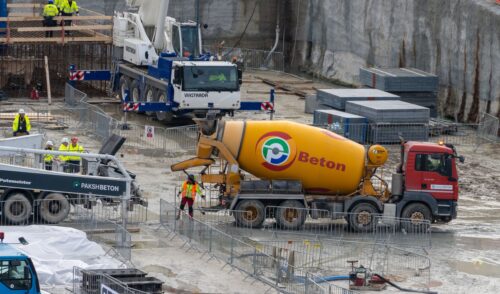
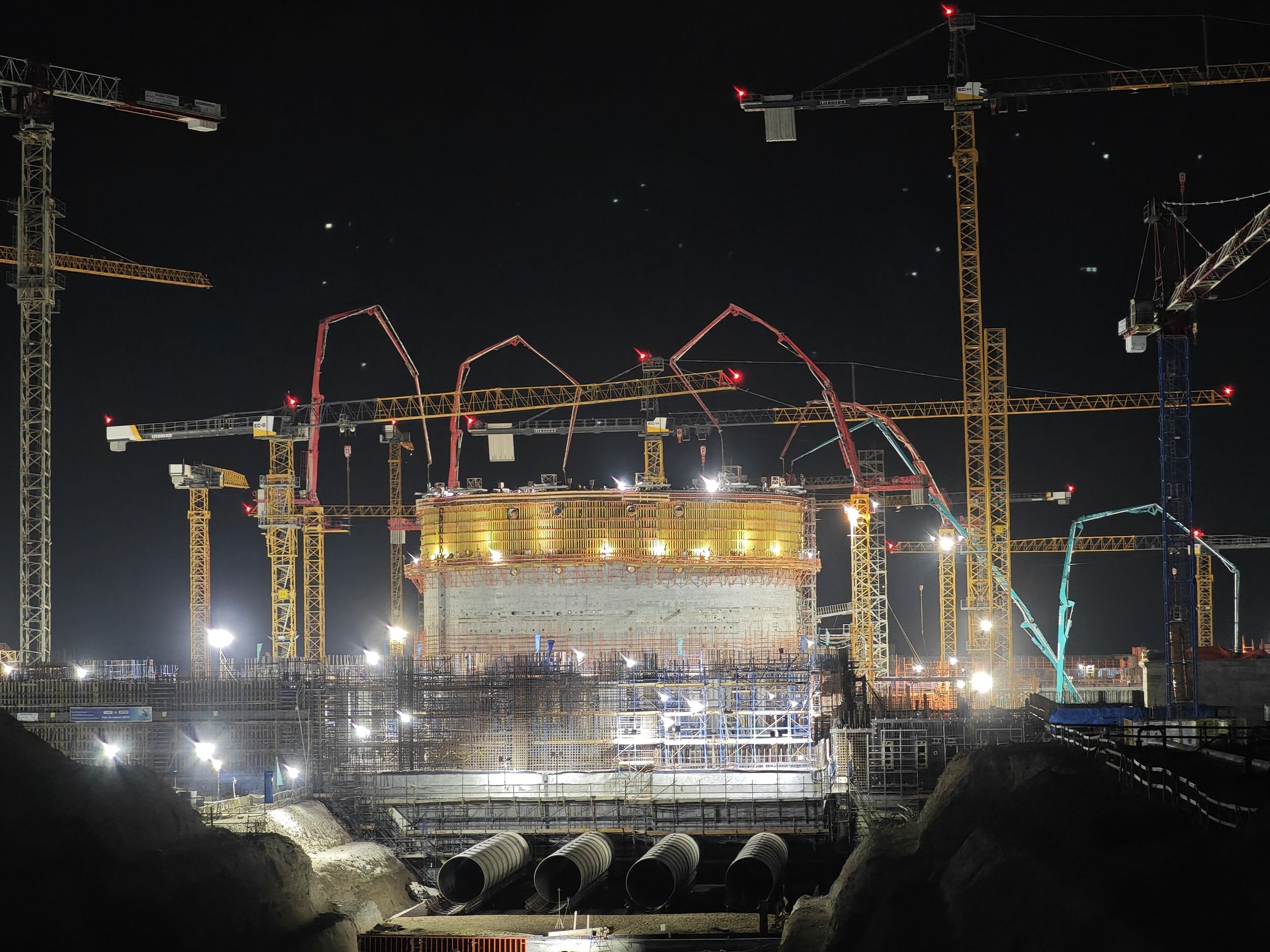
Today, Rosatom is a global leader in building nuclear reactors abroad. Nuclear power units with VVER reactors are being constructed all over the world. The two largest nuclear construction projects by Rosatom are the Akkuyu Nuclear Power Plant in Turkey and the El Dabaa Nuclear Power Plant in Egypt. At both sites, four VVER-1200 units are being built simultaneously. Hungary’s Paks II Nuclear Power Plant with two VVER-1200 reactors is the first such project in the European Union. The Rooppur NPP in Bangladesh also consists of two VVER-1200 units, both of which are under active construction. Rosatom is also involved in building two nuclear plants in China, Units 3 and 4 at the Xudabao NPP and Units 7 and 8 at the Tianwan NPP, all of them featuring VVER-1200 reactors.
Photo by: Rosatom’s Machine-Building Division, ASE EC (Atomstroyexport), SP