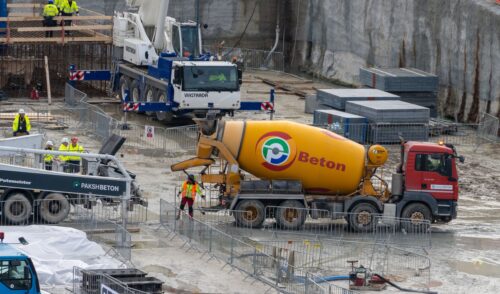
The installation of the reactor pressure vessel at Unit 1 marked the culmination of construction milestones passed by Egypt’s El Dabaa NPP in 2025. This event was underpinned by dozens of other significant developments, from the assembly and concreting of plant structures to the launch of a major training center and the signing of strategic agreements between Rosatom and Egypt.
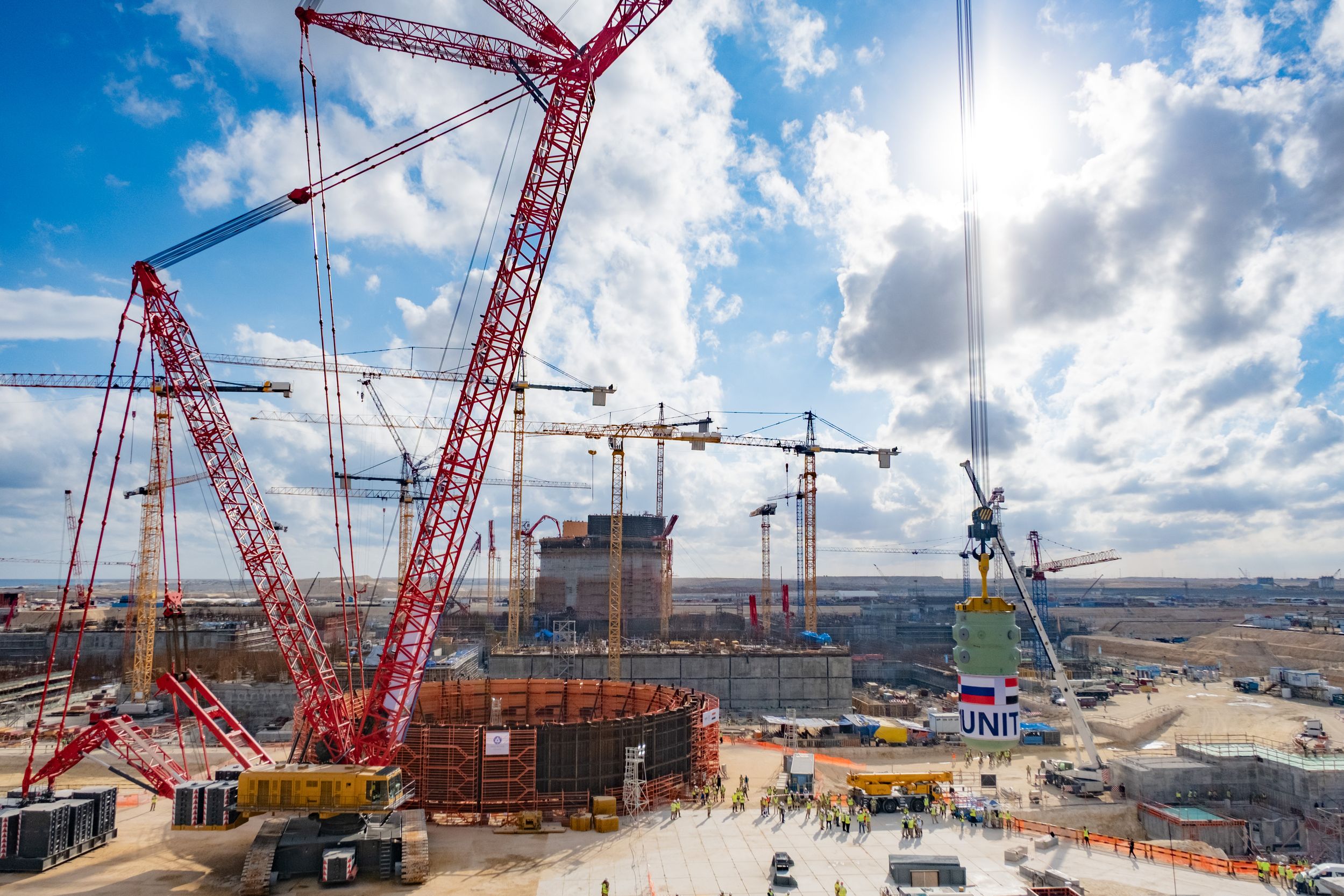
Construction works on the nuclear plant site proceeded at full speed throughout 2025.
In February, welding operations on the upper semi-vessel of the reactor for El Dabaa Unit 2 were completed at one of Rosatom’s production sites. In early March, the second tier of the inner containment shell (ICS) was installed at Unit 2. This cylinder-shaped structure is designed to house the nuclear reactor and primary circuit equipment. The second tier of the ICS consists of 12 ‘petal blocks’ manufactured right at the El Dabaa construction site.
In late May, workers finished concreting the second tier of the ICS, and in June, they installed its third tier.
In the spring, Rosatom engineers began setting up a secure local area network (LAN) for El Dabaa. The network will connect all computers, workstations, systems, and sensors at the nuclear power plant.
In early July, a new training center opened at the construction site. It includes a production workshop, full-scale simulators, pieces of real-life thermal, mechanical and electrical equipment (the same as installed at power units), and classrooms for lectures and computer-based training. All local employees (planned to be around 20,000 people), regardless of their future specialization, will complete a basic training program at the facility. The center will also serve as a testing hub to assess the skills and competencies of new employees before they begin work.
In late October, the reactor pressure vessel for Unit 1 was delivered to the site. Concreting of the third ICS tier was completed at Unit 2. At Unit 4, construction crews poured concrete for the foundation slab of the nuclear service building, which houses amenities for the controlled access area. This is one of the key infrastructural buildings ensuring safe work of the personnel in radiation-protected environments.
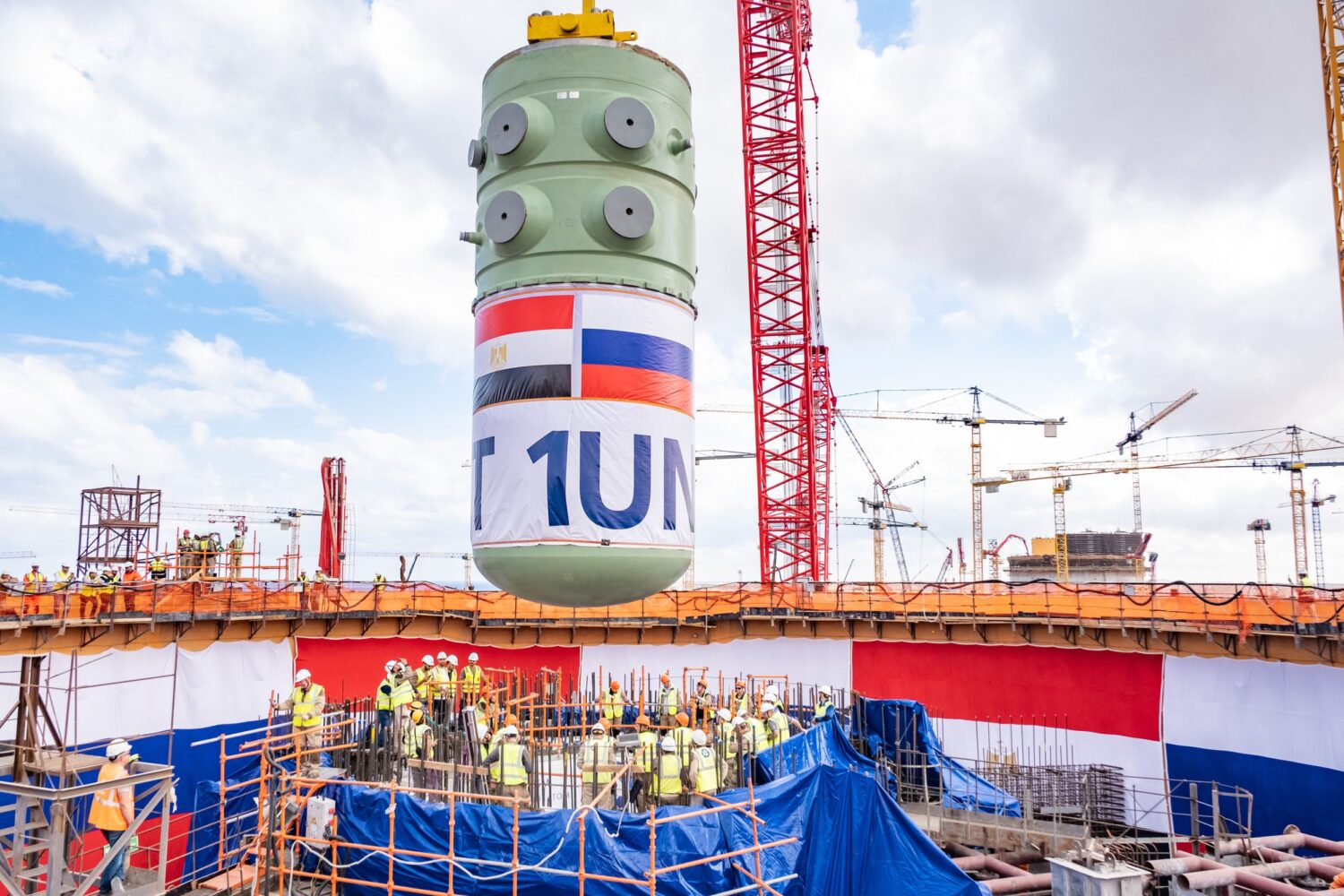
Finally, in November, El Dabaa passed the year’s key milestone as the reactor pressure vessel for Unit 1 was placed into the intended position. The Presidents of Egypt and Russia congratulated the project team on this achievement. International Atomic Energy Agency (IAEA) Director General Rafael Grossi also sent a video message to the event participants.
Rosatom Director General Alexey Likhachev said: “I am truly happy that we can celebrate Egypt’s Nuclear Energy Day with such a significant achievement, marking one of the key stages in the construction of the first Generation III+ unit on the African continent. Construction work at each of the four power units is in full swing, with more than 30,000 people involved.”
Business activity
Construction works ran in parallel with the development of strategic partnerships: the year was packed with important meetings, signed agreements, and joint events.
In January, Rosatom signed a memorandum of understanding with Benha Electronics, one of Egypt’s largest electronics companies. The document provides for the integration of advanced Russian technologies into the company’s production processes.
In early February, Rosatom took part in the 56th Cairo International Book Fair (CIBF 2025). Visitors of every age had an opportunity to play interactive games, receive books as gifts, join educational sessions, and learn more about the Russian nuclear industry.
In late February, the International Youth Forum on Green Nuclear Technologies held in Egypt discussed how nuclear technologies affect modern life, the role of the nuclear industry in creating breakthrough products, and the industry’s appeal to young people. The event was organized by the Egyptian Nuclear Power Plants Authority (NPPA) in partnership with Rosatom. The forum brought together over 350 people from 25 countries, with about 800,000 people watching the online broadcast.
In early July, Egyptian President Abdel Fattah el-Sisi and Rosatom chief Alexey Likhachev discussed progress in the construction of the nuclear power plant and Russian-Egyptian strategic cooperation in peaceful uses of nuclear energy. Alexey Likhachev emphasized that construction of the El Dabaa Nuclear Power Plant remained an absolute priority for Rosatom. “We are confident that the successful completion of the El Dabaa NPP project will strengthen Russian-Egyptian relations, enhance Egypt’s energy independence, and lay the foundation for further technological partnership between our countries,” Alexey Likhachev said.
The parties also signed documents providing for Russia’s potential involvement in the design, equipment and material supply, construction, installation, and commissioning works necessary for establishing the physical protection system at the El Dabaa Nuclear Power Plant.
The Egyptian delegation took an active part in the World Atomic Week (WAW) international forum held in Moscow at the end of September. During the opening ceremony, a video link connection launched the ceremonial shipment of the latest VVER-1200 reactor vessels—for Akkuyu Unit 4 in Türkiye and El Dabaa Unit 1 in Egypt. Speaking at the ceremony, Egypt’s Minister of Electricity and Renewable Energy, Mahmoud Mostafa Kamal Esmat, stated that the El Dabaa NPP project reflects the depth of historical ties and strong relations between Egypt and Russia. He pointed to the high level of coordination, cooperation, and interaction between the Egyptian and Russian parties.
In November, Rosatom participated in the Smart Transport, Infrastructure, Logistics and Traffic Expo and Conference (TransMEA 2025), Egypt’s leading regional platform for discussing technology transformation and industrial development. Visitors to the booth of the Russian nuclear corporation were introduced to its solutions in nuclear energy and other areas, such as a cross-cutting ecosystem in additive manufacturing (including development of advanced materials, design software, advanced 3D printers, and industrial applications) and energy storage technologies.
Rosatom and the Egyptian Ministry of Electricity signed a comprehensive cooperation program. The document establishes framework cooperation procedures and opens up new areas of joint effort. Particular attention is paid to the exchange of experience and scientific and technical collaboration, laying a sustainable platform for a long-term partnership.
From Alexandria to the North Pole
The El Dabaa project is not just about power units and infrastructure; it is also about people. The year 2025 was memorable for vivid social and educational initiatives carried out with Rosatom’s support.
In late March, about a hundred people from the subcontracting companies working on the plant site joined a cleanup initiative on the Mediterranean coast. The volunteers collected more than 50 bags of trash.
In April, the first El Dabaa Kids Sports Festival was held at the nuclear plant site, gathering over 200 children of the employees from the companies involved in the construction project.
In late May, 13 winners, five of whom were Egyptian, were announced for the eighth annual Atoms Empowering Africa video contest. In the summer, they went on a five-day trip to Russia, where they visited Rosatom’s Technical Academy, the world’s first nuclear power plant in Obninsk, the Atom Museum, and other sites.
In July, Rosatom partnered with the 3rd International Adly Chess Festival held in Cairo and gathering 977 players from 11 countries.
The festival included a wide range of tournaments for different ages and skill levels. “We perceive chess not just as a game, but as a mindset. It is a discipline that reflects the precision, foresight, and structured thinking inherent in nuclear sciences,” noted Murad Aslanov, Director of Rosatom’s office in Egypt.
In August, Egyptian winners of the Icebreaker of Knowledge international project traveled to the North Pole on a nuclear icebreaker as part of an educational expedition, joining school students and experts from various countries.
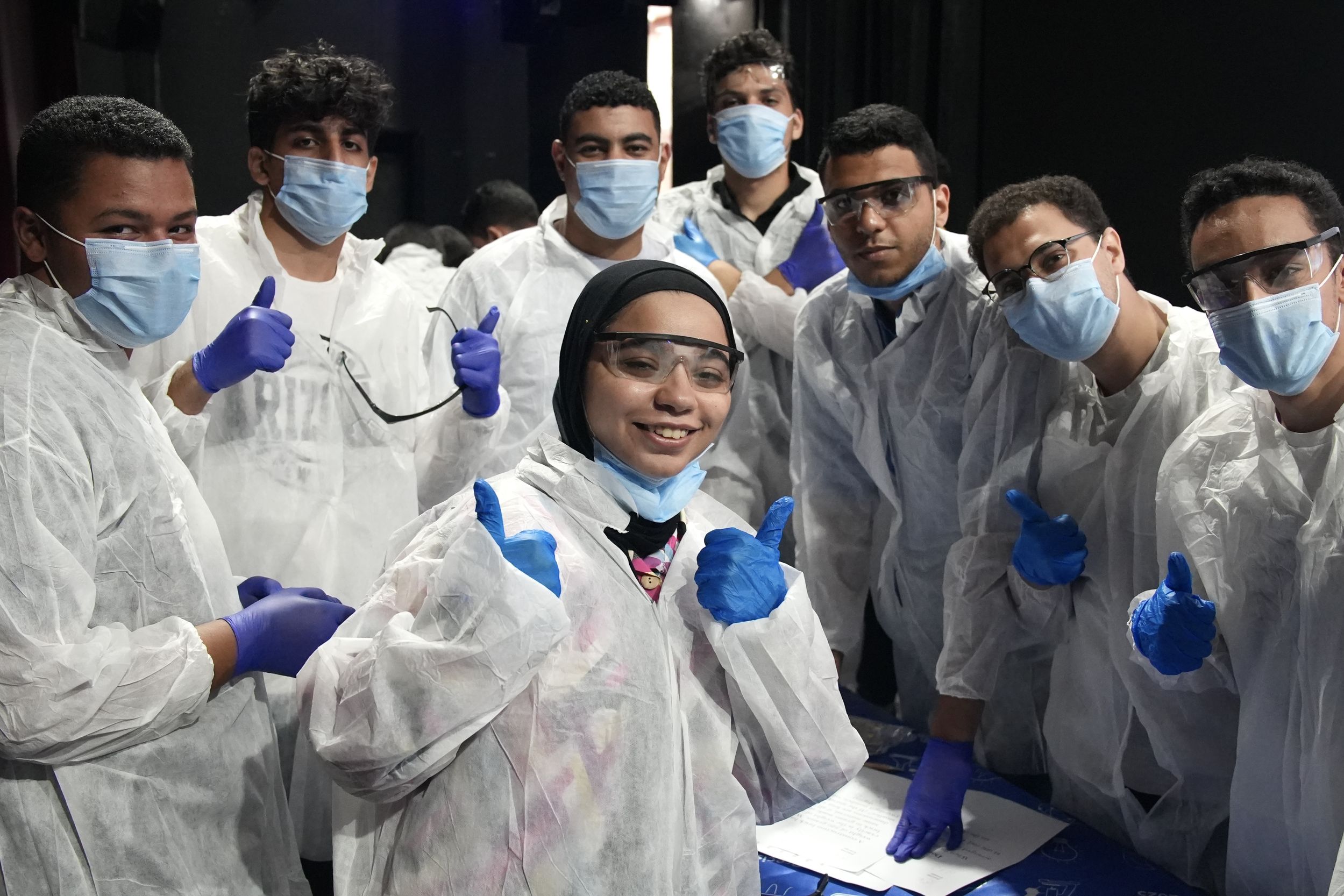
Another major educational initiative by Rosatom is the Precise Energy Olympiad. More than 3,000 high school and university students from the El Dabaa NPP construction region participated in the qualifying round. Winners and runners-up of the final stage held in Alexandria received awards.
This site uses cookies. By continuing your navigation, you accept the use of cookies. For more information, or to manage or to change the cookies parameters on your computer, read our Cookies Policy. Learn more