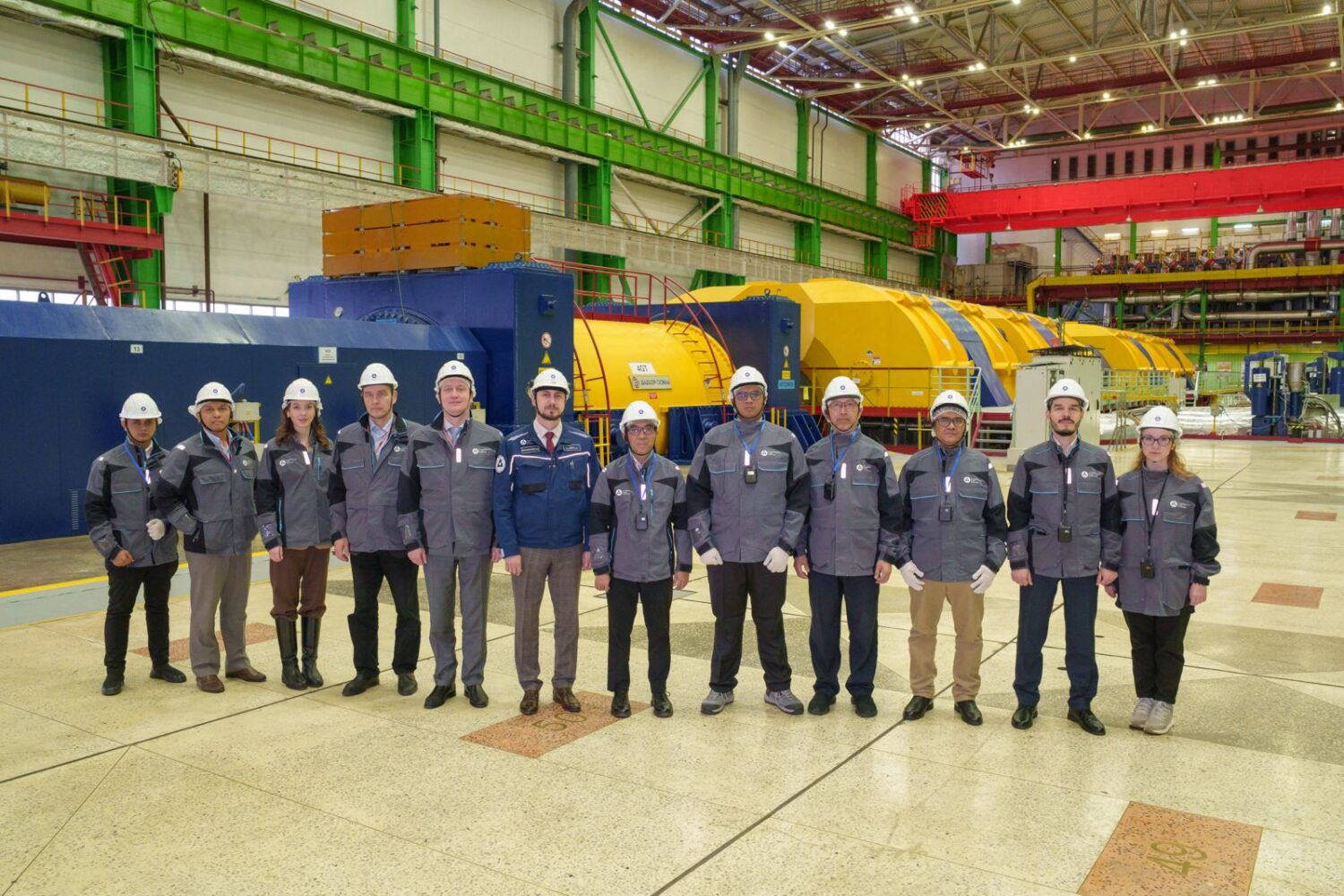
In 2025, cooperation between Rosatom and Indonesia reached a new level. Russian and Indonesian delegations were active at the key business events in both countries. Social and cultural initiatives also flourished, ranging from the participation of Indonesians in the Icebreaker of Knowledge educational expedition to a professional women’s community meeting in Jakarta. Here are the main highlights of the past year.
The expert dialogue in 2025 focused on discussing large-scale nuclear generation and small modular reactor (SMR) solutions for Indonesia. Rosatom participated in the country’s key industry events to present its technologies in this field. In late November, Rosatom took part in Southeast Asia’s largest energy exhibition, Electricity Connect 2025, held in Jakarta.
Rosatom’s booth, displaying nuclear solutions relevant to the Southeast Asian region, was visited by leading Indonesian businessmen and government officials, including Darmawan Prasodjo, CEO at Indonesia’s national electricity company PT PLN, Dadan Kusdiana, Secretary General of the National Energy Council, and other guests.
“Growing electricity demand across many regions of the country can be effectively met by large and small nuclear power plants, including floating power units. Rosatom possesses unparalleled experience and the necessary time-proven technologies to provide Indonesia with a comprehensive solution that will allow for developing nuclear energy in accordance with the needs of a growing economy,” said Vladimir Aptekarev, Deputy Head of Rosatom’s Mechanical Engineering Division, speaking at one of the sessions.
In September, Rosatom took part in an international nuclear energy workshop organized by PT PLN. According to Anna Belokoneva, Head of Rosatom’s office in Indonesia, floating power units providing electricity to remote territories could be the optimal solution for Indonesia, which has over 17,000 islands, and so could land-based large or small nuclear power plants.
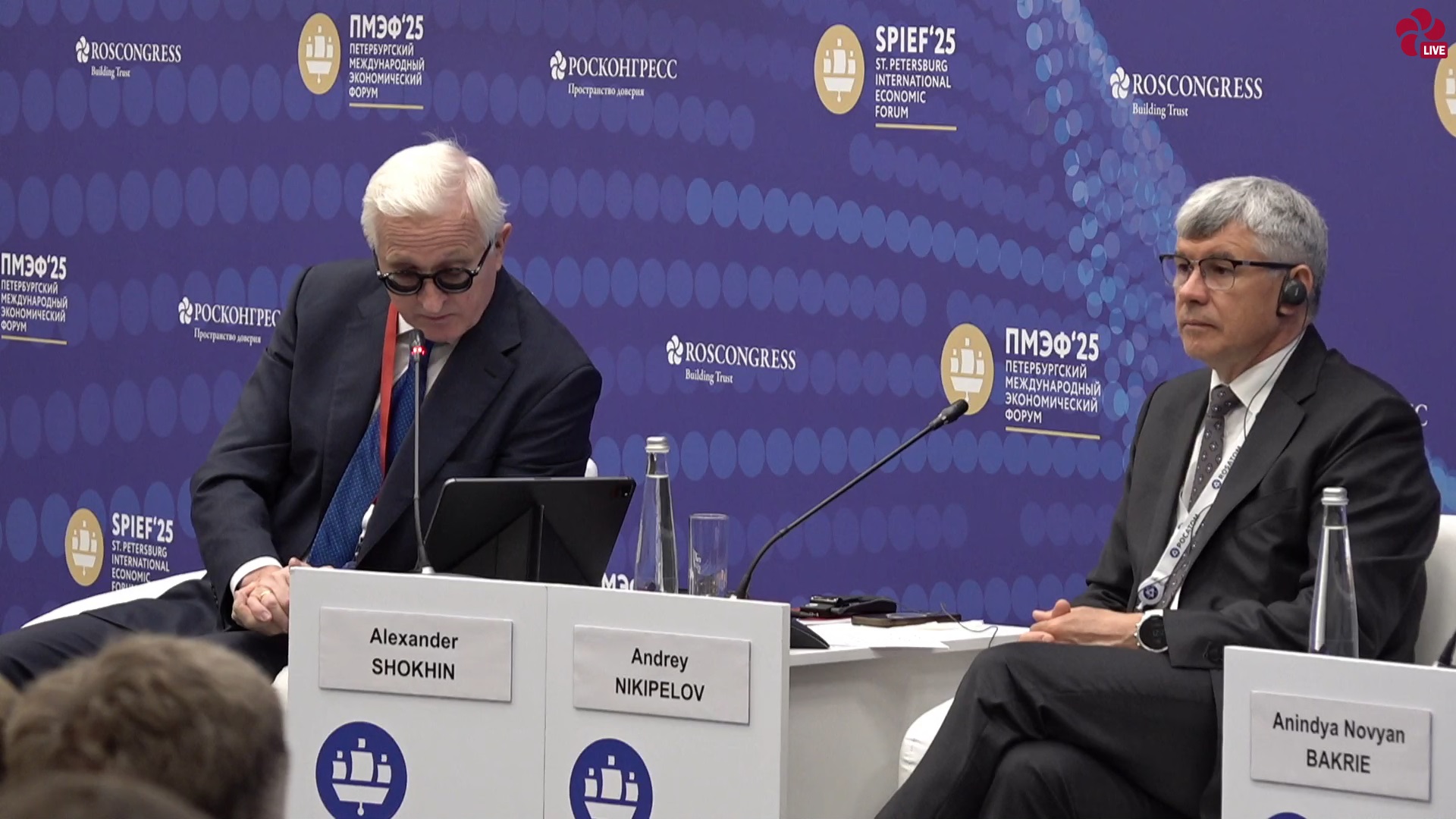
In June, the St. Petersburg International Economic Forum (SPIEF) hosted the Russia-Indonesia Business Dialogue attended by business community representatives from both countries. Andrey Nikipelov, Deputy Director General for Mechanical Engineering and Industrial Solutions at Rosatom, spoke about the advantages of nuclear energy in general and small modular reactors (SMRs) in particular. “Nuclear energy offers a solution where one does not have to choose between sustainable power and environmental concerns. Large and small-scale nuclear generation can provide reliable green energy for both people and the country’s industry, and Rosatom has unparalleled expertise in building and operating such power facilities,” Andrey Nikipеlov noted.
The year’s most important practical outcome was the signing of a Memorandum of Understanding (MoU) on cooperation in conducting a preliminary feasibility study for the construction of Russian-designed nuclear power plants in Indonesia. The document was signed in September at the World Atomic Week international forum. The memorandum outlines further steps in expanding Russian-Indonesian cooperation to evaluate options for integrating nuclear power into Indonesia’s energy mix.
From Jakarta to the North Pole
Along with business activities, Rosatom and Indonesia strengthened their social and cultural ties. Last autumn, Jakarta hosted an open dialogue on the role of women in the nuclear industry. The event brought together delegates from 20 countries, including representatives of the nuclear and tech sectors, and medical, educational, and scientific organizations.
“Today’s dialogue serves as a bridge connecting institutions, industries, and, most importantly, people — women scientists, engineers, innovators, and policymakers who believe that technology should serve humanity. Our cooperation reflects the growing role of women in shaping the future of high-tech industries, from nuclear energy to digital technologies,” noted forum co-organizer Geni Rina Sunaryo, Head of the Women’s Potential Development Department at the Indonesian Nuclear Society (HIMNI).
One of the past year’s highlights was the well-deserved second place taken by a team from Indonesia in the final of the Global HackAtom international student hackathon organized by Rosatom. The national stage was held in July in Jakarta at the Polytechnic Institute of Nuclear Technology under the auspices of the National Research and Innovation Agency (BRIN). Fifteen teams from nine universities participated in the in-person part. The winning team, Tahu Sumedang from Padjadjaran University, traveled to Moscow in September for the Global HackAtom final, which was dedicated to nuclear-powered space exploration. The Indonesian team proposed a concept for applying nuclear technologies to maintain circadian rhythms during long-distance space travel. The jury praised the project, awarding the team second place.
Another second place went not to students, but to fishermen competing at the international fishing tournament organized by Rosatom. The tournament took place in Türkiye, near the Akkuyu NPP construction site, with fourteen amateur anglers from seven countries participating. Indonesian anglers Aiptu Hamzah Basri and Mulyadi Umar from Kendari (the province of Southeast Sulawesi) caught 6.5 kg of fish, earning the silver medal. During the tournament, the fishermen had the opportunity to visit the nuclear plant under construction, talk with local residents, and verify the safety of nuclear technologies for themselves.
Finally, participating in the Icebreaker of Knowledge 2025 international Arctic expedition organized by Rosatom became an unforgettable experience for student Priya Wicaksono and Professor Topan Setiadipura from Indonesia. In August 2025, they traveled to the North Pole aboard the 50 Let Pobedy nuclear icebreaker. On board were 66 high school students from 21 countries, accompanied by experts, including renowned researchers and science communicators from various fields. “This experience effectively strengthened my conviction that human civilization needs nuclear energy,” Topan Setiadipura said.
Photo by: Rosatom International Network, Kalinin NPP, Strana Rosatom newspaper
This site uses cookies. By continuing your navigation, you accept the use of cookies. For more information, or to manage or to change the cookies parameters on your computer, read our Cookies Policy. Learn more