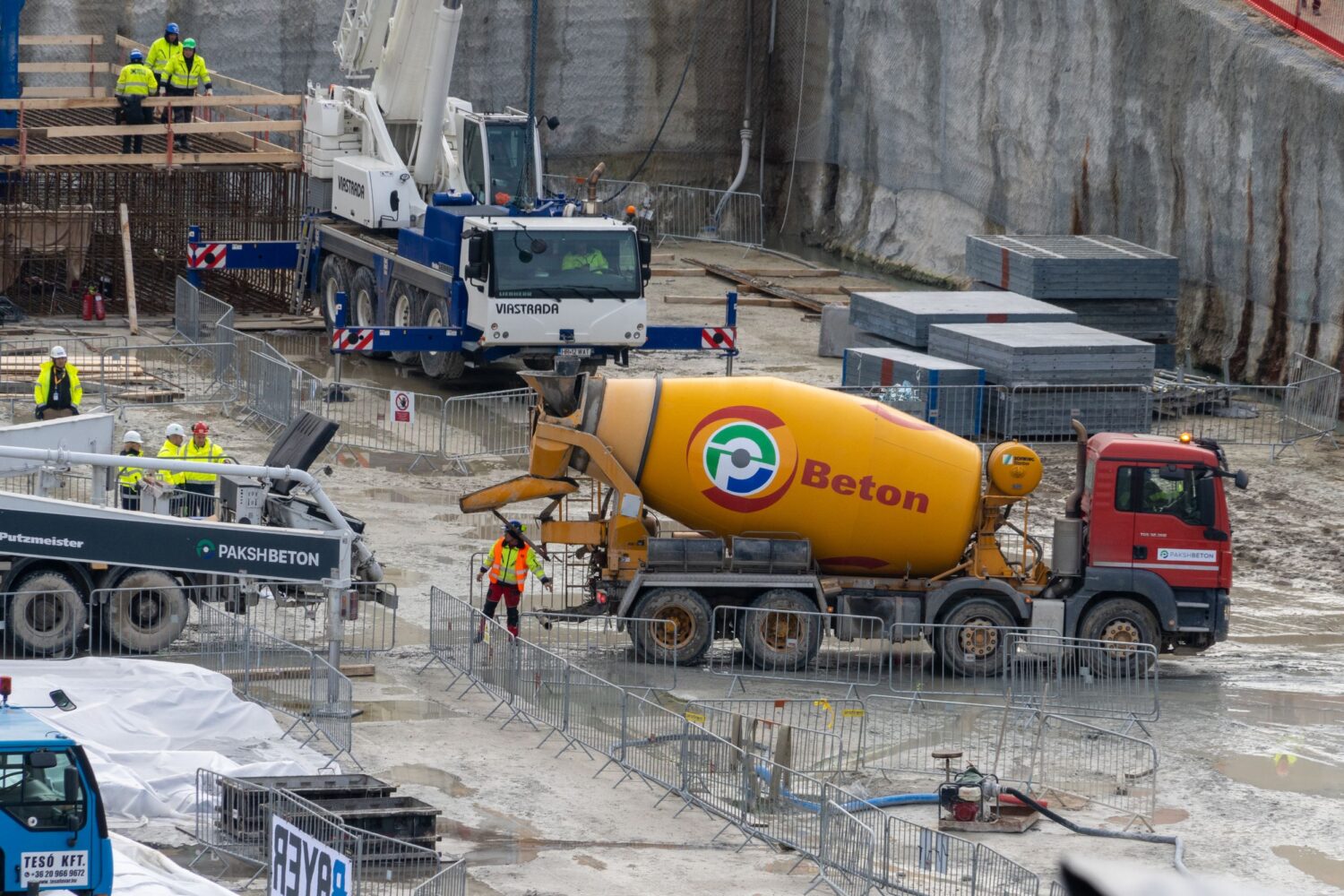
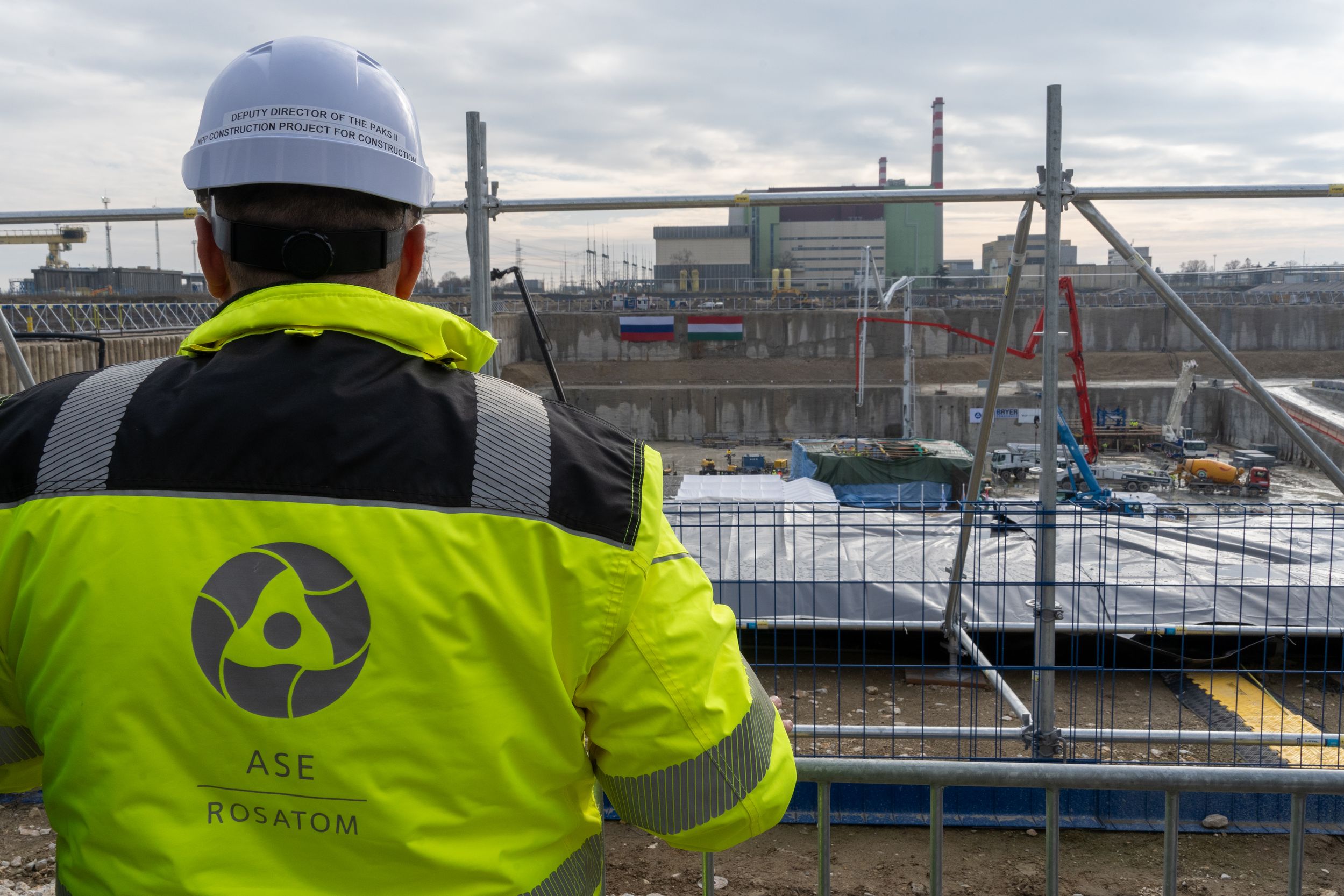
The pouring of the first concrete for the foundation slab of Paks II Unit 5 in Hungary began on February 5, 2026. The new nuclear power plant will replace units that have been operating since the 1980s and will continue to provide the country’s residents and industry with clean, reliable, and affordable nuclear electricity.
With the start of the concrete pouring, the unit officially transitioned to the “under construction” status according to the IAEA classification. “This is a very important day for Hungary, for Russia, and for the global nuclear community,” Rosatom Director General Alexey Likhachev commented on the event.
Unit 5 continues the cooperation between Hungarian and Russian (formerly Soviet) nuclear professionals that began in the 1960s. Between 1982 and 1987, four power units of the Paks NPP with Russian-designed VVER-440 reactors were connected to the Hungarian grid. Today, they operate at uprated (above nominal) power and provide approximately 47% of the electricity consumed in the country. Paks II, with a total capacity of 2,400 MW, will feature two Generation III+ VVER-1200 reactor units.
“The country that will be the first to succeed in building nuclear power plants will be the most competitive. Hungary is one such country: the Paks II NPP is the largest and most advanced project in Europe, the flagship of the nuclear renaissance,” emphasized Hungarian Minister of Foreign Affairs and Trade Péter Szijjártó. “This plant will be a guarantee of long-term energy security. Thanks to the new units at Paks, Hungary will be able to independently produce up to 70% of the electricity the country needs, significantly reducing dependence on price fluctuations in international markets.”
Paks II is also important for the global nuclear community. “We highly value the IAEA’s patronage of our facilities under construction and the personal involvement of its Director General Rafael Grossi,” Alexey Likhachev acknowledged.
Building on a solid foundation
The general construction license for the VVER-1200 units was issued by the regulator, the Hungarian Atomic Energy Authority (OAH), in August 2022. This license authorized the contractor to make an excavation pit for one of the two future power units. In November 2025, the regulator issued a permit for the first concrete pouring and the construction of the nuclear island buildings.
Nearly 9,000 tonnes of reinforcing steel will be installed and 43,000 cubic meters of concrete mix laid for the foundation slab of Unit 5. The concrete laying will proceed around the clock. Concreting operations are scheduled to continue until the end of 2026. Subsequently, workers will begin erecting the inner and outer containment shells of the reactor building and installing nuclear island equipment. The first item to be installed will be the core catcher (melt trap), which has already been delivered to the construction site. This is a crucial element of the passive safety systems for nuclear power plants with Generation III+ reactors. The structure serves to retain the molten core material in the event of an accident.
In April 2024, Rosatom steelmakers began manufacturing the reactors for Paks II. They cast all the necessary billets for both power units at once — a total of 36 items with a combined weight of 3,440 tonnes.
Rosatom is working in close connection with the Hungarian customer. “The customer here is very strong as a licensee, handling contacts with the regulator, obtaining permits, and solving technical issues. We work as one team with both the customer and the supervisory body, and this is a very successful strategy. We now hold regular meetings not only at the executive level but also at the working group level,” Vitaly Polyanin, AtomStroyExport Vice President and Paks II construction project director, told the Strana Rosatom newspaper. “Everyone understands that frank, direct exchange of information contributes to achieving goals. It is important that the Hungarian party is very interested in the construction of the units, which is evident in their active support for the project.”
New opportunities
The construction of Paks II is an opportunity to maintain low electricity prices for Hungarian residents and ensure new capacity for charging electric vehicles, digitalizing the economy, building data centers, and deploying artificial intelligence solutions. It also offers new competencies and opportunities for Hungarian companies: having gained experience at Paks II, they can participate in Rosatom’s other nuclear projects, for example, in Serbia. “I believe that the decision to build a nuclear power plant in Serbia will be made sooner or later. We will make every effort to convey our proposals to the Serbian leadership and present the advantages of these proposals for Serbian industry and the Serbian people as fully and detailed as possible,” Alexey Likhachev said in response to a question from Serbian media. According to him, a nuclear energy cluster in Central Europe could be of advantage due to the geographical proximity of the two countries and the possibility of using the Danube as a transport artery.
This site uses cookies. By continuing your navigation, you accept the use of cookies. For more information, or to manage or to change the cookies parameters on your computer, read our Cookies Policy. Learn more