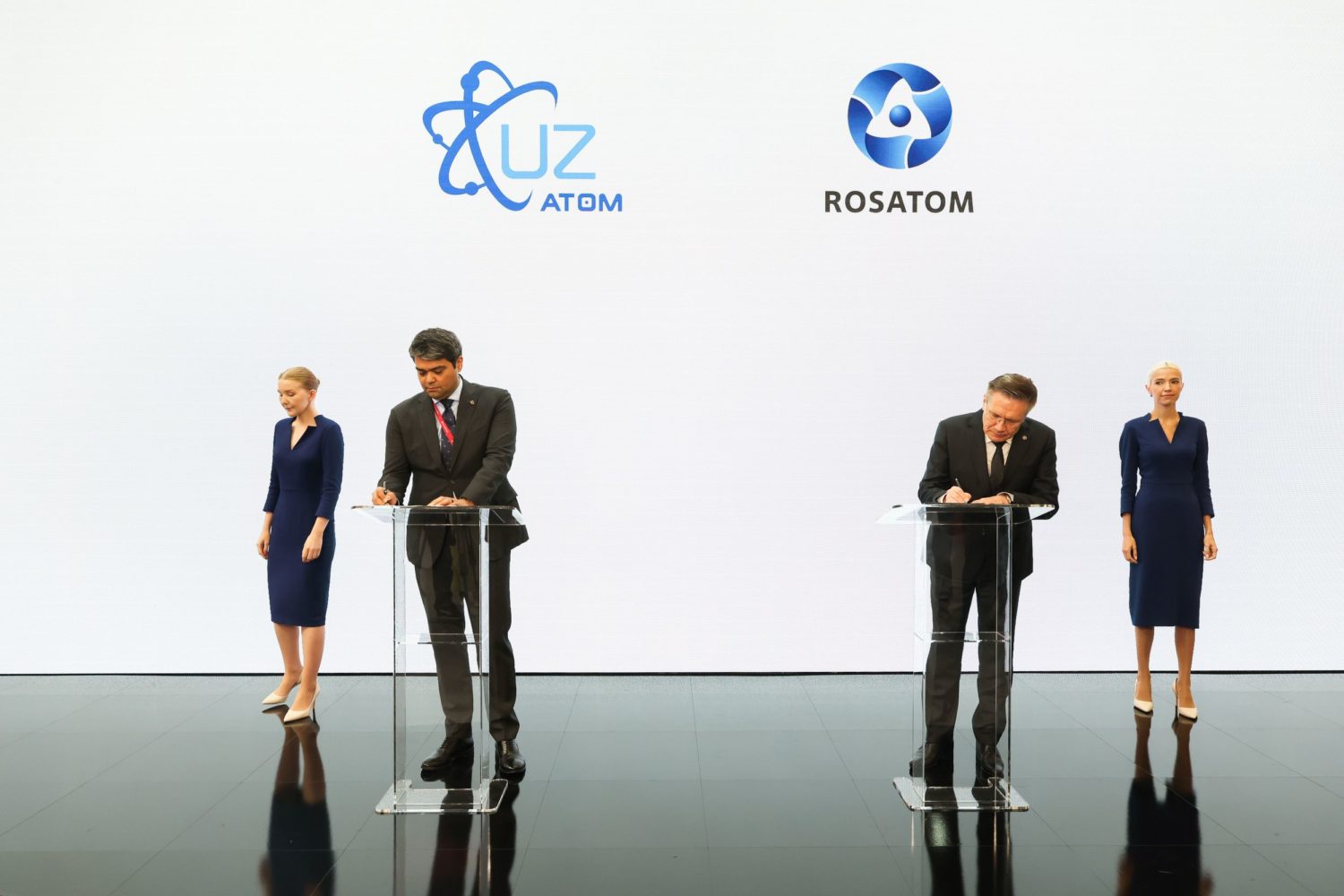
The Russian nuclear corporation Rosatom and Uzbekistan’s Agency for Nuclear Energy Development (Uzatom) have signed three agreements aimed at advancing nuclear energy in this Central Asian country. The parties agreed to jointly study the feasibility of building a large-scale nuclear power plant, establish irradiation centers for agricultural products, and expand initiatives promoting women’s leadership in the nuclear industry. These measures reinforce the strategic partnership between the two countries and support sustainable economic development in Uzbekistan.
Rosatom and Uzatom will assess opportunities for constructing a large nuclear power plant. An agreement to this effect was signed by Rosatom Director General Alexey Likhachev and Uzatom Director Azim Akhmedkhajaev on the sidelines of the Saint Petersburg International Economic Forum (SPIEF).
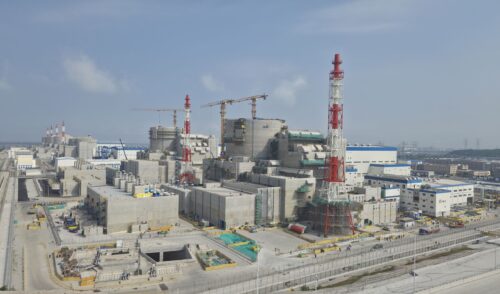
The document provides for the construction of two VVER-1000 reactors, with the possibility of adding two more in the future. The project is based on the Russian technology that has already proven its efficiency and safety in Russia, as well as in China (the Tianwan NPP) and India (the Kudankulam NPP). The large-scale nuclear plant may be built on the same site where Rosatom is currently constructing a 330 MW small modular reactor (SMR) facility.
“Rosatom is proud to serve as Uzbekistan’s strategic partner in developing nuclear energy. We keep expanding the scope of our cooperation. While continuing the construction of an SMR plant in the Jizzakh Region, we are taking an important step forward with the VVER-1000 nuclear power plant project. Combining both small and large nuclear facilities has the potential to create a powerful low-carbon energy cluster in Uzbekistan, meeting growing electricity demands and laying the foundation for industrial and technological growth across the country,” said Alexey Likhachev. He also emphasized that Rosatom was making strong progress on the SMR project and had already begun manufacturing reactor equipment for the first unit.
Commercial irradiation
Rosatom and Uzatom have also signed a memorandum of cooperation on irradiation of agricultural and medical products. The parties plan to build multi-functional irradiation centers in Uzbekistan.
Ionizing radiation treatment enables rapid and effective sterilization of medical equipment and is the only method capable of achieving the highest level of sterility. This process can also extend the shelf life of foods by controlling insects, decontaminating products, and suppressing harmful microorganisms, all while remaining safe for human health.
“We see significant market potential for ionizing radiation treatment in Uzbekistan and are ready to work together with our partner, Uzatom, to promote broader adoption of irradiation technologies to enhance food safety, public health, and Uzbekistan’s export capabilities,” noted Arthur Kolontaev, CEO of Rosatom’s subsidiary in charge of irradiation projects.
“The memorandum signed with Rosatom reflects Uzbekistan’s commitment to adopting innovative technologies in key sectors of our economy. Multi-functional irradiation centers will be a major step toward advancing medicine and agriculture, ensuring high quality of sterilization, extending product shelf life, and strengthening food security. This collaboration will both improve the quality of domestic products and significantly expand our export potential, opening new pathways for sustainable national development,” Uzatom director Azim Akhmedkhajaev pointed out.
Supporting women in nuclear
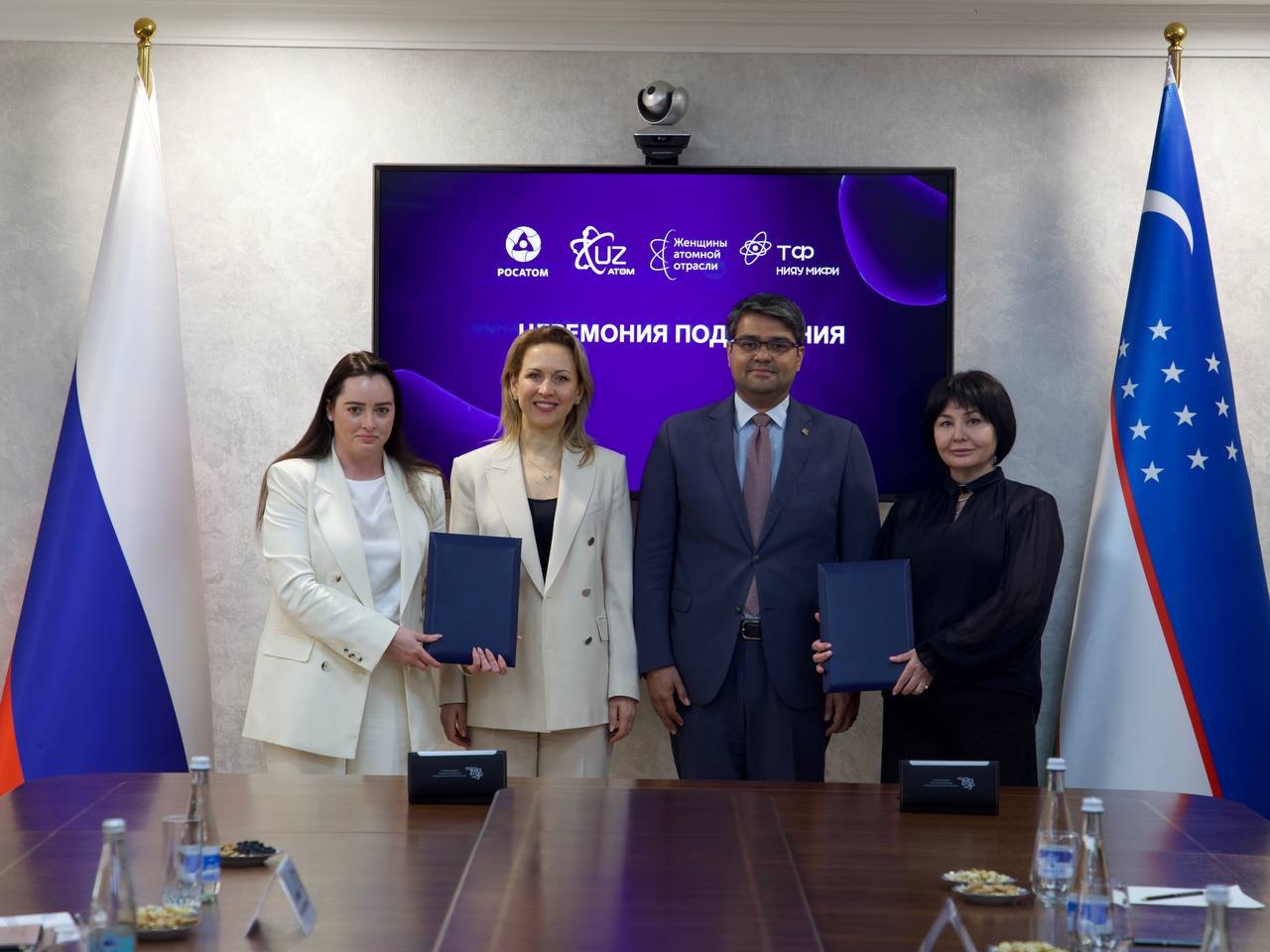
A meeting of female professionals from Rosatom and Uzatom took place at Uzatom’s headquarters. During the event, Deputy Director General for Human Resources at Rosatom Tatyana Terentyeva and Uzatom director Azim Akhmedkhajaev signed a 2025 roadmap outlining cooperation in supporting and developing women professionals in the nuclear sector. The document builds on many years of fruitful cooperation between female nuclear professionals of the two countries. It provides for a number of initiatives such as joint seminars, mentoring sessions at the Tashkent branch of the National Nuclear Research University MEPhI, virtual conferences, and other knowledge-sharing events. The participants of the meeting paid particular attention to the expansion of female leadership in the nuclear sector.
Photo by: Rosatom, RMS, Newspaper “Strana Rosatom”