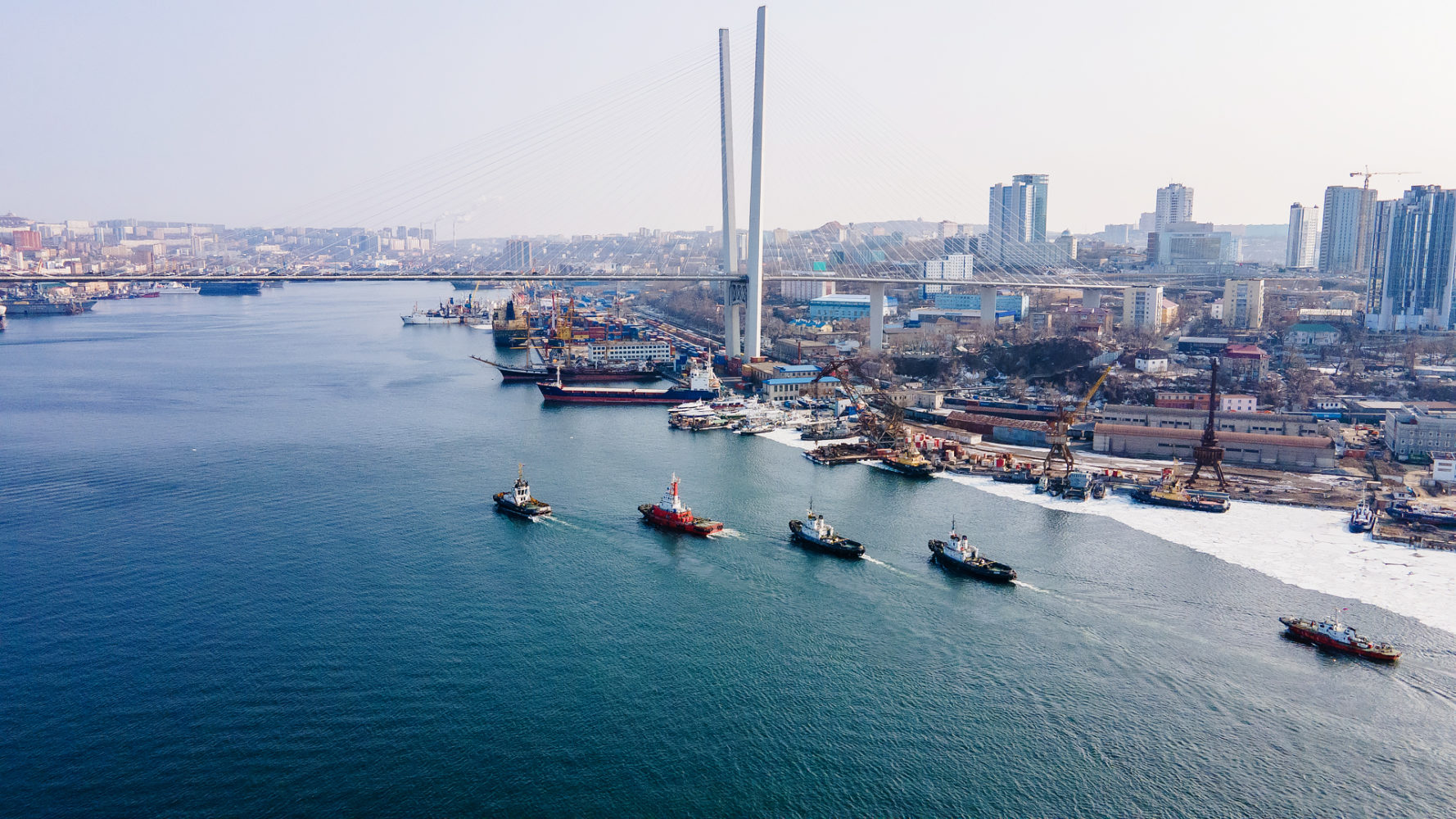
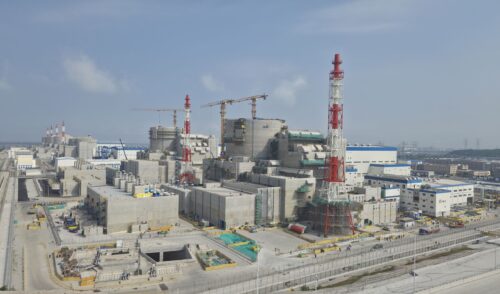
Development of the Northern Sea Route (NSR) is one of the cooperation areas between China and Rosatom. Chinese shipping companies are increasing the number of voyages along this route. Representatives of government agencies and businesses from both countries hold regular meetings focused on joint activities related to the NSR. Here’s a look at the advantages of the NSR and the progress in Russian-Chinese cooperation in this field.
The Northern Sea Route is the shortest maritime passage connecting Western Eurasia with the Asia-Pacific region, and has historically served as a key national transportation artery for Russia. This year marks the 500th anniversary of Russia’s initial exploration of the Northern Sea Route. The route stretches approximately 5,600 kilometers, from the Kara Strait to Cape Dezhnev in the Bering Strait.
The Northern Sea Route offers several advantages. First, it is significantly shorter than traditional southern routes. The Arctic route reduces travel time from Asia to most European ports by 30–40% compared to the voyage through the Suez Canal.
“Sea freight from Tokyo to London via the ‘classic’ route through the Suez Canal takes 40 days and covers 24,000 km, whereas using the NSR (Northern Sea Route) takes up to 20 days depending on the season and covers 13,000 km,” notes Lyubov Rozhkova, Managing Director of the “Supply Chain and Operations Management” practice at Rexoft Consulting.
Second, using shorter shipping lanes is a way to reduce human impact on the world’s oceans. Navigation in Arctic waters is supported by nuclear-powered icebreakers, which produce virtually no carbon dioxide emissions. Third, the NSR optimizes freight transportation costs and improves the efficiency of global logistics chains. Finally, ships traveling the Northern Sea Route face no risk of piracy.
In 2018, Rosatom became the sole operator of the NSR infrastructure. Since then, the Russian nuclear corporation has been responsible for its development, including by way of building nuclear icebreakers, ensuring navigational and hydrographic support, maintaining maritime safety systems, organizing shipping operations, and guaranteeing reliable navigation, including transit, on the NSR.
In association with Rosatom, Russian authorities have launched a federal project to develop the Greater Northern Sea Route (GNSR), a transport corridor stretching from Saint Petersburg and Kaliningrad to Vladivostok. The project provides for a consistent expansion of port capacities and infrastructure along the entire GNSR.
“The Greater Northern Sea Route federal project adds new advantages to already announced NSR initiatives. The key benefit is a seamless corridor between major logistics hubs in Europe and Asia, with no customs duties and significantly reduced cargo transit times,” comments Anna Volkova, an analyst at the consulting firm Yakov and Partners.
Cargo traffic on the NSR is growing rapidly: in 2024, it reached 37.9 million tonnes, exceeding 2023 levels by more than 1.6 million tonnes. Also in 2024, a record number of 92 transit voyages were completed.
Nuclear icebreakers for year-round NSR operations
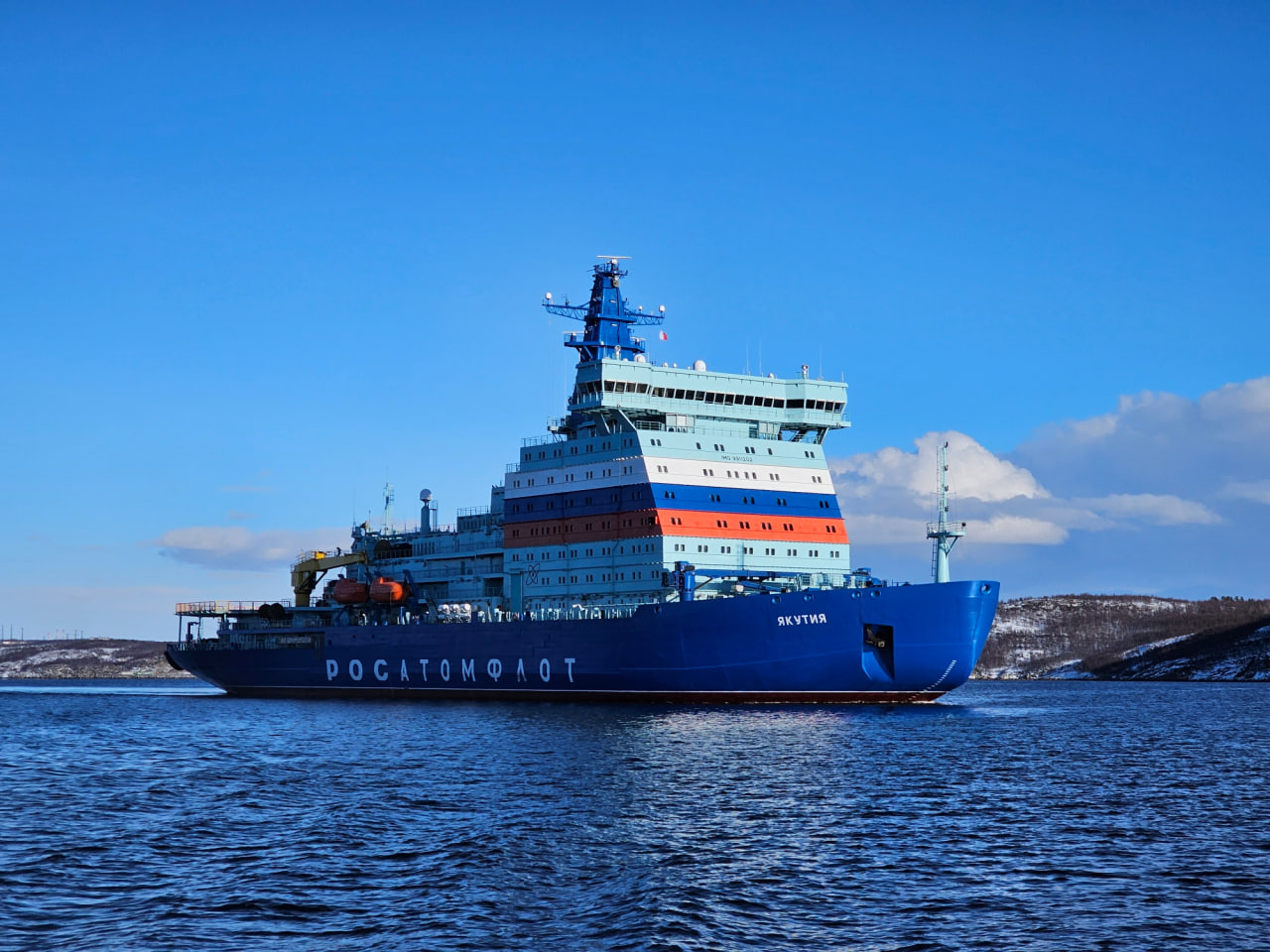
For much of the year, the Arctic Ocean is icebound, requiring icebreaker escorts for safe navigation. Russia is the world’s only country with a nuclear-powered icebreaker fleet operated by Rosatom’s subsidiary Atomflot.
The nuclear icebreaker fleet currently consists of eight vessels, including the newest and most powerful Project 22220 icebreakers. Capable of breaking through ice up to three meters thick, these vessels are powered by two RITM-200 reactors, each with a thermal capacity of 175 MW.
Four more icebreakers are currently under construction, including Rossiya, the first vessels of the Project 10510 series. It will be equipped with two RITM-400 reactors and will be capable of breaking through ice up to four meters thick. Rosatom’s mechanical engineering division has already produced the first RITM-400 unit.
Russia-China collaboration
Global interest in the NSR is growing. “Today, China is the key importer of goods transported via the NSR. China and India as major consumers of oil and gas, and Southeast Asian countries stand to benefit the most from participating in this new transport corridor. Russian President Vladimir Putin has emphasized that Russia welcomes interested nations to directly participate in developing the NSR,” Anna Volkova says.
Rosatom continues to expand and strengthen cooperation with China in this area. In 2024, one of Rosatom’s subsidiaries and a Chinese shipping company signed a memorandum of intent to set up a year-round container shipping line between Russian and Chinese ports using the Northern Sea Route. A joint venture was established to design and build high-ice-class container vessels and jointly operate the Arctic container line.
In 2023, another Chinese shipping company purchased vessels for container shipping on the NSR, trained crews to operate them, and completed the first seven voyages. In 2024, that number doubled.
In July 2025, a new phase of the Russian-Chinese Ice Silk Road 2025 container line project started as the first vessel embarked on an official voyage along the NSR, traveling from Lianyungang to Arkhangelsk.
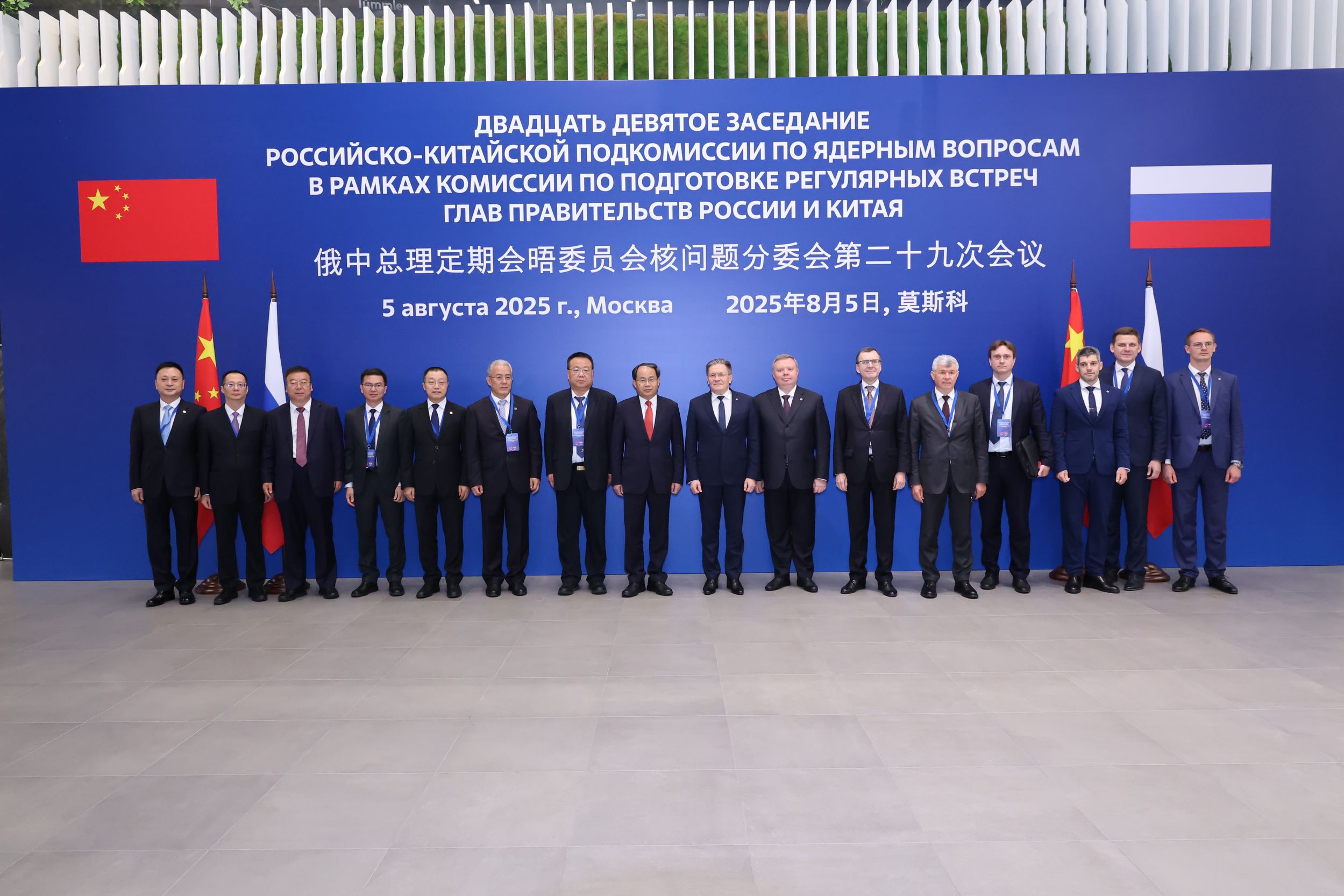
Also in 2024, Russia hosted the first meeting of the Northern Sea Route Cooperation Sub-Commission of the Russia-China Commission for the Preparation of Regular Meetings between the Heads of Government. Vladimir Panov, Rosatom’s special representative for Arctic development and Russia’s secretary of the Sub-Commission, outlined key areas of collaboration. These include maritime safety, planning and boosting cargo traffic on the NSR, promoting logistics development, and exchanging information on ice conditions, weather, and other factors. The Sub-Commission’s first meeting in November 2024 was attended by China’s Minister of Transport Liu Wei and Rosatom Director General Alexey Likhachev. Liu Wei noted that both parties had reached several important agreements on joint work in the future.
Young people from China take active part in Rosatom-organized scientific and educational initiatives in the Arctic. In 2024 and 2025, young Chinese nationals joined the international Icebreaker of Knowledge project, traveling to the North Pole aboard the nuclear icebreaker 50 Let Pobedy.
Photo by: Rosatom, Atomflot, FESCO