An unparalleled multi-purpose fast-neutron research reactor (abbreviated MBIR) is under construction in Russia. Its experimental and technological capabilities will expand research into closed nuclear fuel cycle technology, enable material studies and other tests. An international consortium is being established, whose members will gain access to experiments on MBIR. China is considering the possibility of joining the consortium.
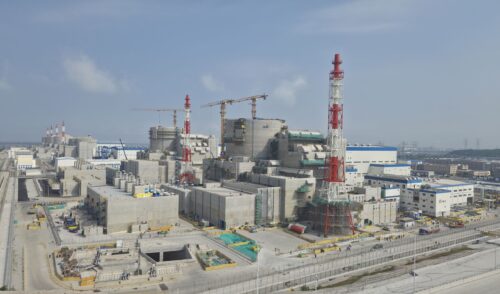
MBIR is the largest research reactor currently under construction in the world. It is being built in Dimitrovgrad at the site of the Research Institute of Atomic Reactors (RIAR, part of Rosatom’s research division). MBIR has 150 MW of thermal power and 55 MW of electric power—exceptionally high figures for a research reactor.
Beyond its record-breaking power, MBIR boasts other unique features. For example, its extremely high neutron flux density of 5.3×10¹⁵ neutrons/(cm²·× s) will allow scientists to study the behavior of materials in a relatively short time, whereas other nuclear facilities would require decades to achieve equivalent radiation exposure.
Another distinctive feature of MBIR is its ability to accommodate several independent loop units with different types of coolants (sodium, lead, lead-bismuth, gas, and others). This will make it possible to simultaneously model operating conditions of reactors with various coolants and explore structural and fuel materials to validate Generation IV reactor concepts.
Design features
MBIR will have a three-circuit heat transfer scheme, with sodium used as a coolant for the first and second circuits and water for the third circuit. The reactor will be equipped with a steam turbine, handling systems, loop units, vertical and horizontal experimental channels, a set of research shielding chambers, and laboratory facilities.
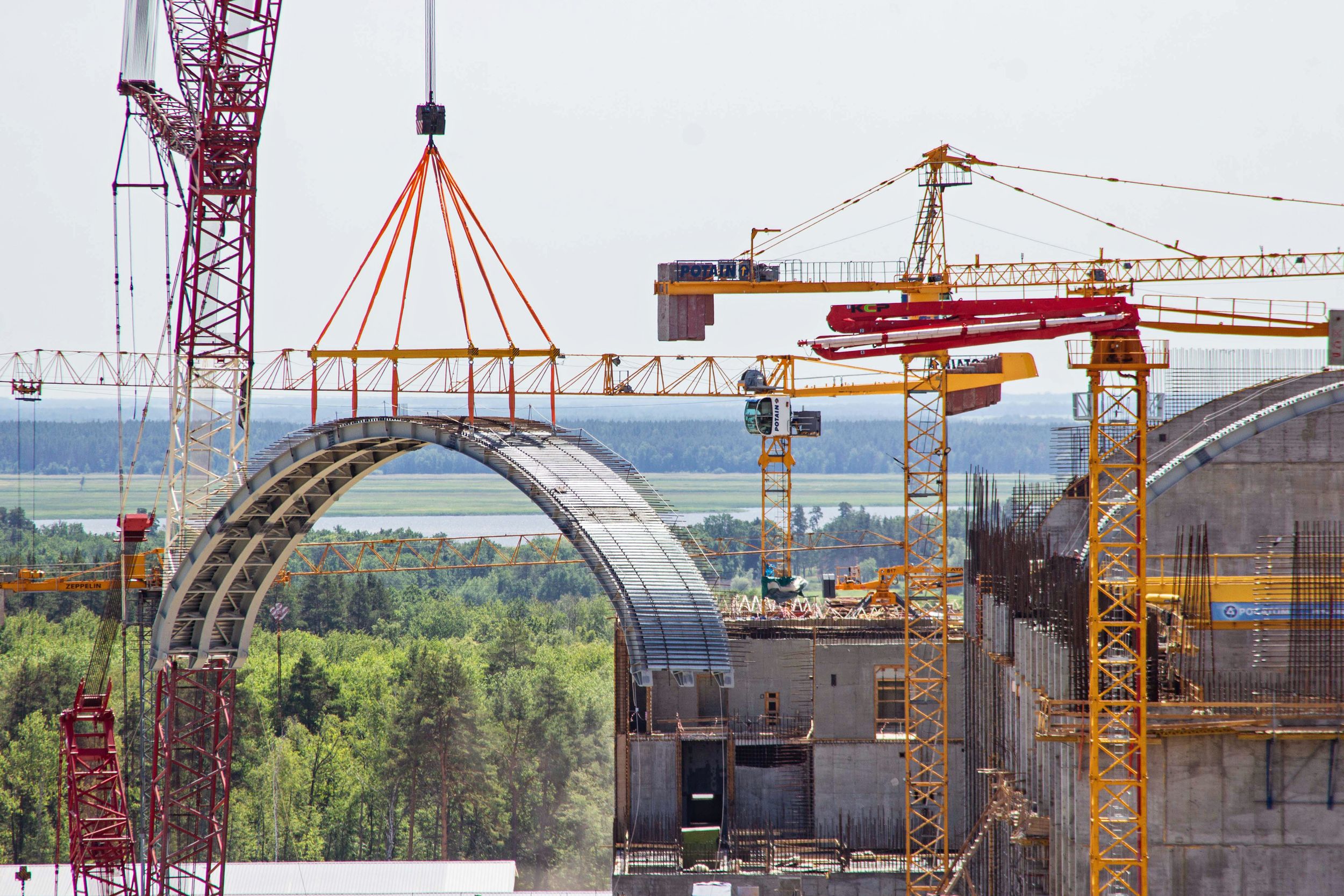
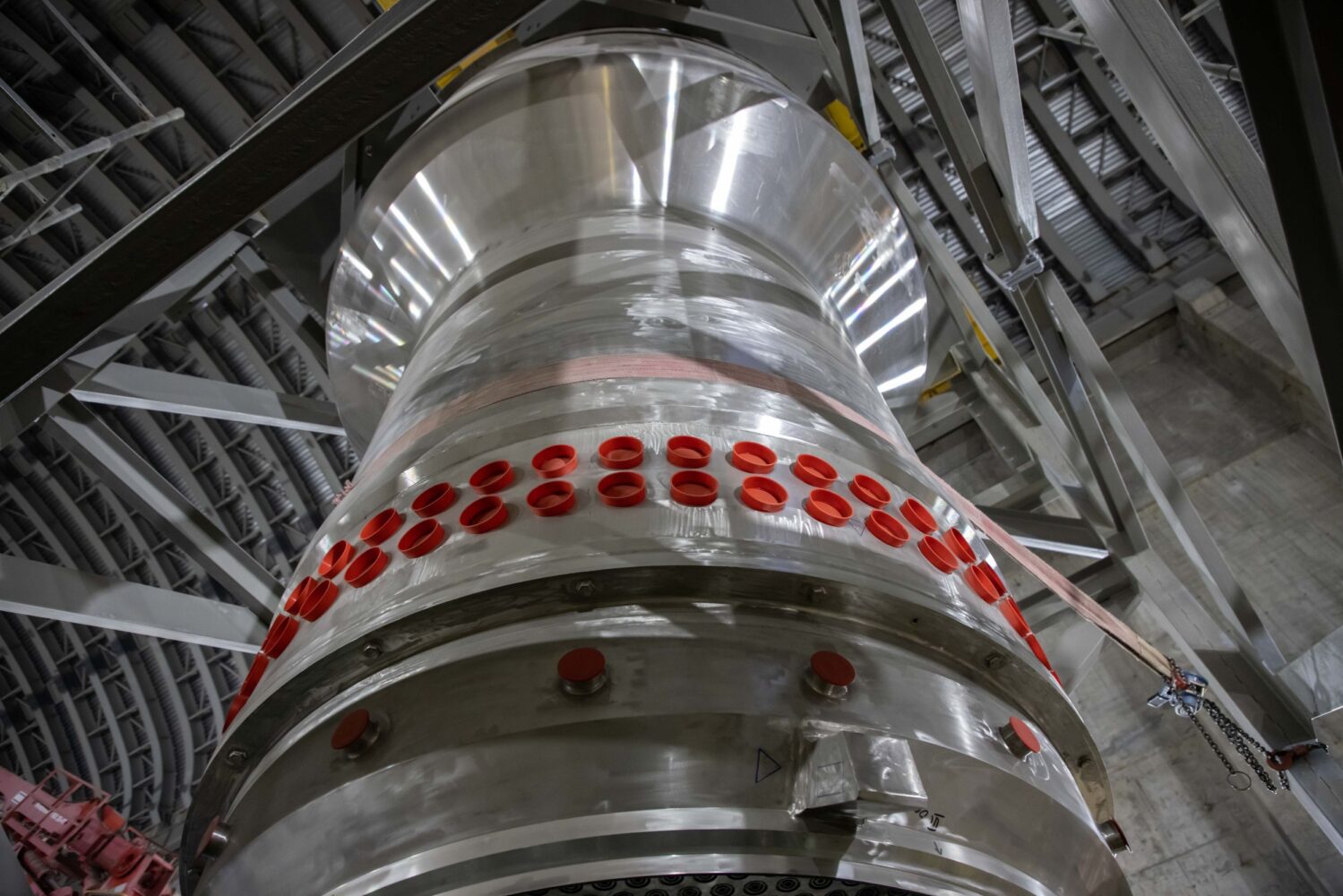
MBIR will have a special pressure vessel—its walls will be only 25 to 50 mm thick, or 6 to 12 times thinner than those of VVER. The vessel is a complex mechanism, in which rotating plugs are precisely aligned with the coordinates of the core cells.
MBIR will use mixed-oxide (MOX) fuel, a blend of plutonium oxides extracted from spent nuclear fuel and oxides of depleted uranium, a by-product of uranium enrichment.
In August last year, Rosatom manufactured fuel rods for MBIR. Containing a vibro-compacted mixture of uranium and plutonium oxides, this fuel rod design ensures high neutron flux density in the core. The fuel rods passed a series of tests for compliance with design and production documents.
Last December, Rosatom’s mechanical engineering division shipped intermediate heat exchangers for MBIR, which function to remove residual heat from the reactor core. These 40-tonne oversized items are one of their kind—their machining, assembly, and welding required pinpoint accuracy.
Research
MBIR will replace BOR-60, a 60 MW fast neutron reactor. The new reactor will continue in-pile and post-irradiation material studies and will be used to validate production technologies for radioactive isotopes and modified materials. Most importantly, MBIR will expand studies into closed nuclear fuel cycle technologies. It will also support the validation of solutions for the fourth generation of nuclear facilities.
In 2021, a national program for advanced experimental research at MBIR was approved for the period of 2028–2040.
In addition to conventional fields of study, the program provides for potential non-energy applications, such as conducting biomedical research. MBIR will facilitate boron neutron capture therapy for treating certain cancers, as well as neutron doping of silicon for its subsequent use in electronics.
Significance for global science
MBIR’s unparalleled experimental capabilities have generated strong interest from the global scientific community. The reactor will be operated by a recently established International Research Center (IRC), which is intended to become a global scientific platform for applied and fundamental research. Currently, more than 20 countries and organizations are already involved in the project. “Active negotiations are underway with China, Uzbekistan, and Belarus. We expect them to join the consortium by the end of this year,” said Vasily Konstantinov, CEO of MBIR IRC Consortium Leader at the Eurasian Economic Forum 2025.
To ensure guaranteed access to reactor resources, accommodate interests of all IRC partners, and deliver research programs, the IRC will function as a consortium whose primary scientific body—the advisory council—brings together scientists from around the world. Council members will define and coordinate key research programs, and monitor their implementation. The council will include several specialized committees covering individual fields of research, such as closed nuclear fuel cycle technology, materials and fuel studies, safety, code validation, and non-power applications of nuclear technology (nuclear medicine, fundamental research, modification of materials).
By joining the consortium today, partners will gain access to the research platform and have the opportunity to take active part in developing experimental programs for MBIR. The programs themselves—from testing advanced fourth-generation nuclear technologies to developing innovative methods for silicon doping and producing valuable isotopes—will begin in the next decade.
Photo by: NIIAR (Research Institute of Atomic Reactors) JSC