Jorge Matheus Pereira is a participant of the Russian Nuclear Education Ambassadors (RNEA) Program. The ambassadors are foreign students enrolled in Russian universities who provide guidance to prospective students from other countries and promote knowledge about the nuclear industry. In this interview, Matheus discusses his career choice, studies at St. Petersburg State University, and prospects for nuclear energy development in his native Brazil.
I chose engineering and technology and eventually found my way to nuclear energy because I have always strived to combine research and engineering studies with the objectives of international cooperation.
What I like most is that this field requires a holistic interdisciplinary approach: fundamental knowledge, technological thinking, and international communication are all equally important here. I was profoundly influenced by the words of Soviet physicist Igor Kurchatov: “A human life is not eternal, but science and knowledge cross the thresholds of centuries.”
Beyond power engineering, I pay close attention to educational and scientific initiatives; however, the nuclear industry remains the focal point of my professional interest. I am convinced that nuclear technology is the future, and I view everything I do outside my main studies as a way to broaden my understanding of the industry and strengthen international cooperation and personnel training.
Studying in Russia
Russian education, especially in physics, energy, chemistry and engineering, is distinguished by strong fundamental training, a systematic approach, and a focus on large technological facilities. Furthermore, Russia possesses unique experience in the nuclear industry, from fast neutron reactors to a strong school of theoretical physicists.

Admission required much study; I only got in on my second attempt. The fast pace and scientific terminology were the most difficult aspects of the initial stage of my studies. The Russian language itself proved challenging: I was surprised by its phonetic system and grammar, despite the fact that I was born in a Russian community.
Russia combines tradition and modernity: respect for historical memory, attention to science and culture, and a special atmosphere of hospitality in the regions. Everything in Russia is magnificent!
Work and international projects
I work at the Coordinating Council of Russian Compatriot Organizations in Brazil. I also participate in international initiatives related to nuclear energy and technological projects for the young as a Russian Nuclear Education Ambassador. The RNEA program has provided me with exceptional opportunities, such as participation in major industry forums, contacts with engineers and researchers, and nuclear awareness promotion among young people in developing countries.
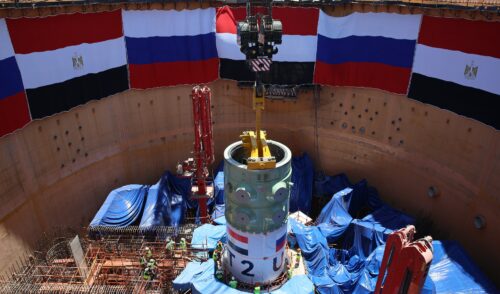
This experience has allowed me to build professional connections, gain access to valuable educational programs, and form a systemic understanding of the industry at an international level. Thanks to the program, I took part in the International Youth Forum on Green Nuclear Technologies in Egypt, spoke at the Russia-Africa Raw Materials Dialogue, delivered a lecture at the Federal University of Rio de Janeiro (UFRJ), and attended the Obninsk Tech School and the International Winter School on Radiochemistry at Lomonosov Moscow State University.
The future
Brazil’s nuclear industry is on the rise. Currently, the country needs personnel trained in reactor technologies, safety analysis, the fuel cycle, materials science, and engineering of complex thermophysical systems. By strengthening cooperation with Russia, my country could occupy a much more prominent place in the regional nuclear energy sector.
In 20 years, I see myself as a nuclear energy professional working at the intersection of engineering, science diplomacy, and personnel training. My dream is to work at Rosatom. I would like to contribute to the creation of educational ecosystems for training the next generation of engineers and to the development of technologies that enhance the safety and efficiency of nuclear energy. I believe that our future is nuclear, and I know that Rosatom is doing everything right.
Advice for those choosing the same path
Success in the nuclear sector requires discipline, the ability to make data-driven decisions, and the skill to work in a multicultural environment. A willingness to learn plays a major role as the nuclear industry evolves very quickly. Communication skills are also important, especially if the work involves international projects and awareness promotion.
Focus on fundamental sciences, learn languages, strive for international internships, participate in research projects, and do not be afraid of complex technical disciplines. And most importantly, treat the nuclear industry as a long-term professional path requiring responsibility and systemic thinking.
Photo by: From the personal social media accounts of the article’s hero