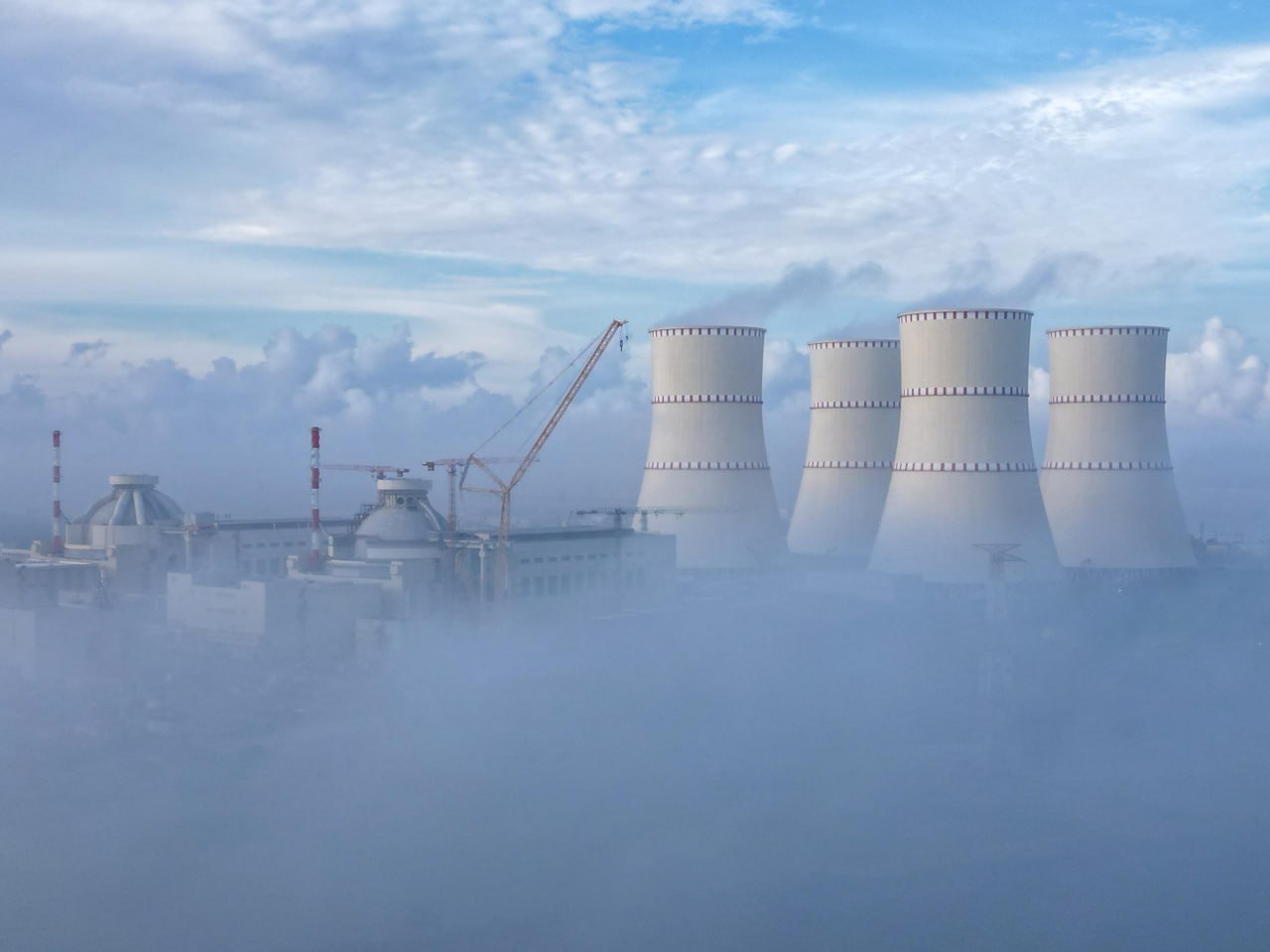
The year 2025 brought Bangladesh closer to a historic event, the launch of its first nuclear power plant. The pace of work was intense at the site of Rosatom-led construction of the Rooppur NPP, with Unit 1 undergoing a series of crucial tests that demonstrated its reliability and safety. Meanwhile, the country continued to strengthen its national nuclear industry. Let’s revisit the key milestones of the year.
In August, Unit 1 of the Rooppur Nuclear Power Plant passed a crucial stage of cold and hot functional tests in preparation for the commissioning operations: steam heated to 200°C was blown at a pressure of 2.0 MPa through the fresh steam pipes in the turbine building. This process aims to clean the steam lines of any residual moisture, industrial contaminants, and mechanical particles.
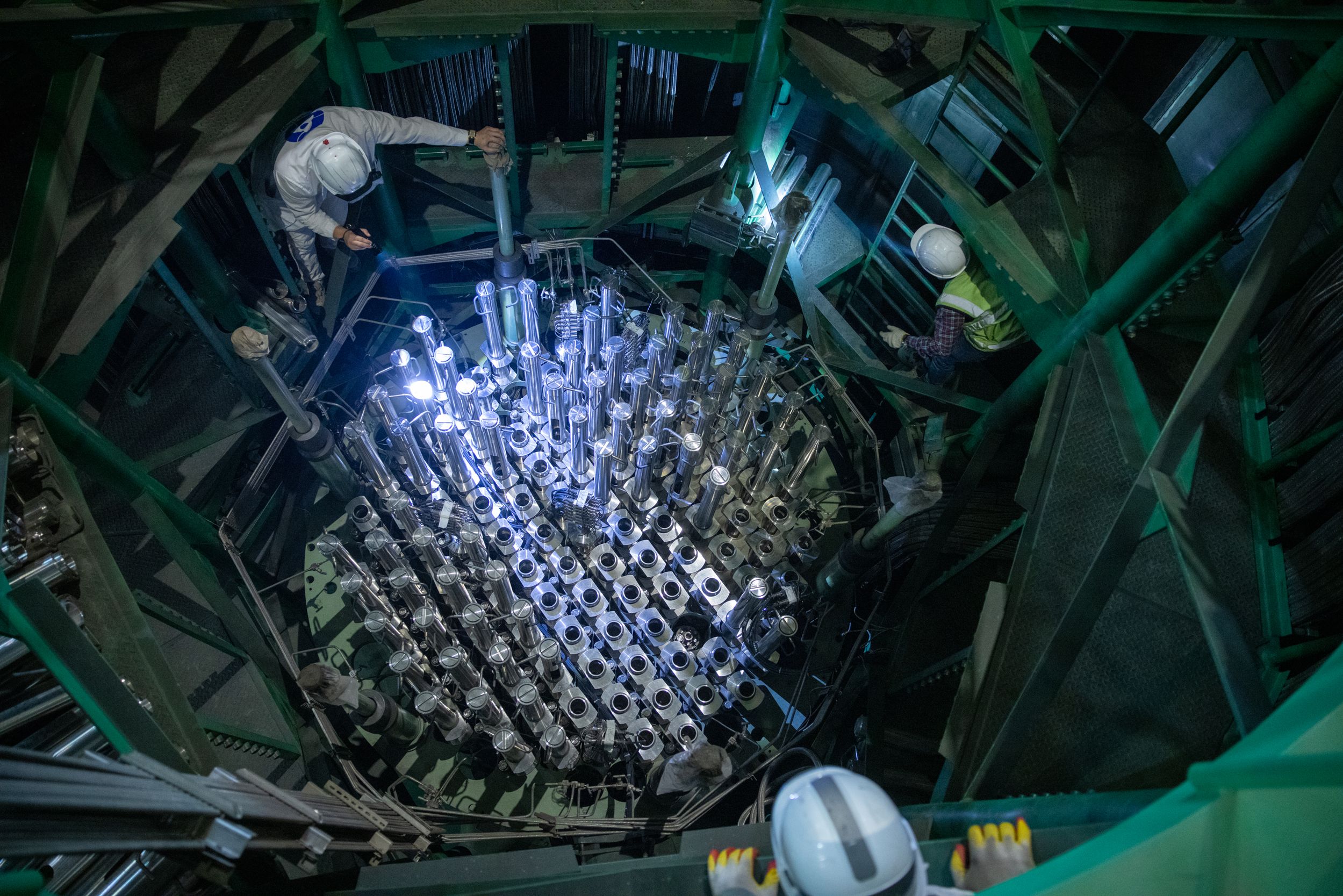
The preceding month, July, saw the successful hot functional testing of the reactor at Unit 1, a pivotal step toward first criticality. During the tests, the reactor was gradually heated up, while engineers methodically assessed the performance of key components — pumps, pipelines, and heat exchangers — under these conditions. Hot functional testing demonstrates whether the reactor systems are ready to function under near-real conditions and how precisely all mechanisms operate.
Earlier at Unit 1, engineers conducted pressure and strength tests on the reactor containment building. The tests confirmed full compliance with design specifications and the highest safety standards.
In June, step-up transformers and auxiliary transformers were successfully commissioned. The step-up transformers are among the most critical components of the power unit: they convert 24kV voltage generated by the turbine generator into 400 kV, enabling electricity to be fed into the national grid.
In March, hydraulic pressure tests were completed on the primary coolant systems and equipment of Unit 1, and the turbine was installed. Technicians performed control checks to confirm the alignment accuracy and high quality of the turbine build. Concurrently, a 50-tonne overhead crane for Rooppur Unit 2 was shipped from Russia. Advanced 16-tonne and 32-tonne electric gantry cranes had previously been delivered to the port of Novorossiysk (Russia).
Simultaneously, an all-around emergency response drill was launched at the Rooppur construction site. Response teams practiced actions to localize and mitigate the consequences of a simulated radiation accident on the plant’s premises.
World Atomic Week
In late September, a delegation from Bangladesh participated in the World Atomic Week (WAW) international forum held in Moscow. The country’s representatives discussed the development of conventional nuclear power and learned about Rosatom’s new business ventures, while young professionals — graduates of Rosatom’s partner universities — had the opportunity to network with peers from around the world.
Bangladesh is the second South Asian country set to have its own nuclear power plant. Stable and reliable nuclear energy is essential for the nation, noted Sama Bilbao y León, Director General of the World Nuclear Association (WNA): power consumption in Bangladesh is growing very rapidly, at about 7% per year. Ensuring universal access to electricity is critical for accelerated economic development. Therefore, the launch of the Rooppur NPP with two reactors totaling 2,400 MW will be a game-changer. “Rooppur represents a revolutionary opportunity for Bangladesh. It is a story of success!” Bilbao y León concluded.
In addition to participating in the WAW business program, forum guests eagerly explored the exhibition dedicated to the Rooppur project. They learned about key project milestones and also discovered Bangladesh culture and traditions. Furthermore, the visitors had the chance to sample dishes from traditional Bangladeshi cuisine in the Nuclear Power Countries’ Cuisines themed zone.
Educational initiatives
In December, Bangladesh hosted a large-scale Science Festival. Its main attraction was an “atomic bus” – a mobile educational hub designed with a popular science theme. Representatives from the Bangladesh Atomic Energy Commission and Rosatom toured towns in the Pabna district, meeting with local residents, answering their questions, and dispelling common myths about nuclear energy.
In October, over 600 university and high school students from Bangladesh took part in the final of the Precise Energy Olympiad, an international competition organized with Rosatom’s support. The competition covered three main subject areas: physics, chemistry, and mathematics, and also included a creative team contest focused on solving real-world engineering tasks.
In August 2025, the sixth Rosatom-supported Icebreaker of Knowledge expedition for students aged 14–16 set sail. The nuclear icebreaker 50 Let Pobedy carried 65 students, including a representative from Bangladesh, to the North Pole. All of them were winners of open Russian and international competitions. Bangladesh submitted a record 841 applications for the competition, which saw around 4,000 participants from 20 countries.
“I first heard about this expedition from my school teacher and immediately decided to enter the competition. Fortunately, I won the chance to travel to the North Pole. I was deeply inspired to be here,” Mahmoud Al Abdullah, an expedition member from Bangladesh, shared his story.
In April, members of the Bangladeshi team excelled at the annual AtomSkills championship for working and engineering professions, securing 1st, 2nd, and 3rd places in various categories. In 2025, AtomSkills brought together over 2,000 professionals. For five days, representatives from 16 Rosatom divisions, major companies’ teams, and students competed in the professional and student leagues for the title of the best in their occupation.
Photo by: Rosatom State Corporation, ASE JSC, “Knowledge Icebreaker” educational project