The launch of the small modular reactor (SMR) project was the headline, but not the only, event for Rosatom and Uzbekistan in 2025. Their partnership is developing comprehensively, encompassing large-scale power generation, scientific research, radiation technologies, and educational programs. Read our review for details.
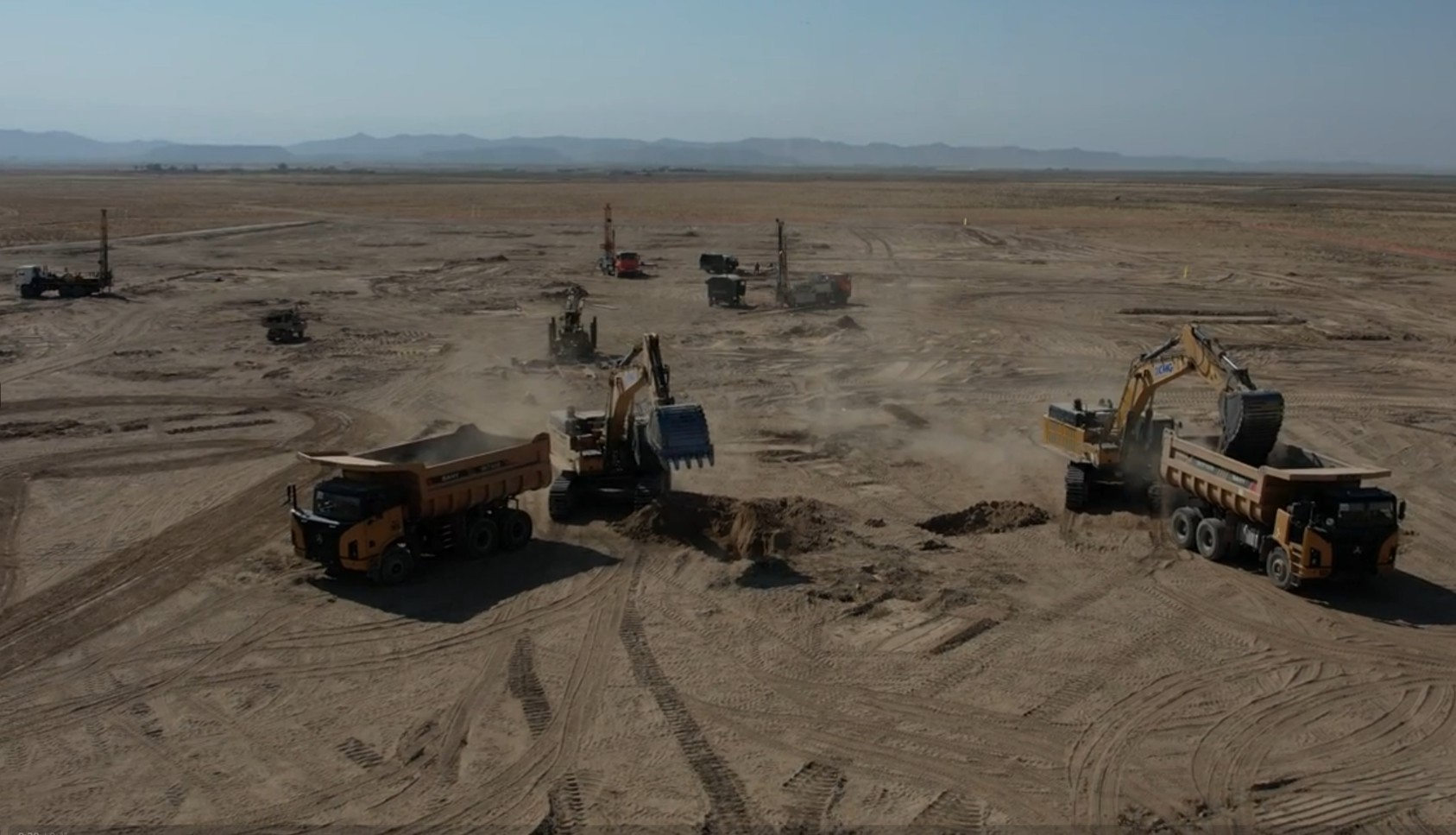
In November, Rosatom Director General Alexey Likhachev and UzAtom Director Azim Akhmedkhadzhaev kicked off on-site works for a small-scale nuclear power plant to be built in Uzbekistan’s Jizzakh Region. It involves excavating a pit for the foundation of a power unit with a RITM-200N reactor to be built in the Farish district of the Jizzakh region to a Russian design.
“Just as in all our international projects, we strive to increase local content in the construction of this SMR plant. Much work will be done by subcontractors from Uzbekistan. Rosatom will build a station with a service life of at least 60 years and will provide all necessary support during its operation. We are looking forward to many decades of fruitful and mutually beneficial cooperation,” Alexey Likhachev emphasized.
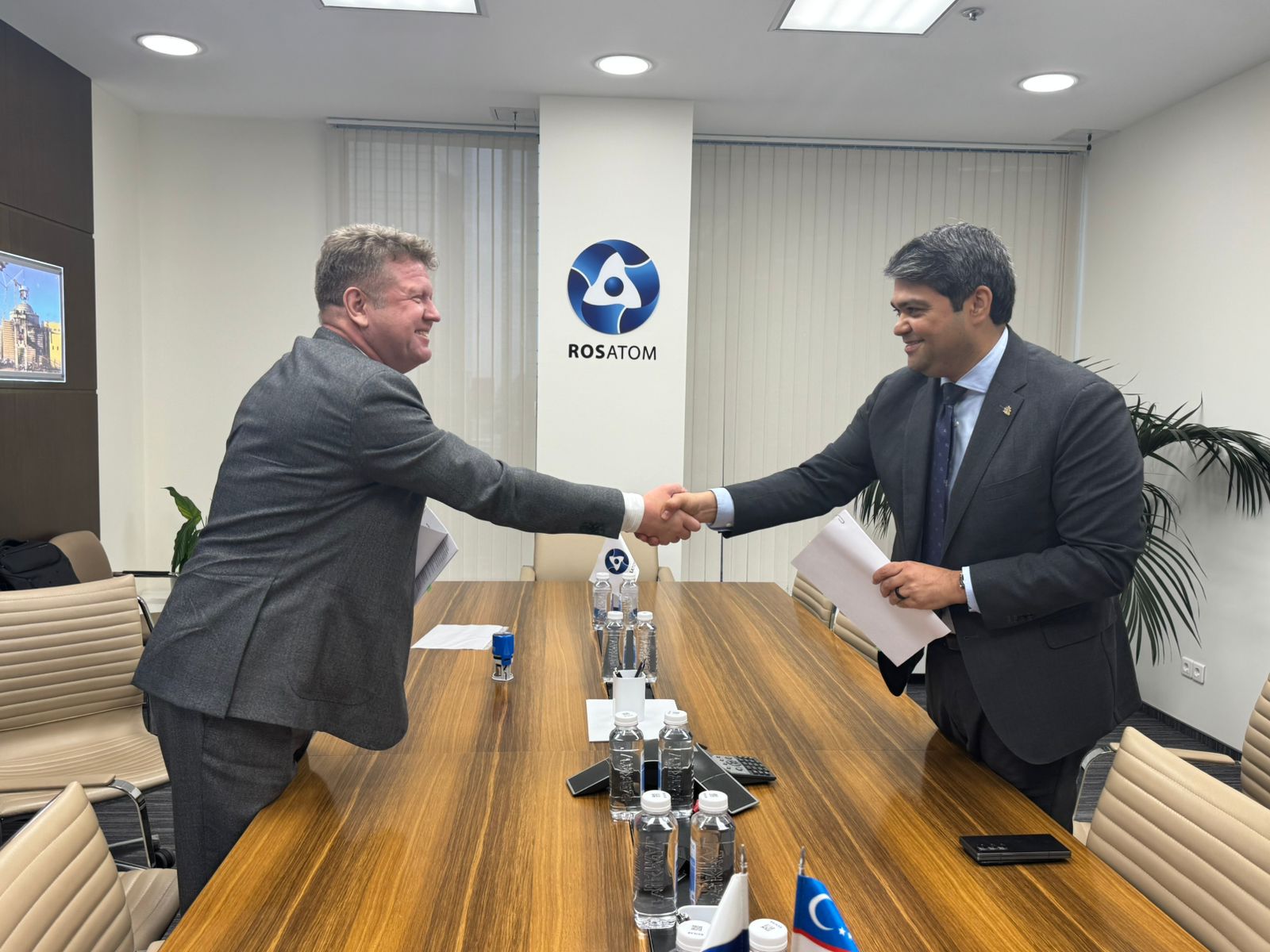
Earlier Rosatom and UzAtom signed documents at the World Atomic Week international forum to expand cooperation in the nuclear sector. The parties agreed on a new configuration for the nuclear power plant project in Uzbekistan. The final design of the nuclear power plant provides for the construction of two large power units with Generation III+ VVER-1000 reactors and two 55 MW power units with RITM-200N reactors. This will be the world’s first facility to feature both high- and low-capacity reactors on the same site. Rosatom and UzAtom also signed term sheets for the contracts to supply fuel for both the large and small nuclear reactors.
“We are launching an unprecedented energy project in the very heart of Uzbekistan, in the Jizzakh Region. We are not just building the region’s first nuclear power plant—we are pioneering an innovative solution for the future. Our project boldly combines cutting-edge small modular reactor technologies with time-tested large-scale nuclear energy solutions,” said Azim Akhmedkhadjaev, Director of UzAtom.
Research and development
In July, Russia and Uzbekistan signed an agreement on cooperation in international scientific research. The Nuclear Physics Institute of Uzbekistan’s Academy of Sciences joined a consortium that will operate MBIR, a Generation IV multi-purpose research reactor.
MBIR will be the world’s largest research reactor. It is being built in Dimitrovgrad (Russia) at the site of the Research Institute of Atomic Reactors (RIAR, part of Rosatom’s research division).
MBIR will be operated by the International Research Center (IRC), which is intended to become a global platform for applied and fundamental research. Currently, more than 20 countries and organizations are already involved in the project. The IRC functions as a consortium By joining the consortium, scientists from Uzbekistan will gain access to the research platform and have the opportunity to take active part in developing the experimental program for MBIR.
“We are proud to become part of this one-of-a-kind MBIR consortium. With its Generation IV reactor as an essential tool, our scientists will be able to do cutting-edge research, advancing future-oriented fields of study,” emphasized Ilkham Sadykov, Director of the Nuclear Physics Institute of Uzbekistan’s Academy of Sciences.
Commercial irradiation
In June, Rosatom and UzAtom signed a memorandum of cooperation on irradiation of agricultural and medical products. The parties plan to build multi-functional irradiation centers in Uzbekistan.
Ionizing radiation treatment enables the rapid and effective sterilization of medical devices, being the only method capable of achieving the highest level of sterility. As for food products, irradiation extends their shelf life, ensures disinfection and decontamination, and suppresses pathogenic microorganisms. It does not alter the taste of food and is entirely safe for humans.
Educational initiatives
In April, Rosatom announced the results of its international scholarship contest for foreign master’s students specializing in nuclear and related professions. More than 50 students took part in the selection process. Among the winners were five master’s students from Uzbekistan. One of the winners, Hasan Alovitdinov, who studies at the Obninsk Institute for Nuclear Power Engineering, links his future with a nuclear power plant in Uzbekistan. “I did not expect my work to be appreciated so highly, but I put 100 % effort into it. It was a valuable experience that shows that my knowledge and efforts bring results. Special thanks to the professors who taught us because their contribution to our training is invaluable,” the student said.
Also in April, the Uzbekistan branch of the National Nuclear Research University (MEPhI) in Tashkent (MEPhI Tashkent) opened admission to a new Informatics and Computer Science program. Along with the new IT program, MEPhI Tashkent introduced an educational program on Medical Physics and Nuclear Medicine. This program is focused on training medical physicists who will specialize in diagnostics and treatment of oncological diseases.
In the summer of 2025, the Tashkent Branch of MEPhI graduated students for the third time. Forty-four fresh graduates successfully defended their theses. The final papers covered a wide range of topics, from nuclear technology to thermal and hydropower engineering and renewable energy sources. Examination board members noted that the quality of the theses remained high.
Photo by: Rosatom State Corporation, Rosatom International Network, AEM-Spetsstal