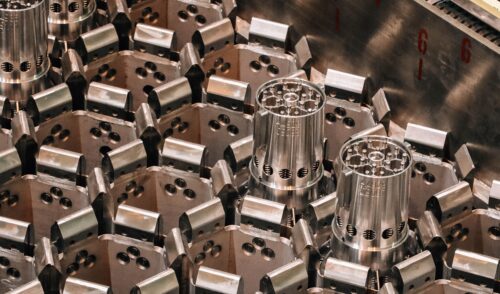
The Russia-made irradiated nuclear fuel damaged at Paks NPP in 2003 has been returned to Russia for subsequent reprocessing. The fuel was damaged when the western-design equipment was used to handle it at the plant.
The repatriation of fuel from Paks NPP was carried out in frames of a number of intergovernmental agreements. The fuel was shipped by rail in full compliance with the international and Russian requirements for nuclear material physical protection during shipment. The operation was carried out following a positive statement issued by the State Environmental Expert Review Authority.
The fuel was delivered to one of the largest enterprises of the Russian nuclear industry, i.e. Production Association Mayak (Ozersk, Chelyabinsk Region) where it will be subsequently reprocessed using the adopted technology. Some of the cash (about US$ 2.2 million) to be received under this foreign trade deal will be spent to finance social and environmental measures in the territory of Chelyabinsk Region.
Help from Russian nuclear experts
The completed shipment of damaged nuclear fuel marked the end of the multi-year joint effort of the Hungarian and Russian specialists aimed at eliminating consequences of the accident resulted from the use of western equipment.
In April 2003 Russia promptly responded to a request of the Hungarian leadership to assist in retrieval and subsequent reprocessing of irradiated fuel assemblies at Paks NPP Unit 2. The fuel assemblies were damaged in the course of washing operation that used the technology and equipment of Framatome ANP (France). The event was rated Level 3 as per the international scale INES (“serious incident”).
That time, the Fuel Company of ROSATOM TVEL won the international tender for recovery works. The works were executed using unique technologies and special equipment designed with participation of several entities of Russia’s nuclear industry.
In January 2007 specialists from the FC TVEL successfully completed the recovery activity project at the plant. The project implementation allowed the Hungarian party resuming commercial operation of Paks-2 within the shortest time possible, while the Russian party gained unique competences in the area of radiation safety. Besides, the joint work to eliminate consequences of this serious incident strengthened Russian-Hungarian nuclear cooperation; several Russian nuclear workers were given state awards of the Republic of Hungary.
Paks NPP is the only nuclear power plant in Hungary. It was built in 1982-1987 with participation of soviet specialists. The plant operates four VVER-440 reactors totaling 1860 MW capacity. The plant generates about 40% of Hungary’s electricity. Over the entire operating life Paks NPP has used Russia-made fuel. The existing contract between JSC TVEL and Paks NPP for nuclear fuel supplies was signed in 1999 and is valid until the end of service life of the nuclear power plant (considering planned life extension until 2037).
In January this year Russia and Hungary signed an intergovernmental agreement on building two new reactors to the Russian technology at this NPP, which is located 100 kilometers from Budapest. For these purposes ROSATOM will give Hungary a loan of € 10 billion. During this year, the parties intend to prepare main documents related to construction of the new reactors.
The European sanctions should not ruin the agreements of the parties. The Hungarian Government comes out against economic pressure on Russia. Prime Minister of Hungary Viktor Orb?n intends to strive for revision of the EU’s policy of sanctions against Russia. “The policy of sanctions pursued by the West, i.e. by us, which has become the necessary result in response to Russia’s actions, does more harm to us than to Russia,” Orb?n said in his interview with a radio station. “In politics it is called ‘shoot in the foot’”, he said. He also stated that he would seek for ways, which would allow rethinking of such policy of the West.
“I will do my best – everybody knows about Hungary’s influence, so the capabilities are clear – but I’m looking for partners to change the EU’s policy of sanctions, which, I think, was not sufficiently thought through,” he emphasized.