ROSATOM and the IAEA have implemented a joint mission to train specialists of Bangladesh in design, construction and operation of nuclear power plants. The program is based on the “soft coordination” concept developed by the IAEA. Under this program the leadership of the Bangladeshi nuclear program is trained in various aspects of nuclear power. The training is carried out in the Central Institute for Continued Education and Training of ROSATOM (ROSATOM-CICE&T). They take part in events organized by ROSATON and visit its sites.
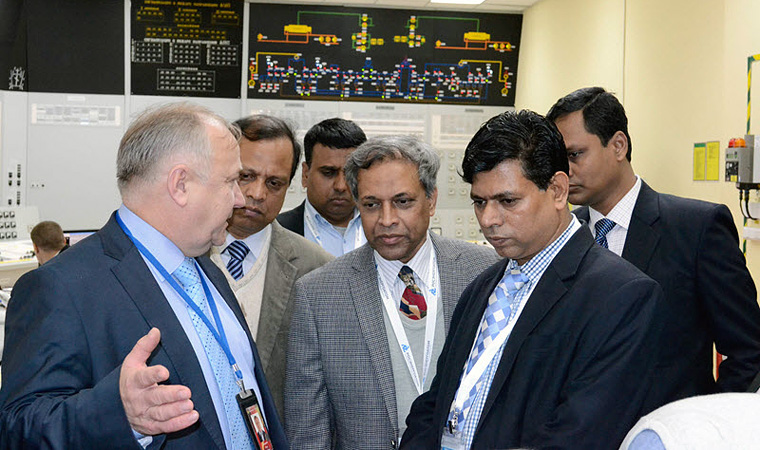
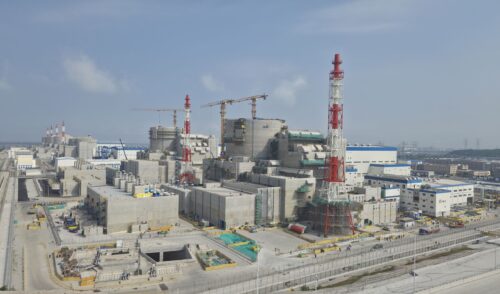
The preparedness to development of domestic nuclear power and impressing half-a-century operating experience of Novovoronezh NPP reactors were the theme of the recent technical tour the delegation of the People’s Republic of Bangladesh made there. The delegation visited the operating reactor of Unit 5, the construction sire of Unit 6, full-scale simulators of VVER-1000 and VVER-1200, and got competent answers from the top managers and specialists of the plant.
“We have been confirming safety of the VVER technology for half of the century,” Novovoronezh Plant Manager Vladimir Povalov addressed the tour participants. “Over these years our impact on the environment has not exceeded guidelines established by the state. We are proud of the fact that our team played the key role in the world nuclear power development and we hope to retain this technological leadership,” he said.
“We are stricken with the level of competence of your specialists. We have seen the reactor in operation and the plant under construction. It is very useful for us. We saw all these here in Russia for the first time. I would like to thank your leaders for the openness and heartily welcome,” said Director of Ruppur I NNP construction project Akbar Mohammad Shoukat.
To remind, the intergovernmental agreement between the Russian Federation and the People’s Republic of Bangladesh concerning the construction of NPP in Bangladesh was signed on November 2, 2011. “We implement this project. We have signed three commercial contracts already. The fourth contract on the pre-project work procedure and preparation of the Ruppurt NPP site for the construction start is being drafted. A joint working group has been set up, which works on all elements of this project for several years already,” Zulkvarnain Ali, the Head of Planning and Development Department and Member of the Bangladesh Atomic Energy Commission, said.
The representatives of the People’s Republic of Bangladesh expressed hope that the signing of the contract would accelerate the transition to the direct construction of Ruppur NNP, which is planned for the end of 2015. Now, the process of identifying water sources and electricity for the future construction needs is under way.