The International Energy Agency (IEA) has released a new edition of its World Energy Report tracking investments in energy projects. IEA experts forecast that capital inflows into the global energy sector will reach USD 3.3 trillion in 2025, up 2% from 2024. Over the past five years, investment in nuclear energy has grown by 50%, and this is encouraging. However, funding for this sector is still expected to reach only USD 70 billion, which is clearly insufficient to fully unlock nuclear energy’s potential in delivering a sustainable future.
Investment outlook for the nuclear sector
According to IEA estimates, about USD 2.2 trillion will be invested this year across renewable energy generation, nuclear power, grids, storage systems, low-emission fuels, energy efficiency, and electrification combined. This is twice the investment going to fossil fuels (oil, gas, and coal).
Investments in nuclear power will exceed USD 70 billion this year, accounting for just over 2% of total energy spending, yet nuclear generation contributes about 10% of the world’s energy mix. This means the sector remains significantly underinvested relative to its output.
Worldwide investments in the electricity sector reached USD 1.4 trillion in 2024. Nuclear generation received USD 72 billion of that, largely due to funding for large-scale reactor construction projects. This suggests this year’s nuclear investments are likely to remain flat or even decline slightly compared to last year.
Looking at historical data—illustrated in an IEA chart showing investment trends over the last decade—it becomes clear that despite relative growth, nuclear investment remains minimal in absolute terms. The numbers have been low for at least a decade and, considering the aftermath of the 2011 Fukushima disaster, even longer.
Despite recent gains, USD 70 billion is alarmingly low when compared to other energy sectors. Moreover, these modest increases have not yet changed the investment behavior of key players, such as governments, global investment banks, and development institutions.
Judging by the chart in the report, recent growth in nuclear investment has come primarily from China and “other emerging economies.” We might assume this euphemism conceals construction of Russian-designed nuclear plants worldwide. Rosatom, let’s recall, is the global leader in the nuclear industry, operating in over 60 countries. Its portfolio includes 33 large reactor units across ten countries, with 22 currently under construction, and the world’s first export contract for small modular reactors (a six-unit plant in Uzbekistan).
The IEA expects increased investment in nuclear generation due to demand from major data centers, primarily in the United States, but also in India, Japan, and South Korea. Some tech companies are showing interest in building small modular reactors (SMRs), though there are also agreements for large nuclear plants. Power supply agreements have been signed recently, providing for building new nuclear facilities or restarting decommissioned plants. “A number of new agreements between developers and technology companies, backed by broad government support, is expected to boost investment in the medium term,” the report says.
However, nuclear generation may face competition from fossil-fuel power plants for investments from tech firms running data centers. “At the same time, given the lead times and uncertainties associated with nuclear and advanced geothermal, technology companies and DC operators are turning towards conventional sources of dispatchable power to ensure reliability in the short term. Hence the AI-led DC spending spree may also be ushering in a new wave of fossil-fired generation in advanced economies, the United States in particular,” the report notes. Gas-fired power plants may also come into play. “Anticipated growth in data center demand is already leading to a new wave of orders for gas turbines, particularly in the United States,” IEA experts say.
Overall, finding money for new nuclear capacity remains a challenge because major financial institutions are still reluctant to invest in the sector. Only in June 2025 did the World Bank’s board agree to lift a long-standing ban on financing nuclear energy projects. Later that month, the bank signed a cooperation agreement with the International Atomic Energy Agency (IAEA) to work together on extending the service life of existing nuclear plants and accelerating the development of SMRs.
These steps are not enough, though. First, mere approval is not sufficient as the nuclear sector needs access to cheap, low-interest loans. Unfortunately, the World Bank has only one precedent in its history of supporting nuclear generation—it was back in 1959 when it financed a nuclear power plant in Italy. Second, construction of large and medium nuclear plants was left out of support. Third, it is unclear whether other financial institutions, including reconstruction and development banks through which the World Bank channels funds, will follow suit.
Without backing from financial institutions, governments may approach decisions to build new nuclear plants, both large and small, with greater caution.
Beyond multilateral lenders, sovereign wealth funds (like those in some Asian countries) or pension funds could also step in as investors.
Finally, there is an option of investing via liquid commodities, such as industrial or precious metals.
Investments in R&D
Spending on nuclear research and development remains far below the levels seen in other energy sectors, though the report does not specify why. The IEA attributes a 210% surge in investment in nuclear startups at the growth stage to the rising interest from data centers. Still, the biggest gains were recorded among fusion energy startups.
Finally, it is important to note what the IEA report omits, namely efforts by some countries to actively block Russia and China from advancing their nuclear export projects. These actions are another reason for underinvestment in nuclear energy, but the consequences often hurt the initiators themselves. Here are just a few examples. Finland will have to restart the entire licensing process for a new nuclear power plant to replace Hanhikivi 1. Originally contracted to Rosatom, the Hanhikivi project was canceled by the country’s authorities. Similarly, the UK government, having effectively blocked Chinese firm CGN from participating in the Sizewell C project and failing to find alternative investors, was forced to commit GBP 14.2 billion of public funds to construct the plant on its own.

Russian context
Russia plans to expand its electricity generation capacity from the current 270 GW to 330 GW by 2050. With installed capacity set to grow by 22%, electricity consumption is projected to rise by 34%, suggesting higher utilization rates, Deputy Energy Minister Pyotr Konyuschenko said at the Saint Petersburg International Economic Forum (SPIEF) in June 2025. Investments in new construction will total RUB 53 trillion, with two-thirds going toward new generation assets and one-third to grid expansion. Eventually, the pace of new capacity additions is expected to reach about 5 GW per year.
Representatives of Russian banks say they are ready to back these goals and have the necessary funds. Possible financing mechanisms include infrastructure bonds and capacity supply agreements.
The share of nuclear power in Russia’s energy mix is expected to rise from nearly 20% today to 25%. According to the national Power Plant Location Master Plan 2042, Rosatom is tasked with building 38 reactor units of varying capacities. This will require about RUB 17 trillion in finance. Among the upcoming large-scale nuclear generation projects are nuclear plants in Vladivostok and Khabarovsk.
“Each ruble invested in domestic nuclear power plants generates three rubles in GDP,” said Kirill Komarov, First Deputy Director General for Corporate Development and International Business at Rosatom, speaking at SPIEF. According to him, nuclear power is one of the most efficient forms of generation from the levelized cost of electricity (LCOE) perspective.
Komarov also suggested considering power investments in a global context because exporting power solutions, including Russian nuclear plants, also requires financing. “Electricity will be in high demand, and so will investments. We need to take this seriously and develop additional mechanisms beyond the reliable and proven ones we already have,” he concluded.
Discussions are already underway. By October 2, the Russian government is expected to receive proposals for subsidized long-term loans to build eight floating nuclear power units for foreign markets and four for Russia.
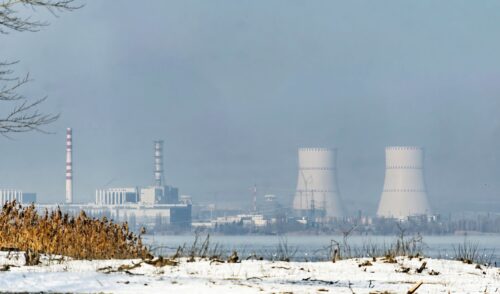
Photo by: Rostov NPP, Unsplash