An international forum on quantum technologies is set to take place in Russia in 2026. The event has officially been added to the BRICS Science, Technology and Innovation Calendar of Activities. This follows the 17th BRICS Summit held July 6–7 in Rio de Janeiro, where member nations expressed strong support for advancing quantum technologies.
Quantum Forum put on the calendar
The international forum on quantum technologies has now been formally included in the BRICS Calendar of Activities.
One of the key players behind Russia’s national quantum ecosystem is Rosatom, which collaborates with academic institutions, universities, industrial companies, and startups to push the frontier of quantum research. Under a 2020 agreement with the Russian government, Rosatom has been leading the country’s quantum computing efforts. Starting in 2026, the Russian nuclear corporation will also oversee the development of quantum sensors. Rosatom’s quantum program provides for the continuation of fundamental research while prioritizing the real-world application of quantum technologies across the nuclear sector and other industries. A major component of the program is the expansion of quantum education.
Rosatom is also championing global collaboration in the quantum space. “With the high potential we have, we are strong advocates for fair and open access to advanced technologies because the ultimate goal of scientific and technological progress is to improve the quality of life worldwide. That is why we fully support the inclusion of quantum technologies in the BRICS agenda and welcome opportunities for international collaboration,” said Ekaterina Solntseva, Director for Quantum Technologies at Rosatom.
In the declaration following the 13th Meeting of BRICS Science and Education Ministers—held alongside the Rio summit—quantum technologies were recognized as a top priority: “We highly appreciate the Brazilian proposal to consider artificial intelligence, quantum technologies and innovation in industry as priorities in 2025, in a novel context of rapid advancement of emerging technologies and national reindustrialization processes. These themes have been emphasized in various BRICS STI dialogues and initiatives in the current year.” It is worth noting that the United Nations has designated 2025 as the International Year of Quantum Science and Technology.
Russia’s quantum evolution
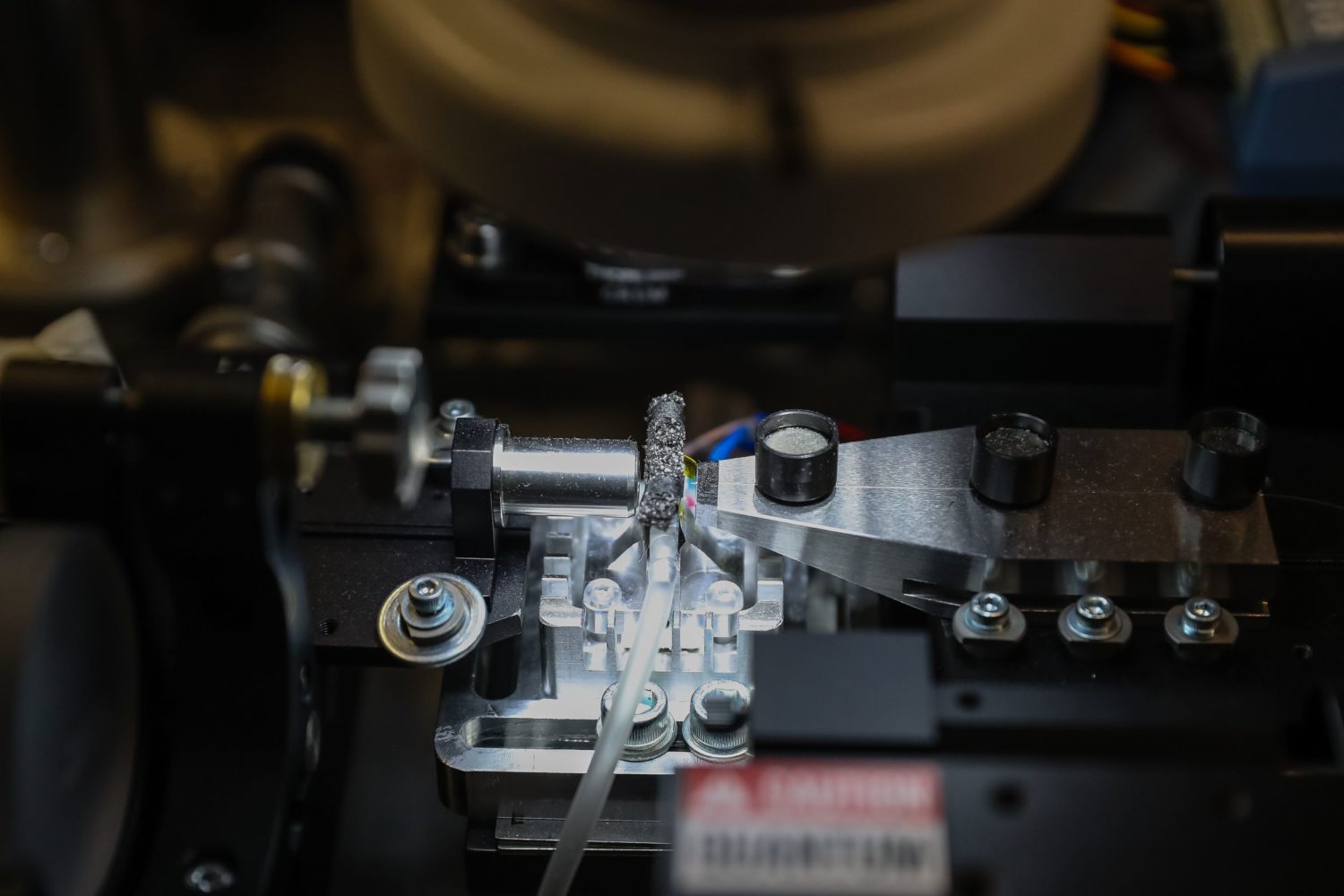
Russia’s national quantum program gained momentum in 2020 with the signing of several roadmaps focused on quantum technology. One of them, the Quantum Computing roadmap coordinated by Rosatom, resulted in the creation of functioning quantum computers on all four of the priority platforms: a 50-qubit ion trap system, a 50-qubit neutral atom system, a 35-qubit photonic processor, and a 16-qubit superconducting circuit system. Researchers have also developed 34 quantum algorithms targeting areas like quantum optimization, quantum chemistry, simulation, and big data analysis. A domestic cloud platform has been created to eventually provide remote access to these quantum processors. The focus through 2030 will shift toward practical application of quantum technologies across industries, with the nuclear sector taking the lead.
Russian researchers are setting ambitious goals, scaling up quantum registers (increasing qubit counts), improving operational fidelity, and miniaturizing quantum devices. By 2030, Russia aims to produce a 300-qubit quantum processor and, more importantly, start solving real-world problems.
Potential applications include optimization tasks, discovery of new materials (including pharmaceutical compounds), personalized medicine, and more efficient logistics operations.
Quantum technologies are already being tested in the nuclear sector. For instance, quantum-inspired algorithms were used to optimize long-term production planning and nuclear fuel delivery, improving resource allocation and production efficiency for the Proryv (Breakthrough) Project, Russia’s initiative to develop a Generation IV nuclear power system.
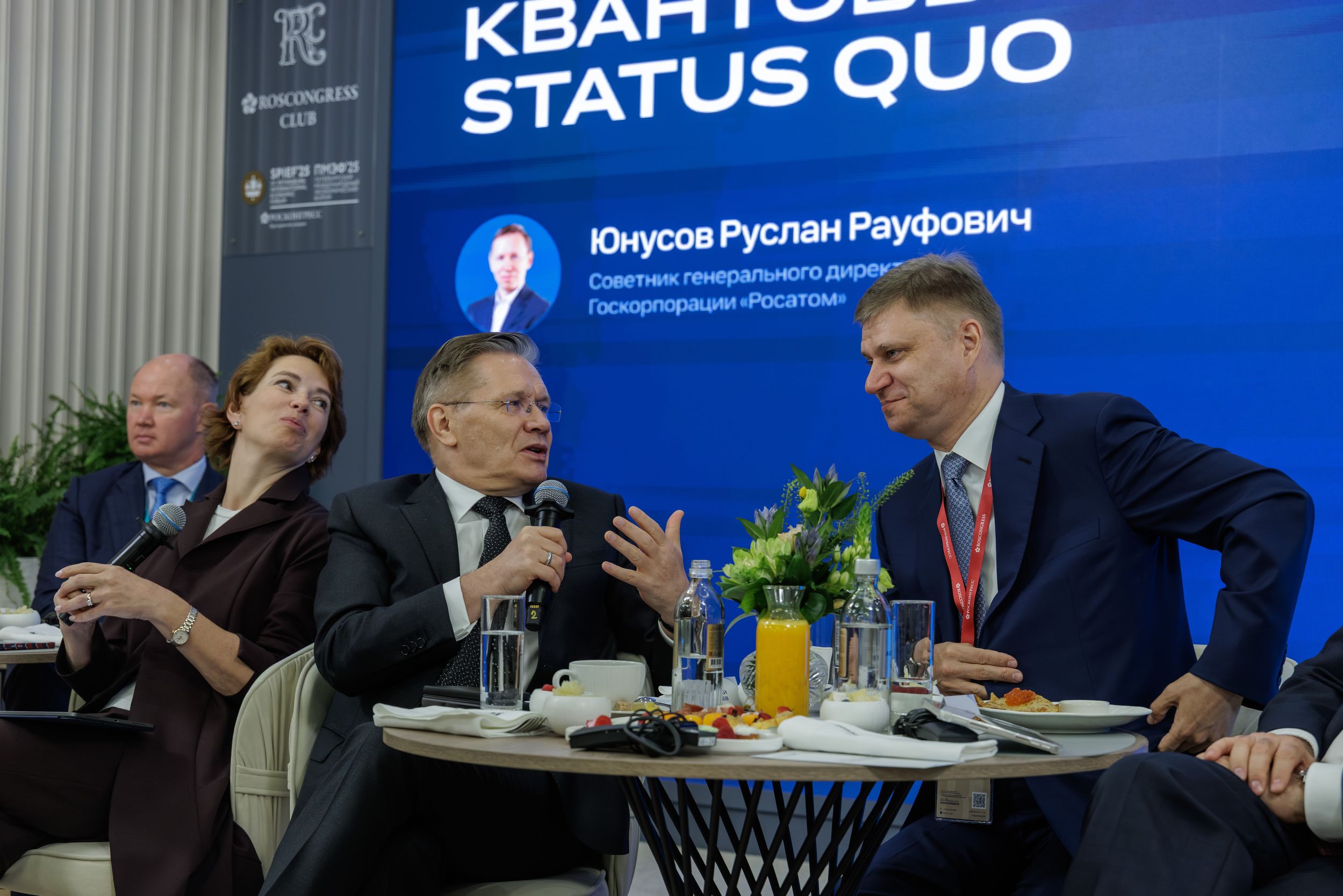
“Rosatom is cautiously advancing in the application of quantum computing — in logistics, engineering, and nuclear fuel operations. And when it comes to Generation IV nuclear power plants, we believe quantum technologies are not just helpful — they’re essential,” said Rosatom Director General Alexey Likhachev, speaking at the Quantum Breakthrough: From Investment in Research to Business Projects business breakfast during the Saint Petersburg International Economic Forum in June 2025. “Now is the time to learn how to solve industrial challenges using quantum computing and algorithms. We need to be ready to act once scalable, industrial-grade quantum machines arrive.”
Photo by: Strana Rosatom Newspaper