In August, Rosatom sent its sixth international Arctic expedition — the Icebreaker of Knowledge — to the North Pole. Members of the expedition were in for many exciting experiences on board the nuclear icebreaker, including lectures by researchers and experts from the nuclear and space industries, scientific experiments possible only in northern latitudes, tours of the icebreaker, stunning views of the Arctic, and observations of local wildlife like polar bears, whales, and Arctic birds. Most importantly, the journey fostered connections among 66 talented students from 21 countries.
Extensive selection
This year’s Icebreaker of Knowledge was the sixth expedition launched and second held internationally (last year’s was the first). Over 67,000 young people aged 14–16, including about 4,000 foreign students from 21 countries, competed for a place on the expedition. The largest number of foreign applications came from Bangladesh (841), India (492), and Kyrgyzstan (471). Winners were selected through a multistage process, which comprised those who took part in the Big Change national children’s contest, educational programs held at the Sirius Educational Center, the Russian intellectual championship Knowledge Games, and members of the Rosatom Juniors movement.
Eventful expedition
One of the highlights of the expedition on board the 50 Let Pobedy nuclear icebreaker were test runs on simplified models of unmanned mobile rovers. They are designed to be delivered to objects in the solar system to study their geological structure. The tests were conducted by engineers from Rosatom and Roscosmos. “The fusion of Roscosmos and Rosatom technologies becomes symbolic here at the North Pole. The local environment helps us simulate conditions on the moons of gas giants—destinations we may reach in the future thanks to nuclear technologies. Rovers operated either remotely or by artificial intelligence will work on the surfaces of other planets covered in ice, enabling active exploration of the Solar System and those of its frontiers where life might exist,” explained Andrey Babkin, a test cosmonaut and an expert for the Icebreaker of Knowledge 2025 science and education program.
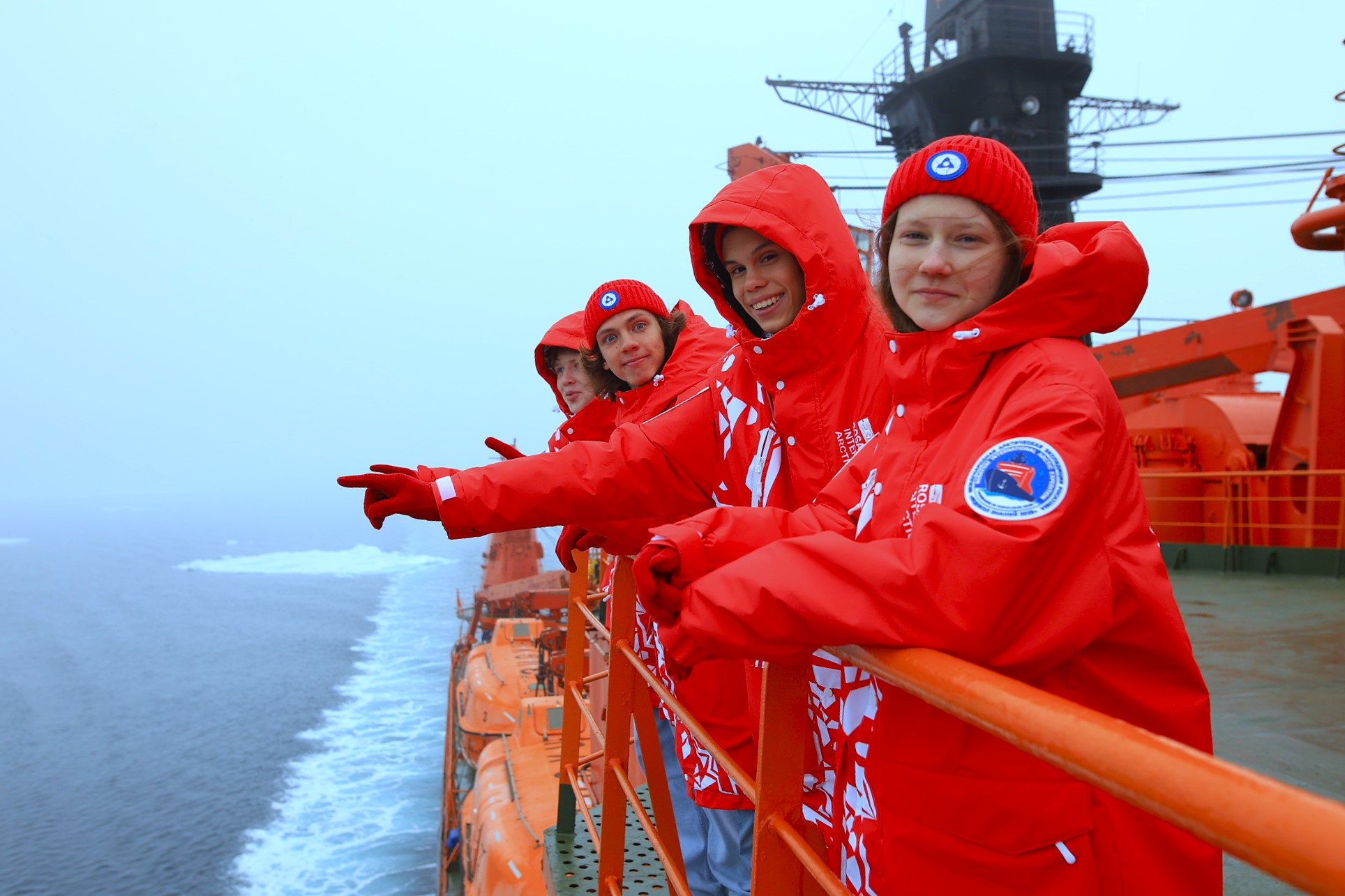
Along with delivering lectures, Rosatom experts engaged extensively with young members of the expedition: “During the journey, I talked about composites: what they are and where they are used, and also about management: how to become a leader and how to structure a leader’s workday. The children are incredibly talented, active, and smart—it was a pleasure talking with them. They asked deep, consistent questions about where to study and how to build a career. I answered carefully, without giving direct advice, so that they could make their own choices,” said Alexander Tyunin, CEO of Rosatom’s Composite Division.
Other experts on board the icebreaker were Topan Setiadipura, head of the Research Center for Nuclear Reactor Technology at Indonesia’s National Research and Innovation Agency (BRIN), Suang Chung Le, director of the Center for Nuclear Physics at the Institute of Nuclear Science and Technology of the Vietnam Atomic Energy Institute (VINATOM); Leonid Dedyukha, winner of the Teacher of the Year 2024 national competition and an ambassador of the Nuclear Lesson initiative, and many others.
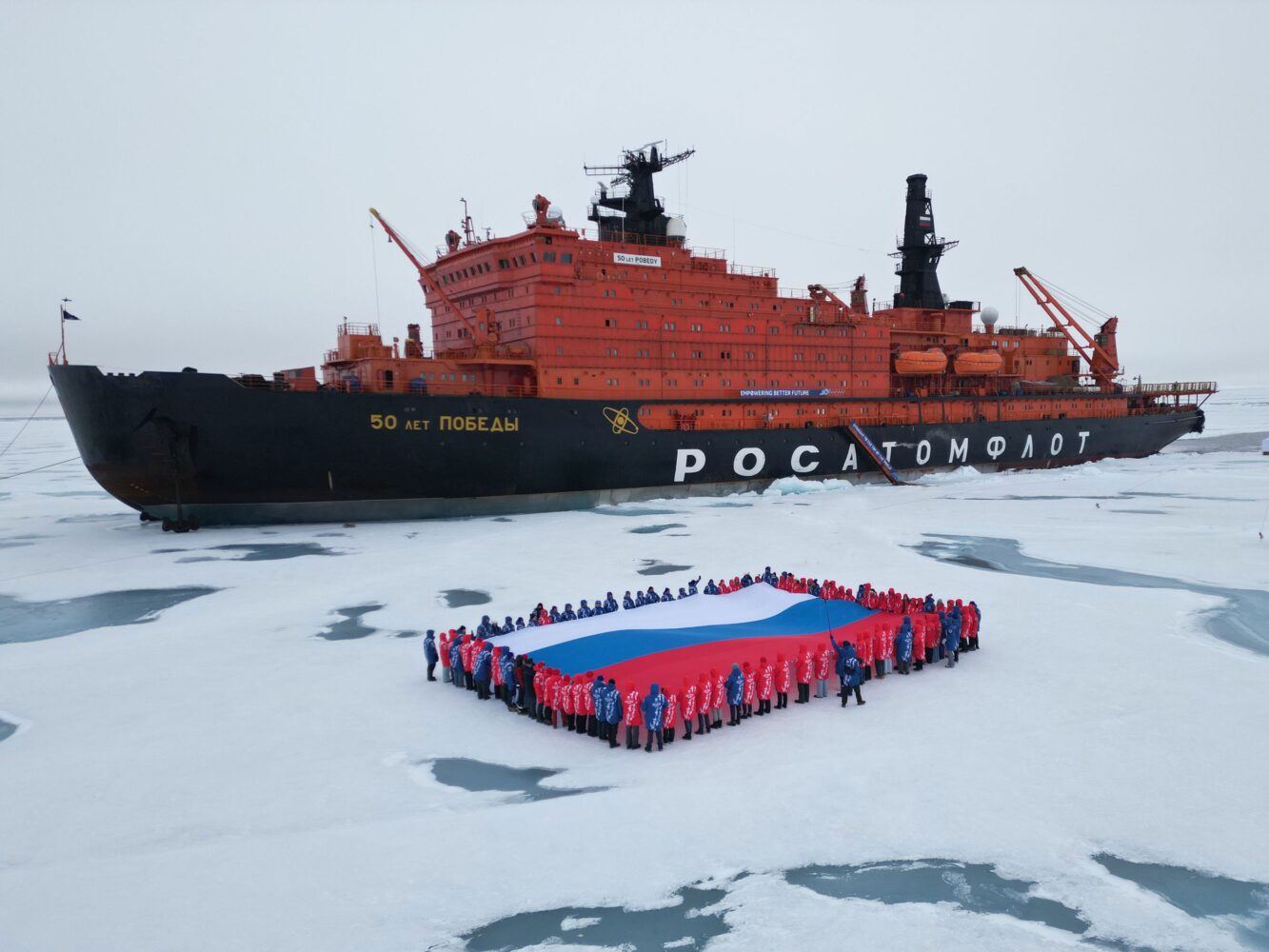
One of the most spectacular moments was the celebration of the National Flag Day of the Russian Federation: students and experts from 21 countries unfurled a large Russian tricolor on the icebreaker. “It was an honor for me to unfold the huge Russian flag together with everyone,” said Mahmoud Said Morsi, head of the Radiological Emergencies Department at the National Centre for Radiation Research and Technology of the Egyptian Atomic Energy Authority and an expedition expert. This year, the holiday coincided with the expedition’s arrival in Murmansk.
Unforgettable experiences
Some expedition members were the first representatives of their countries ever to visit the top of the planet, while others saw snow for the very first time. Isabella Eileen Nell from South Africa made her first snowball at the North Pole: “It was so cool! I can’t describe it—I took some snow and packed it together. The snowball felt like a cloud; I touched it and squeezed it, and I loved that icy effect so much that I want to return to snow again and again! I am so happy,” she shared her emotions.
“When I learned that I would be the only representative of Türkiye on the expedition to the North Pole, I felt an incredible surge of energy. It was important for me to discuss global issues, including achieving the Sustainable Development Goals, with young people from different countries,” said Deniz Arda from Turkey.
Great significance
The expedition is part of comprehensive efforts to study and develop the Arctic and the Arctic Ocean. This year marks 500 years since Russia began developing the Northern Sea Route — the maritime passage from Europe to the Far East across Arctic seas. “We never cease to be proud of the achievements of our pioneers who fearlessly advanced step by step toward incredible discoveries. Russia is the world’s only country with a nuclear icebreaker fleet, and I am confident that the Icebreaker of Knowledge journey and the expanses of the Arctic will inspire young people to become the next generation of explorers and breakthrough technology creators, whom we will also be proud of,” said Yakov Antonov, CEO of Rosatom’s nuclear fleet operator Atomflot.
Photo by: ICAE Network