In 2025, Russia’s nuclear industry celebrated its 80th anniversary. The jubilee’s central theme — Legacy. Inspiration. Dream — captured the spirit of the occasion: pride in the achievements of previous generations, inspiration drawn from today’s accomplishments, and the dream of new possibilities unlocked by nuclear technologies. The road ahead includes creating quantum computers, developing the Northern Sea Route, exploring space and, most importantly, advancing new construction projects with a focus on Generation IV systems designed to close the nuclear fuel cycle.
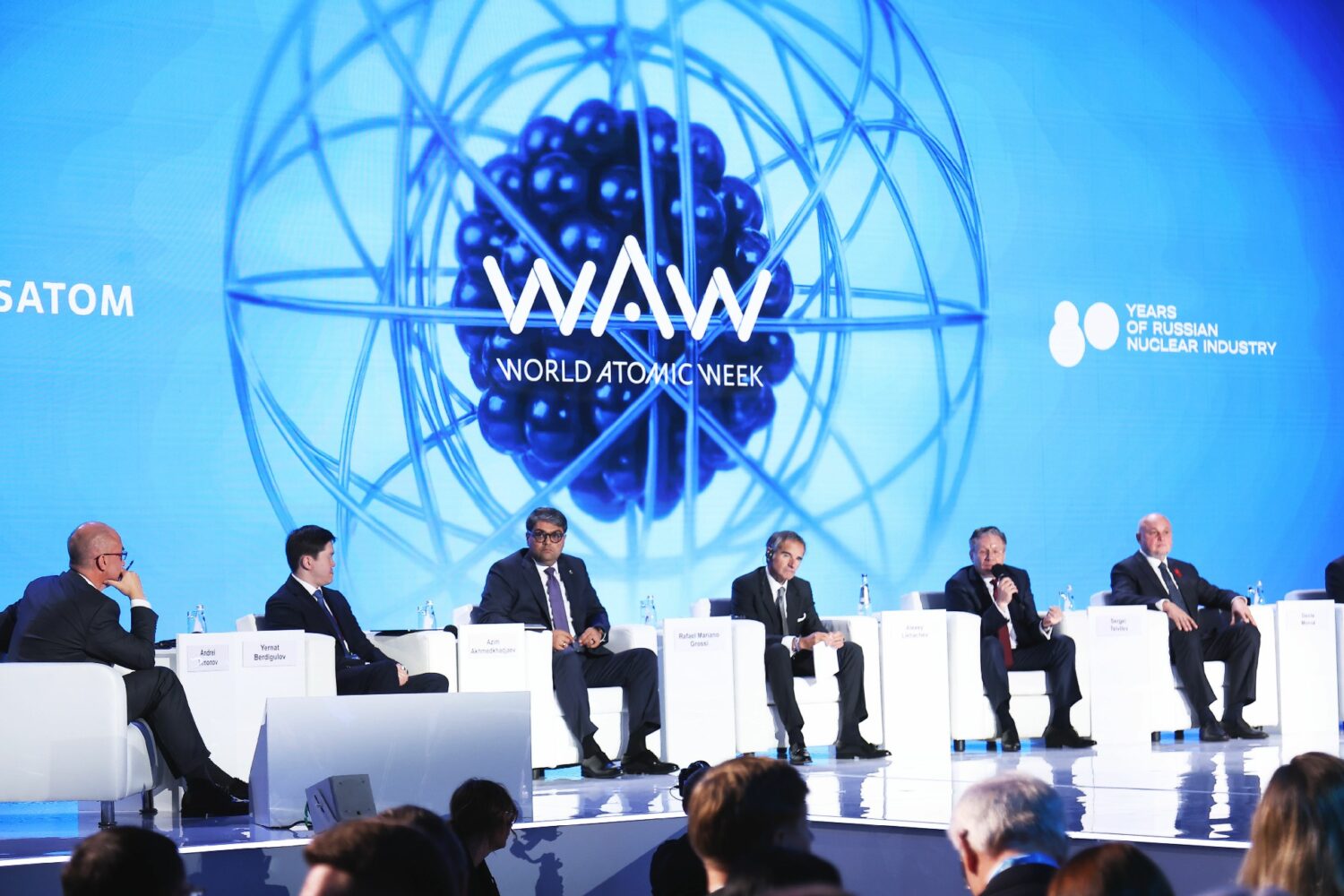
The anniversary year’s premier event was the World Atomic Week (WAW) forum, which brought together over 20,000 participants from 118 countries. Attendees included heads of state, leaders of global nuclear organizations, experts, diplomats, students, entrepreneurs, and many others. The forum featured an exhibition of achievements by Russia’s and allied nations’ nuclear industries, the “Knowledge. The First” educational marathon, and the second “Composites Without Borders” youth festival. “We are proud to say that only Russia today possesses end-to-end competencies across the entire nuclear technology chain, and nuclear power plants built to Russian designs are the most sought-after in the world thanks to their safety and resilience,” Russian President Vladimir Putin declared at the forum.
To mark the anniversary, a new visual identity was introduced, inspired by the modern quantum mechanical model of the atom. In this model, electrons surrounding the nucleus exhibit both particle- and wave-like behavior, described in quantum mechanics as a probability cloud. These models are inherently diverse — often resembling intricate flowers or butterflies.
Quantum computers
Rosatom is engaged in developing quantum processing units (QPU) across multiple physical platforms. For a deeper dive into quantum computing, listen to The Second Quantum Revolution episode on the AtomPro podcast. At year’s end, research teams within Rosatom’s Quantum Project had successfully completed validation experiments. Two teams developing ion-based QPUs — one using ytterbium, the other calcium — presented prototypes of 70-qubit quantum computers, executing one- and two-qubit operations on them. The ytterbium-ion prototype demonstrated high operational fidelities: 99.98% for single-qubit and 96.1% for two-qubit gates.
Days later, a research group from the Quantum Technology Center at the Moscow State University’s Physics Department — also part of the Quantum Project — scaled up its prototype rubidium neutral-atom quantum computer to 72 qubits, achieving a two-qubit gate fidelity of 94%.
Nuclear construction sites
Thinking a century or more ahead is intrinsic to the nuclear industry. Rosatom builds power plants with a 60-year design life, extendable further. Factoring in construction and decommissioning, their lifecycle spans roughly a century.
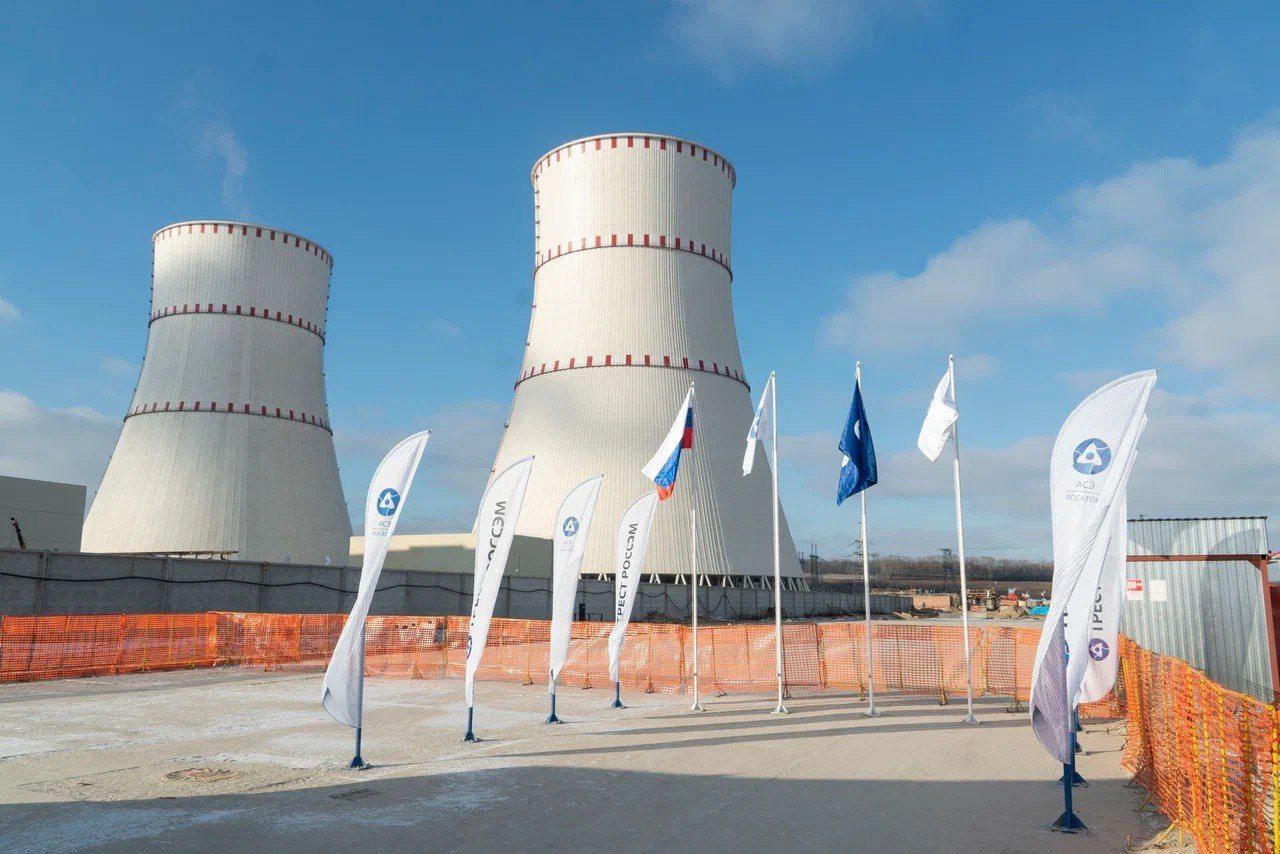
In Russia, Rosatom is constructing six Generation III+ large power units. Work has also commenced on building two units of the Kola II Nuclear Power Plant in the Murmansk Region, featuring innovative VVER-S reactors with a capacity of 600 MW each.
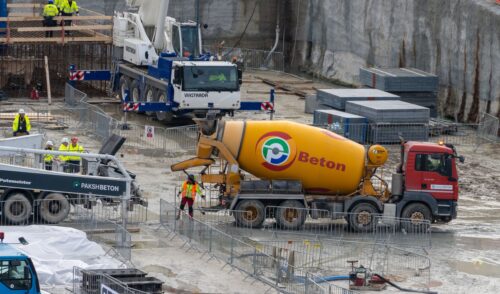
Construction is equally active abroad. In Bangladesh, fuel loading has begun in the reactor of Rooppur Unit 1. In Egypt, the reactor pressure vessel has been installed at El Dabaa Unit 1. The reactor pressure vessel has been delivered to the site of Akkuyu Unit 4. Hungary has issued a permit for the first concrete pour at Paks Unit 5. Agreements have been signed to construct large power units in Uzbekistan and Kazakhstan.
A critical goal for the global nuclear industry is the development of Generation IV systems. In Seversk (Tomsk Region), construction is underway on a power unit with the BREST-OD-300 lead-cooled fast-neutron reactor. In 2025, workers installed the metal shell of the reactor’s central cavity — which will house the nuclear fuel — and positioned the surrounding peripheral cavity shells. The first-of-its-kind nuclear fuel — mixed uranium-plutonium nitride (MUPN) fuel with a liquid sodium sublayer — has been manufactured for this reactor. An analytical simulator for the power unit has been commissioned, and a full-scope simulator has passed comprehensive tests; it will be modified and fine-tuned until April before being shipped to Seversk.
Rosatom will also build another Generation IV system — Unit 5 with the BN-1200M sodium-cooled fast reactor at the Beloyarsk NPP in the Sverdlovsk Region. Preparations for this construction project have already begun. The Mining and Chemical Plant has been selected as the fuel manufacturer for this facility: it has extensive experience producing mixed uranium-plutonium oxide (MOX) fuel on which the BN-1200M reactor will operate.
The development of new small modular reactor (SMR) power units is also of global importance. Rosatom is working on a project for an SMR plant in Yakutia. In Uzbekistan, excavation has begun for the reactor building of the first overseas SMR plant with RITM-200N reactors. Rosatom has already started manufacturing steel billets for the first reactor pressure vessel, which will be shipped to Uzbekistan.
Adding wind…
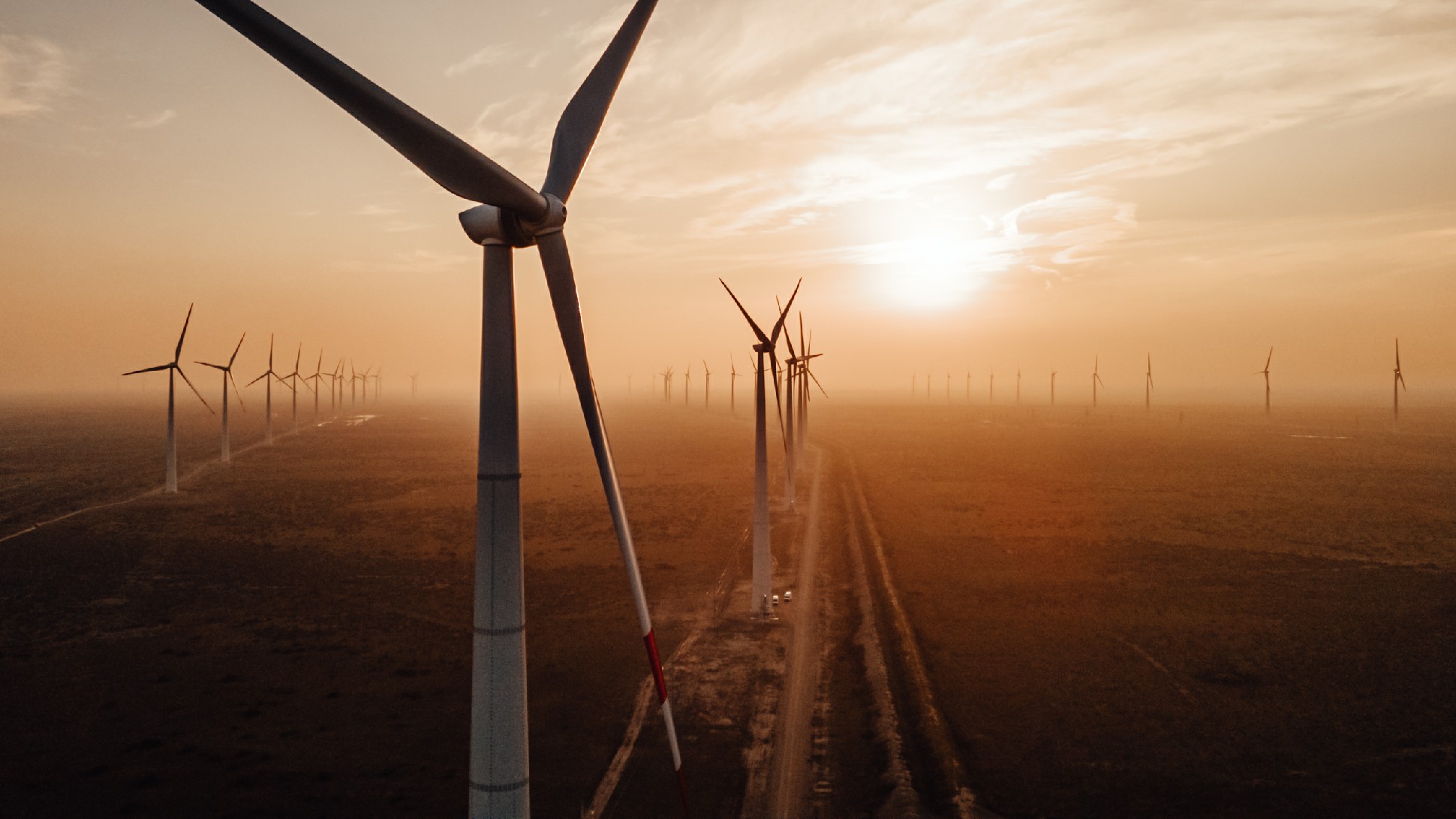
In December 2025, the first stage of the Novolakskaya Wind Farm in Dagestan began supplying electricity to the Russian national grid. With a current capacity of 152.5 MW, it will reach 300 MW upon completion of the second stage, delivering an average annual output of 879 million kWh. The total capacity of Rosatom’s wind farms has reached 1.2 GW.
Rosatom has supplied the first components (nacelles, hubs, generators, towers, and blades) for the construction of the Kok-Moinok Wind Farm (100 MW) in Kyrgyzstan’s Issyk-Kul Region.
…and uranium
In Tanzania, Rosatom has launched a pilot uranium processing plant at the Nyota deposit (Mkuju River Project) to test extraction and processing technologies. The data obtained will inform engineering decisions for a full-scale uranium processing plant with a capacity of up to 3,000 tonnes of uranium per year.
In Russia, development of the Dobrovolnoye deposit in the Kurgan Region has commenced, with uranium mining company Dalur having shipped its first batch of uranium products.
Contributing to Arctic development…
In November 2025, the keel was laid for the sixth Project 22220 nuclear icebreaker, Stalingrad. Four icebreakers of this series are already operating in the Arctic, proving their status as workhorses for icebreaker escorts.
In 2025, 23 transit voyages were completed via the NSR (up from 14 in 2024). The volume of transit cargo grew by 3.82%, reaching a record 3.2 million tonnes. A landmark event was the successful completion of the first-ever transit container voyage from China to Europe via the Northern Sea Route. A container ship with 25,000 tonnes of cargo completed the journey from Ningbo (China) to Felixstowe (UK) in just 21 days, compared to 40 days via the southern route. For more on the Northern Sea Route, listen to the AtomPro podcast.
Another key indicator: by the end of 2025, Rosatom companies had manufactured 12 RITM-series reactors for the Russian nuclear icebreaker fleet. More are on the way: 14 small reactors for icebreakers and land-based/floating power units are at various stages of production. In 2025, 3D printing technology was introduced for manufacturing RITM-200 components: a part of the pump for the marine reactor plant was produced using additive manufacturing, a practice set to expand further in reactor construction.
…and space exploration
Rosatom researchers have developed a laboratory prototype of a plasma propulsion engine based on a magnetoplasma accelerator with enhanced thrust (at least 6 N) and specific impulse (at least 100 km/s). The engine, when operating in a pulsed mode, achieves an average power of 300 kW, unmatched by any existing technology. Such engines could accelerate spacecraft to very high speeds and use fuel dozens of times more efficiently, potentially reducing a Mars mission’s duration from 6–9 months to 30–60 days.
Furthermore, Rosatom is developing carbon fiber for the space industry based on isotropic and mesophase pitches, which is resistant to thermal deformation. It will significantly improve the performance of composite materials used in specialized equipment. Unique properties of this fiber will be valuable for creating large satellite system reflectors, structural elements and radiator panels for long-duration space stations and deep-space missions, orbital structures, and heat removal systems based on carbon-carbon composites with high thermal conductivity.
Sun on Earth
The first of four Russian test stands for vacuum, thermal, and functional testing of key diagnostic systems of the International Thermonuclear Experimental Reactor (ITER) has been delivered to the construction site under Rosatom’s coordination. The next stage involves testing under near-real conditions. The test stand — one of the most complex and science-intensive systems under Rosatom’s responsibility — underscores its leadership in megascience-class technologies. For more on the ITER project, listen to the AtomPro podcast.
Clean and safe
Finally, Rosatom puts much effort into ensuring that nuclear technologies remain safe for people and the environment — a prerequisite for their global recognition and acceptance.
Rosatom signed a contract with the Belarusian NPP for the safe management of the plant’s spent nuclear fuel. This is the world’s first contract implementing the balanced nuclear fuel cycle concept, which aims to minimize waste and maximize the use of energy contained in natural uranium.
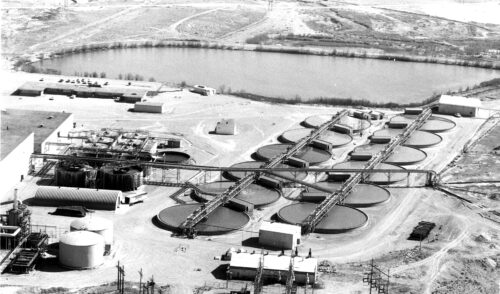
Rosatom has finalized a technology for processing liquid radioactive sodium coolant, enabling the safe decommissioning of fast reactors using such coolant. Key advantages include the absence of gaseous emissions, explosion and fire safety, and a short, single-stage process.
Rosatom scientists have successfully completed the first stage of testing an experimental high-sensitivity analyzer for xenon and krypton radionuclides in air. The device can detect traces of unauthorized nuclear tests and accidents at nuclear facilities. Scientists have also developed the world’s first technology for simultaneously extracting three platinum group metals from spent nuclear fuel — metals that complicate the vitrification of high-level waste. Their extraction improves the quality and safety of the resulting glass. Additionally, Rosatom researchers have completed the first phase of design work for a molten salt research reactor.
The successes and achievements of 2025 not only reinforce Rosatom’s position in the global nuclear technology market but also broaden international recognition of nuclear energy’s transformative potential. Nuclear technologies deliver reliable electricity, unite scientists across borders, drive breakthrough discoveries, and improve lives across our planet.
Photo by: Rosatom State Corporation, Rosatom Renewable Energy, NIIEFA JSC, Atomflot FSUE, Kursk NPP, Strana Rosatom newspaper
This site uses cookies. By continuing your navigation, you accept the use of cookies. For more information, or to manage or to change the cookies parameters on your computer, read our Cookies Policy. Learn more