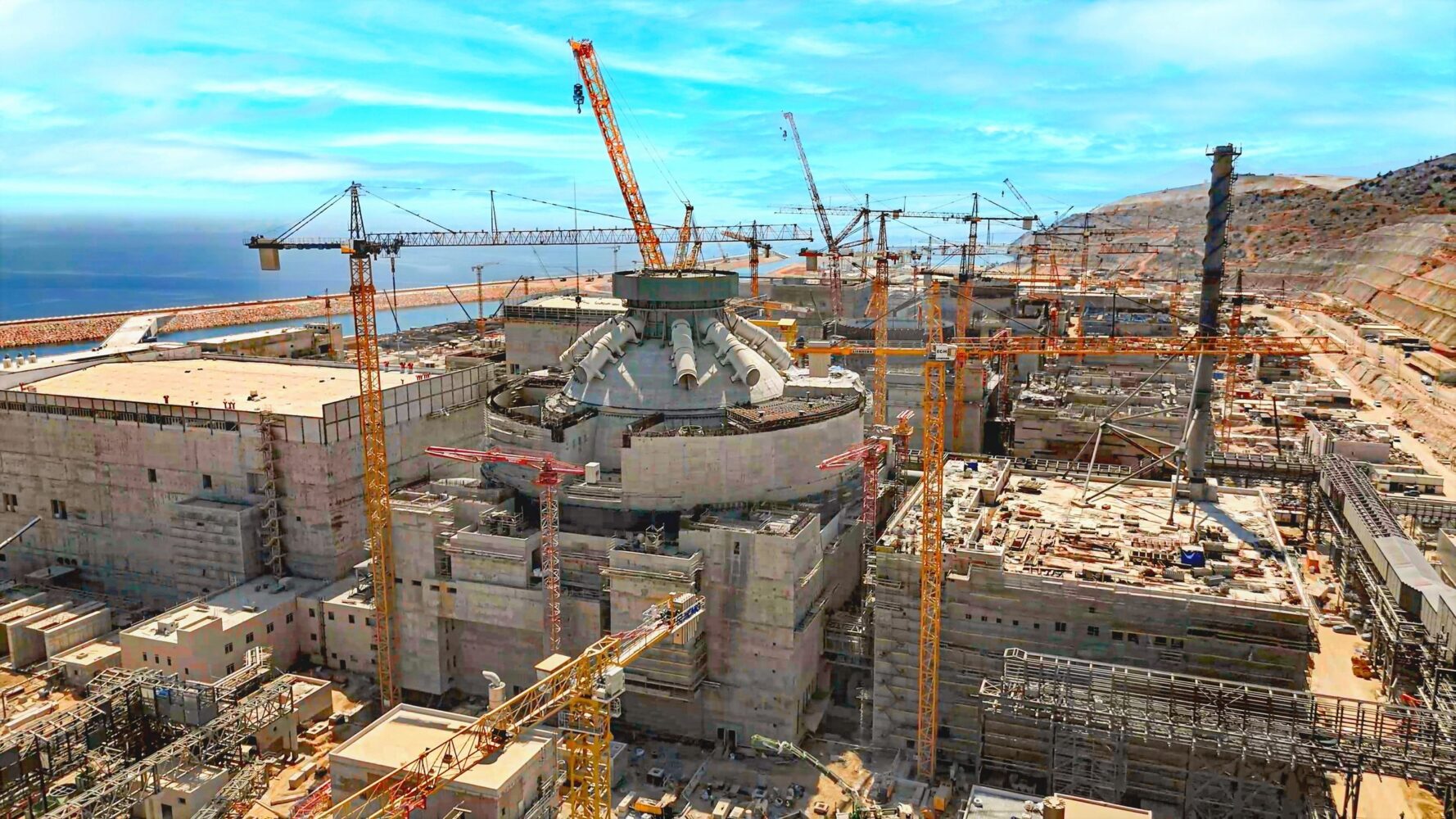
For the Akkuyu project, 2025 was the year of multi-faceted progress. Critical equipment for all four power units was delivered and installed at the site. Active business cooperation between Turkish and Russian nuclear professionals continued, with important social and cultural initiatives launched. Overall, Türkiye’s first nuclear power plant project, the Akkuyu NPP, entered the homestretch in 2025.
In mid-March, engines of all four primary coolant pumps were run at idle at Akkuyu Unit 1, an important phase of the pre-commissioning operations preceding the first criticality. Engineers inspected the lubrication and bearing cooling systems, as well as the monitoring, control and diagnostics systems.
The main overhead crane with a lifting capacity of 350 metric tons was commissioned in the turbine hall of Unit 2. Additionally, a pressurizer was installed at the same unit.
The installation of primary coolant pumps (PCPs) in the reactor building marked the completion of the main equipment installation phase for the reactor plant of Unit 2.
In late March, a seawater desalination facility was put into operation on the plant site. Desalinated water will be used for utility needs and fire safety systems. Seawater is first evaporated in the specialized evaporators and then condensed to produce high-purity distillate, which is then processed into ultrapure chemically demineralized water. It may also be possible to produce high-quality potable water in the future.
In June, electric motors for the technical water supply pumps were started up at the coastal pumping station of Unit 1. This system will provide water to the cooling equipment buildings and the central compressor station.
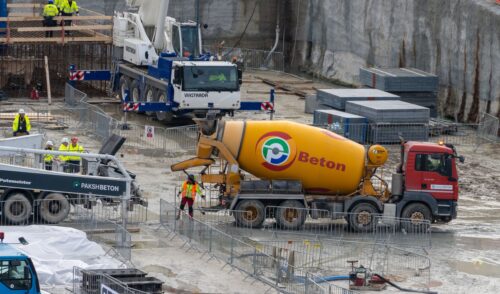
In late July, concreting of the walls was completed for the turbine hall of Unit 3.
In late October, 42,000 items of the instrumentation and control (I&C) system equipment for the first power unit were delivered to the Akkuyu site. The shipment included control cabinets, controllers, computing modules, and auxiliary components.
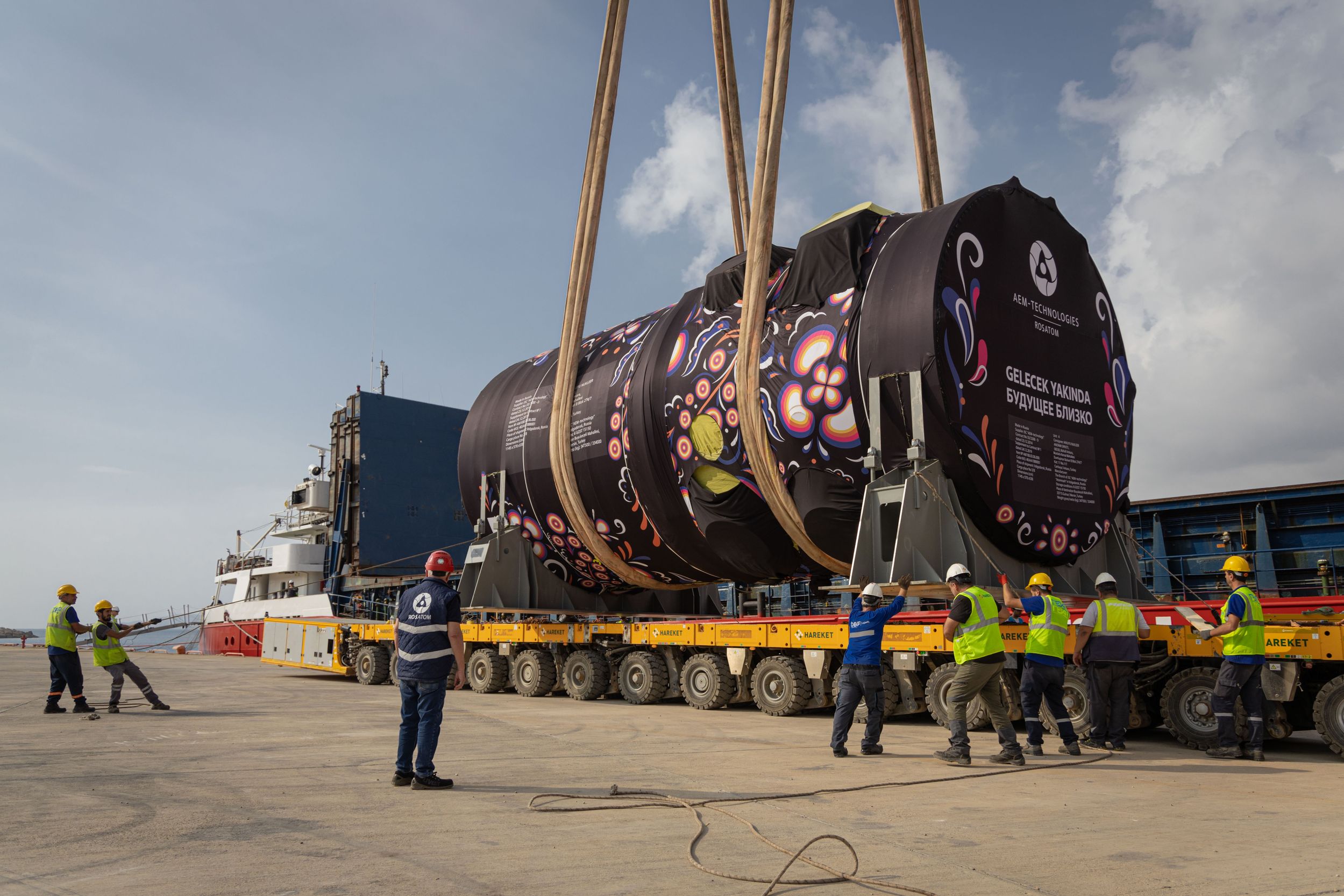
In November, a reactor pressure vessel (RPV) for Unit 4 was delivered to the Akkuyu construction site. Together with the RPV, a containment airlock for Unit 3 and a pressurizer for Unit 4 arrived at the site.
In December, nominal voltage from the external power grid was supplied to some of the 400 kV gas-insulated switchgear (GIS) systems at the site. This operation is intended to confirm that the GIS equipment is ready to receive and transmit electricity generated by Akkuyu Unit 1 to Türkiye’s national power grid.
Beyond the construction site
To ensure that Türkiye’s Akkuyu NPP operates reliably and for a long time, Russian nuclear engineers are developing advanced solutions for the nuclear plant. Rosatom Automated Control Systems (RASU) successfully integrated a turbine control and protection system and an upper-level block system (ULBS) for Akkuyu. A European-manufactured turbine to be installed at Akkuyu uses the international OPC protocol for data exchange (the Russian upper-level system uses the DTS protocol). RASU engineers have developed a ‘translator’ that converts signals collected from the turbine sensors and detectors into the DTS standard and transmits them to the operating personnel.
In June, Akkuyu NPP lab technicians completed a training course ahead of their upcoming ISO 17025 certification.
In early August, a delegation from Turkish ministries and agencies led by Deputy Minister of Energy and Natural Resources Zafer Demircan paid a two-day visit to the site. Members of the delegation held meetings with the Nuclear Regulatory Authority, Rosatom, Akkuyu Nuclear JSC, and major contractors.
Business activity
The role of nuclear energy in the green energy transition was discussed at the 10th Carbon Summit held in Istanbul in April. Polina Lyon, Chief Sustainability Officer at Rosatom, presented proprietary nuclear energy solutions designed to reduce greenhouse gas emissions. “We hope that nuclear energy will be included in Türkiye’s green taxonomy as green and sustainable since this will lay a solid foundation for the country to meet its international commitments on carbon neutrality by 2053,” Polina Lyon noted.
In July, Rosatom took part in the Nuclear Power Plants 7th Expo and 11th Summit (NPPES 2025) held in Istanbul and drawing more than 1,400 delegates and 212 companies. The Russian nuclear corporation showcased its advanced large and small-scale nuclear power technologies, multifunctional nuclear science and technology centers based on research reactors, and logistics solutions. A separate event was dedicated to the 80th anniversary of the Russian nuclear industry. According to Boris Arseev, Rosatom’s Director for International Business, Rosatom holds roughly 90% of the global market for overseas construction of large nuclear power plants. “Thanks to combining vast experience and a wide range of competencies, Rosatom offers not just a product, but an entire ecosystem, including infrastructure development, personnel training, and assistance in developing science and education,” the speaker emphasized.
The Akkuyu NPP project was in the focus of attention at the World Atomic Week (WAW) international forum held in Moscow in late September. Thousands of guests visited the exhibition dedicated to the plant under construction. Turkish representatives took part in all key events of the forum.
During the opening ceremony, a video link connection launched the ceremonial shipment of the latest VVER-1200 reactor vessels — for Akkuyu Unit 4 in Türkiye and El Dabaa Unit 1 (Egypt). Turkish Deputy Minister of Energy and Natural Resources, Zafer Demircan, highlighted the important role of nuclear power in the country’s energy mix. “Thanks to the nuclear plant, we will be able to meet 10% of our electricity demand and reduce carbon emissions by 35 million tons per year,” he said.
Social and cultural ties
As in years past, Akkuyu Nuclear JSC handed over food packages to local authorities for 1,200 families in the Gülnar and Silifke districts of the Mersin Province during the holy month of Ramadan.
Throughout the year, the construction site was visited by school and university students, and representatives of public organizations. For instance, in April, high school students and teachers from the Aydıncık High School (Mersin Province), and heads of the Aydıncık District Education Directorate, visited the site, followed in November by groups of students from the country’s leading Hacettepe University (Ankara).
On the eve of the National Sovereignty and Children’s Day, Akkuyu Nuclear held a celebration for schoolchildren in the region: they launched 81 kites into the sky, representing the number of provinces in Türkiye.
Ahead of May 19, the Commemoration of Atatürk, Youth, and Sports Day, Rosatom organized a meeting between two generations of Turkish nuclear professionals, employees from Akkuyu Nuclear JSC and students from Silifke Vocational School, which trains technical personnel for in-demand nuclear industry roles.
Employees working at the Akkuyu NPP site do not stand aside when help is needed. In August, professional firefighters and volunteers of the firefighting team — 80 people in total — helped extinguish a large forest fire covering around 6,000 hectares near the towns of Kırtıl and Taşucu.
In late October, the third international fishing tournament was organized by Rosatom in the Mersin Province near the Akkuyu construction site. It brought together 14 amateur anglers, experts, and journalists from seven countries.
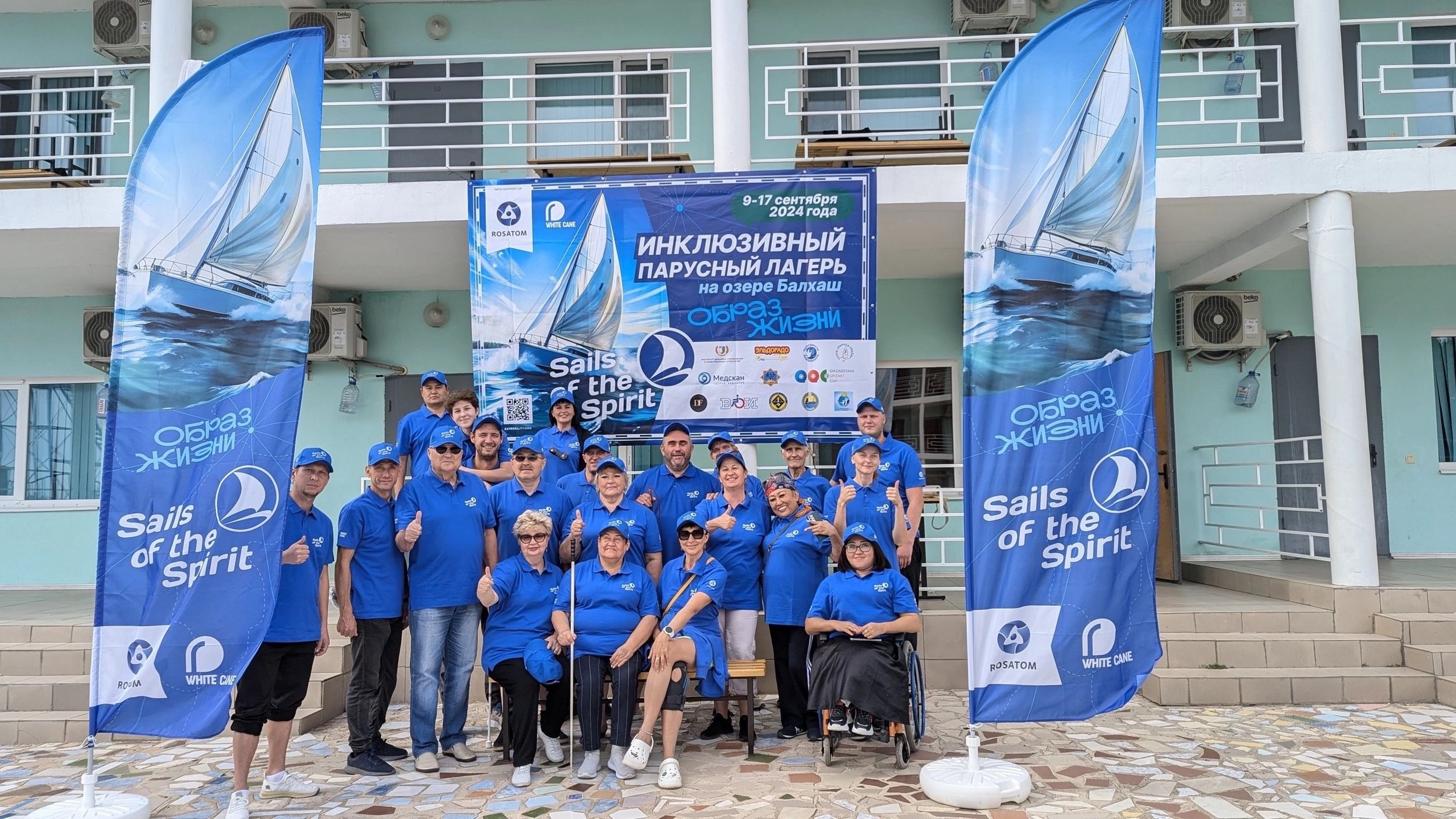
Türkiye was also the final destination for the international Sails of the Spirit initiative supported by Rosatom. The initiative aims to build an international community that recognizes the value of the additional abilities a person develops by adapting to limitations through effective socialization.
Photo by: Rosatom State Corporation, Akkuyu Nuclear JSC