Rosatom has fabricated the reactor core for the world’s most powerful nuclear icebreaker under construction, Rossiya, delivered modified nuclear fuel for a research reactor in Uzbekistan and the Kudankulam NPP in India, and conducted extreme-condition testing of fuel for a high-temperature gas-cooled reactor (HTGR). These milestones represent tangible steps in refining and developing new atomic technologies, paving the way for a new technological paradigm.
In late 2025, the nuclear industry saw a historic first — the fabrication and acceptance of the initial reactor core for the first RITM-400 reactor plant destined for the nuclear icebreaker Rossiya. The two RITM-400 reactors are named after Russian epic heroes, Ilya Muromets and Dobrynya Nikitich. Each has a thermal power of 315 MW, outperforming any other marine reactor in the world.
Rossiya is the lead vessel of the Project 10510 series. With a total shaft power of 120 MW, this ship will be capable of breaking through ice over four meters thick. Upon commissioning, Rossiya will enable year-round navigation on the entire Northern Sea Route.
Density matters
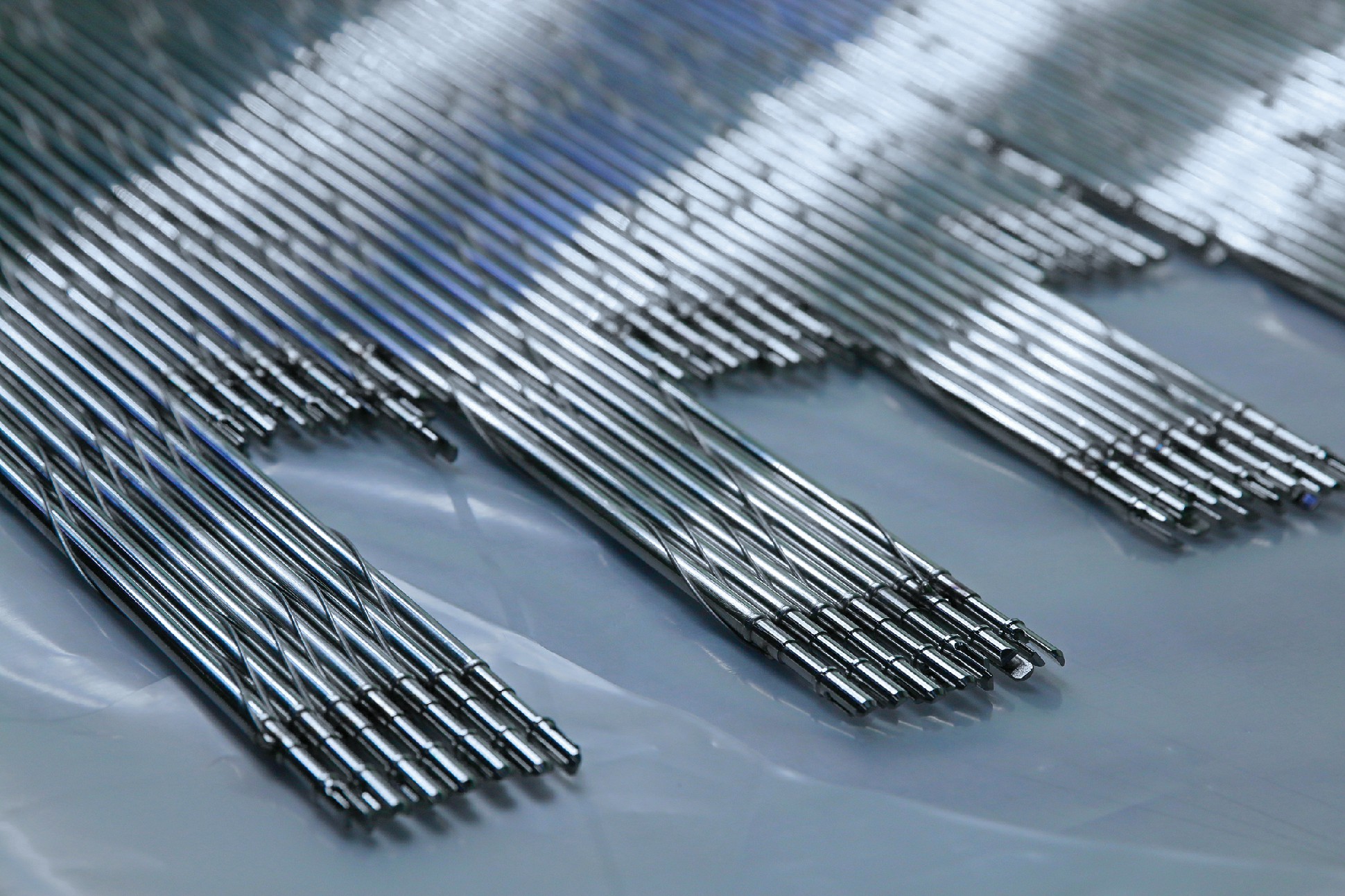
Rosatom has supplied a new modification of nuclear fuel for the VVR-SM research reactor in Uzbekistan. The abbreviation VVR-SM stands for the Russian phrase “upgraded serial water-cooled water-moderated reactor.” The fuel assemblies were manufactured using dense uranium and uranium silicide fuel. Compared to standard fuel, this type offers superior performance characteristics: a higher uranium concentration extends the reactor’s refueling interval.
These fuel deliveries are part of broader cooperation between Rosatom and Uzbekistan. It is worth recalling that the parties are preparing for the first concrete pour for a nuclear power plant featuring Russian-designed RITM-200N reactors in the Jizzakh Region of Uzbekistan. The contract to this effect was signed in May 2024 and marked the world’s first export agreement for a small modular reactor (SMR) power plant (the construction of large-capacity Russian-design reactors is also under consideration).
Under extreme temperatures
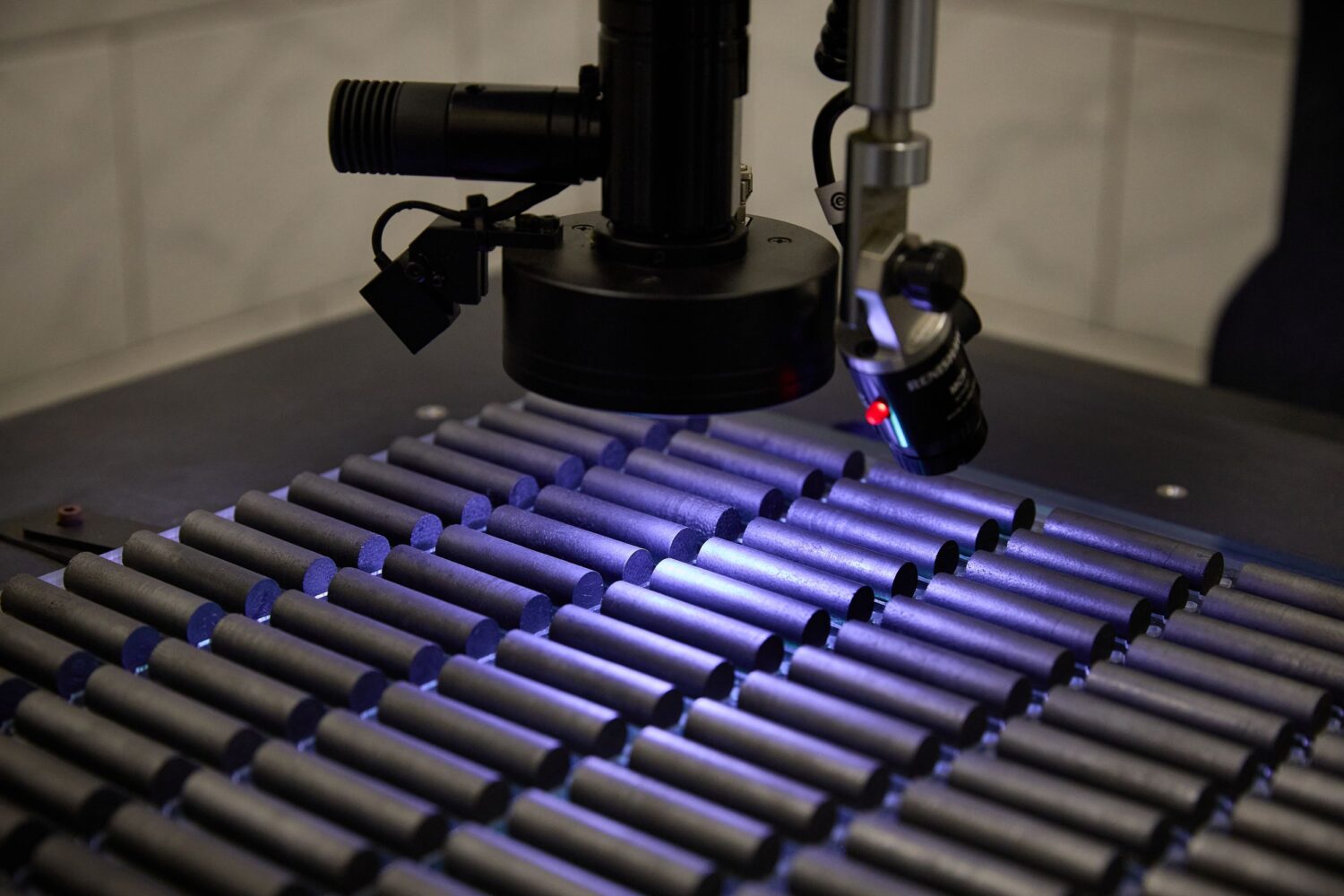
Rosatom has completed extreme-condition testing of fuel samples for a high-temperature gas-cooled reactor (HTGR). Graphite cylinders containing uniformly distributed spherical fuel particles (compacts), developed by Rosatom researchers, were first irradiated under standard conditions to burnup depths of 4%, 8%, and 12% heavy atoms (h.a.). Compacts with 4% and 8% h.a. burnup were then irradiated for over 500 hours at temperatures around 1,600°C. Additionally, HTGR fuel samples with 8% h.a. burnup were irradiated at approximately 1,700°C for more than 380 hours.
“Reactor experiments and comprehensive post-irradiation studies supplement the extensive body of experimental data accumulated since 2021 under the HTGR fuel validation program. We can now state with confidence that the maximum design limits for operating domestic compacts, as incorporated into the HTGR design, have been confirmed,” noted Fyodor Grigoryev, the project coordinator at RosEnergoAtom.
18-month start
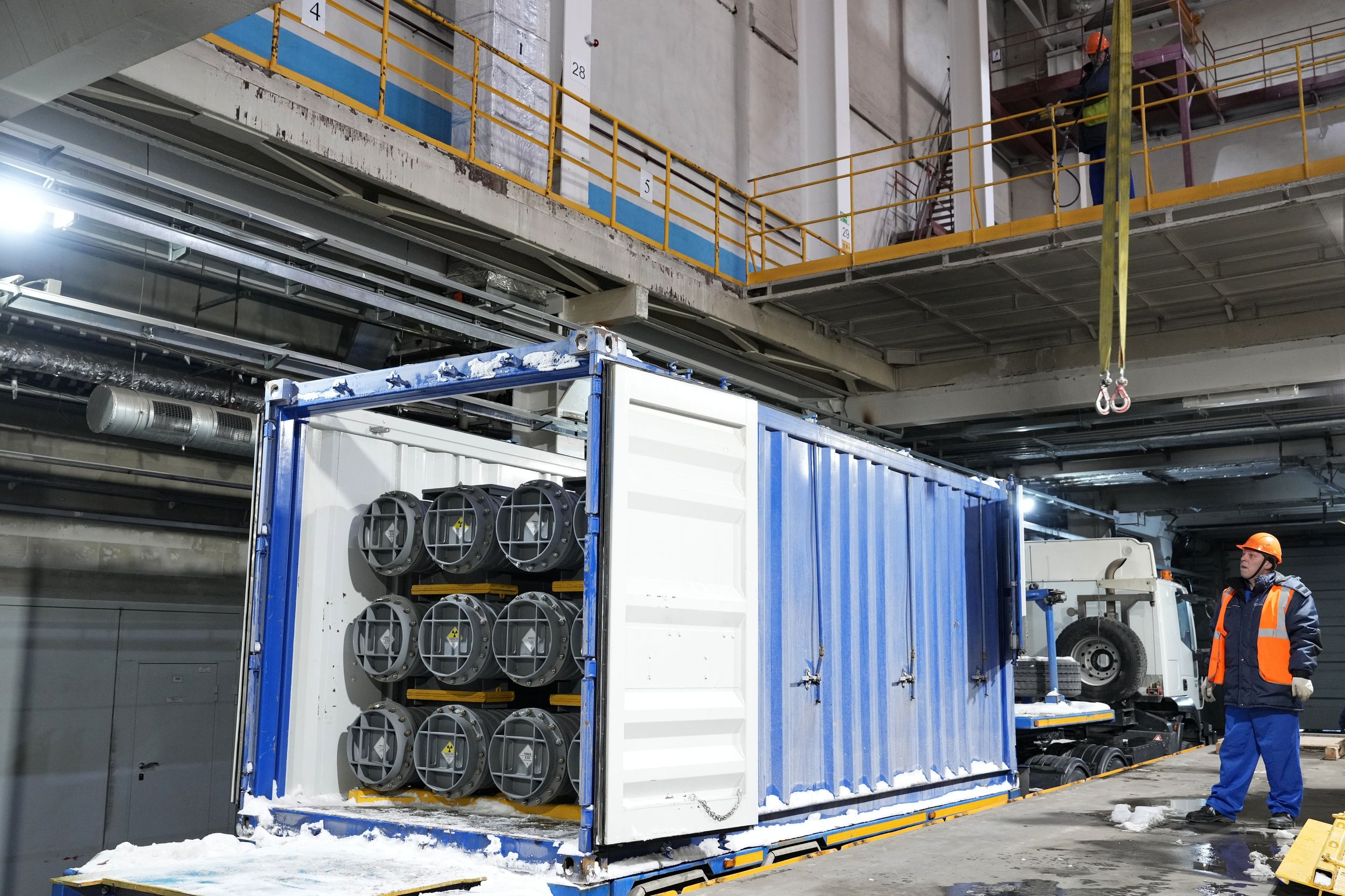
In December, Rosatom delivered the first batch of nuclear fuel via air for the initial core load of the VVER-1000 reactor at Kudankulam Unit 3 in India. Unit 3 will be the first-ever VVER-1000 reactor to commence operation with an 18-month refueling interval. Previously, Kudankulam Units 1 and 2 transitioned from a 12-month to an 18-month interval. This was made possible by supplies of advanced-design TVS-2M fuel assemblies, which ensure more reliable and cost-effective operation due to their robust design, new-generation anti-debris filters, and a higher uranium mass.
And also…
Employees of the Bochvar Institute, Mikhail Skupov and Alexey Glushenkov, were awarded the Vyzov (Russian for ‘Challenge’) Prize in the Engineering Solution category for developing an industrial production technology for nitride nuclear fuel. This fuel is intended for the BREST-OD-300 lead-cooled reactor, part of a Generation IV system.
These developments underscore Rosatom’s position at the forefront of scientific and technological exploration, consistently and systematically creating and refining nuclear fuel that enables safe, cost-effective power generation and advanced research.
Photo by: NZHK, MCC, Strana Rosatom newspaper