In early September, the World Nuclear Association (WNA) released its report on the prospects for nuclear power development. The report is divided into two major sections. The first covers the 2025 results in new construction. The second offers recommendations aimed at rapidly translating plans for fleet expansion into actual kilowatts.
2025 in review
In 2025, the global nuclear fleet generated a record 2,702 TWh, which is 35 TWh more than in 2024. However, the share of nuclear power in the total global electricity generation continues to shrink, having declined from a record high of 17.44% in 1996 to 8.84% in 2025. The reason is clear: electricity generation from other sources, primarily renewables, has surged.
Asia is now the main driver of nuclear generation rise. Between 2012 and 2025, output in the region increased roughly two-and-a-half-fold, from 330.55 TWh to 842.48 TWh. This growth was driven by the rapid expansion of nuclear power in China and the launch of new reactors in India, Pakistan, and the United Arab Emirates.
Since 2012, nuclear generation in North America, South America, and Africa has remained largely flat. In Eastern Europe and Russia, output gradually increased between 2012 and 2025, rising from 251.18 TWh to 271.64 TWh. In Western and Central Europe, however, it declined as Germany shut down all its reactors, and the oldest units were retired in Belgium, Sweden, Switzerland, and the UK.
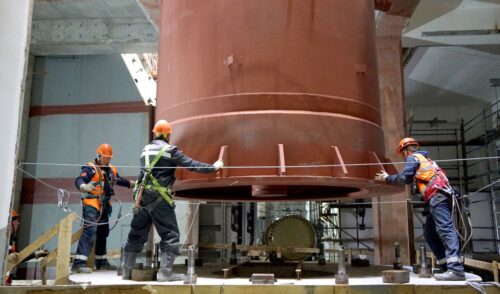
Total installed nuclear capacity at the end of 2025 stood at 400 GW, just 2 GW more than at the end of 2024. Overall, three units with a combined capacity of 2,956 MW were connected to the grid in 2025. Zhangzhou 2 in China was built in 62 months, Kursk II Unit 1 in Russia in 92 months, and Rajasthan 7 in India in 163 months.
2,702 TWh
Global nuclear generation in 2025
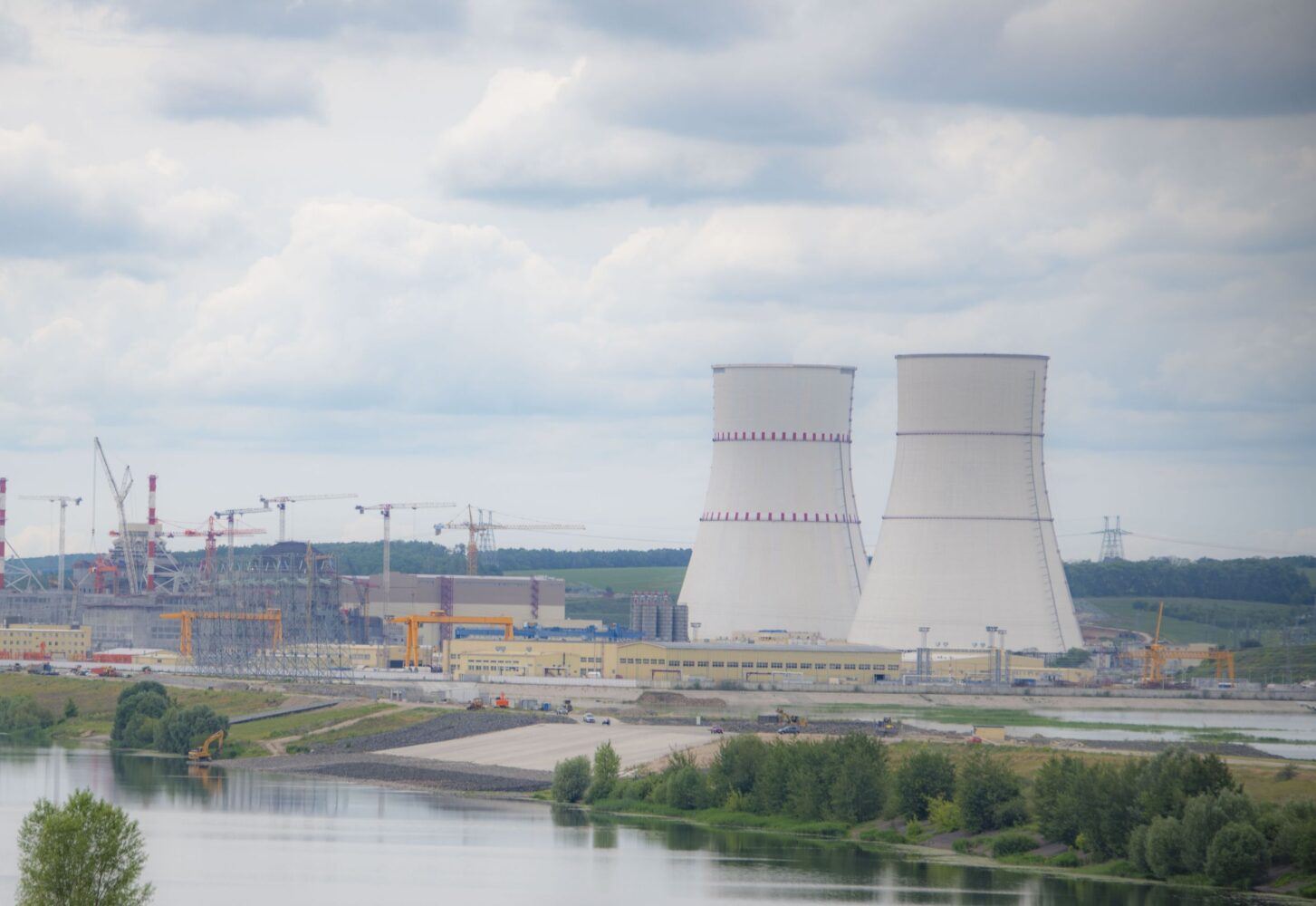
Notably, the construction timeline for Kursk II Unit 1 was impacted by military threats. “The operation of the existing Kursk Nuclear Power Plant and the construction of new units continued amid constant provocations and direct attacks by the Ukrainian armed forces. This makes it all the more significant that, at the end of the year, the first unit of Kursk II was connected to the national grid for the first time. The nuclear professionals at Kursk deserve congratulations and gratitude for this remarkable New Year’s gift,” Rosatom Director General Alexey Likhachev commented on January 1, 2026, following the unit’s first grid connection.
In 2025, seven units were permanently shut down: three in Belgium, one in Taiwan, and three units at Bilibino in Russia. “The Bilibino reactors had reached the end of operations, however, whereas the other four reactors were closed as a result of political decisions,” the WNA report notes. With these seven units, 2,823 MW of capacity was removed from the global nuclear power sector.
In 2025, construction began on nine units in China and two in Russia. Rosatom poured first concrete for Leningrad II Unit 4 on March 20 and for Kursk II Unit 3 on December 20. Those 11 first concrete pours match the number recorded in 2024. “Over the last 40 years, this number of new construction starts has been exceeded only in 2009 and 2010,” the report says. Despite the high number of new builds, WNA experts note that tripling global nuclear capacity by 2050 will require six times as many construction starts per year by the mid-2030s as we see today.
400 GW
Total installed nuclear capacity in 2025
Long-term operation programs continue to sustain nuclear generation volumes. As of August 2026, the average age of operating nuclear reactors worldwide was 33 years. Forty-six reactors are over 50 years old, accounting for about 10% of the operating fleet. The average age at which reactors are retired is gradually increasing: it was 47.3 years in 2024 and 48.7 years in 2025. The report specifically notes that a reactor’s age does not necessarily affect its capacity factor.
Forecasting a shortfall
According to the report, of the 423 GW (gross) of nuclear capacity currently operating, 401 GW will remain in operation in 2050. Through 2030, the growth in global nuclear capacity will be driven primarily by reactors currently under construction. The total capacity of such reactors has increased from 76 GW to 82 GW compared to last year’s forecast. By 2030, they will add 54 GW to the global fleet. An additional 28 GW of capacity under construction is scheduled for commissioning by 2035.
According to WNA projections, “planned” units — those typically commissioned within 15 years — will add 106 GW to the global fleet, and another 8 GW by 2050. Compared to last year’s forecast, capacity in this category has grown from 107 GW to 114 GW. By 2050, “proposed” units are expected to add 289 GW, which is 5 GW lower than last year’s projection. More than half of this capacity will be commissioned between 2041 and 2050. Another 13 GW falls into the “potential” category, where total capacity has decreased from 24 GW.
An additional 559 GW is required to meet the target. “If national targets and identified projects are achieved and the existing fleet continues operating, capacity would reach 1,457 GWe in 2050,” the report says.
Action needed
A significant portion of the WNA report is dedicated to recommendations for countries developing or intending to develop nuclear generation. WNA Director General Sama Bilbao y León advises governments and industrial enterprises to develop programs, select sites, and establish regulatory frameworks and financing mechanisms for nuclear power reactors well before an acute need arises. “This matters because nuclear expansion will take place alongside rapidly increasing electricity demand from electrification, data centers, cooling, desalination, hydrogen and industrial decarbonization. New nuclear capacity will be needed both to replace unabated fossil generation and to help meet growth in total low-carbon electricity demand. It can also provide reliable heat for sectors that are difficult to decarbonize through electricity alone,” the report says.
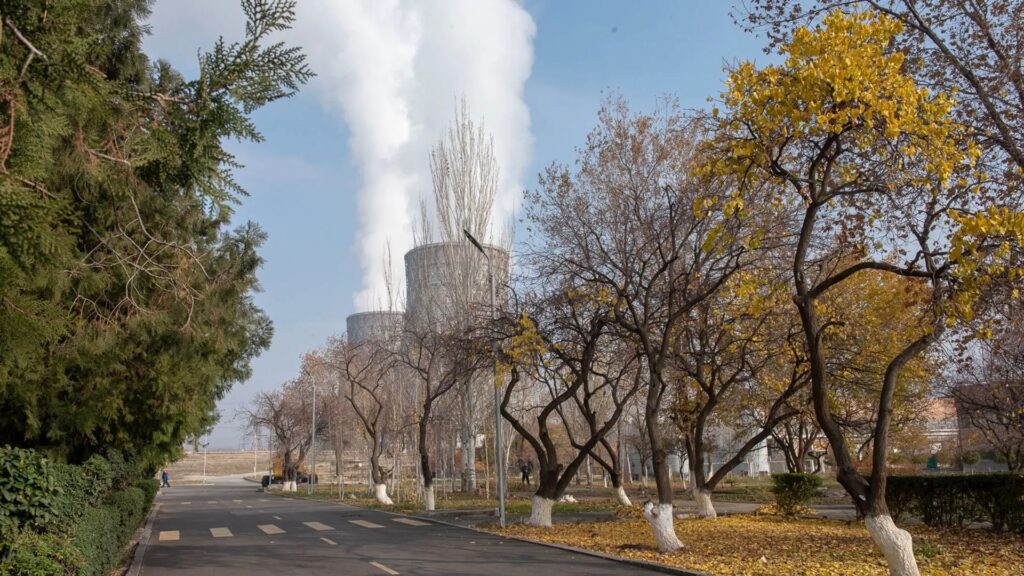
It is crucial to maximize the potential of existing capacity. This requires ensuring long-term operation, safely uprating capacity, and assessing the feasibility of restarting previously shut-down units. Rosatom possesses unique expertise in this area, having restarted and subsequently extended the operational life of the Armenian NPP.
When selecting new projects, Sama Bilbao y León advises opting for proven solutions. “Their contribution will be greatest where we move away from isolated projects and establish repeat-build programs that capture experience from one unit to the next,” she emphasizes. Rosatom operates precisely on this logic, first testing reactor technologies in Russia before offering them to international customers.
The WNA Director General acknowledged that financing models for new nuclear builds will vary depending on how energy markets are structured. In any case, however, risks must be allocated among various stakeholders.
She also advised newcomer countries to turn to experienced equipment suppliers to accelerate initial construction, rather than attempting to localize manufacturing immediately. Another piece of advice is to train nuclear professionals well in advance, paying special attention to regulators, operators, project managers, and skilled workers: “Countries restarting nuclear construction after long gaps should not assume that an existing operating fleet automatically provides the skills needed for major new-build programs.” Rosatom is a proven and reliable partner in these areas. Companies within its perimeter have well-established production capabilities for primary circuit equipment, control systems, and other critical unit components, as well as nuclear fuel. Rosatom is a long-standing partner of the IAEA in nuclear education. The Russian nuclear corporation supports branches of the National Research Nuclear University MEPhI in Kazakhstan and Uzbekistan and offers international students educational programs in Russia.
On the regulatory front, Sama Bilbao y León called for enhanced international cooperation to accelerate decision-making: “Greater use of previous regulatory assessments, while retaining national responsibility for safety decisions, can reduce unnecessary duplication and help successful designs move more efficiently between markets.”
She also noted that long-term programs are superior to one-off projects: “Stable programs allow experience to accumulate. They support investment in people and manufacturing. They make it possible to repeat designs, retain delivery organizations and give governments, regulators, investors and suppliers confidence that capability developed for one project will be needed again.” Rosatom is a premier partner for implementing such programs. For instance, Rosatom is building power units in India and China, as well as four-unit nuclear power plants in Türkiye and Egypt.
Nuclear security
For nuclear generation to expand, however, it is essential to maintain the physical security of power units, nuclear fuel production facilities, and waste storage sites. As noted above, breaches of physical security have extended the construction timeline for Kursk II Unit 1 and slowed the construction of Bushehr 2 in Iran. They also hinder efforts to maintain all units at the Zaporozhye NPP in a safe condition. The importance of the physical protection of nuclear power plants was highlighted by Alexey Likhachev during his address at the IAEA General Conference in September of this year: “On the one hand, we see a genuine increase in interest in nuclear energy and are making plans to expand nuclear capacity. We can state that the vast majority of countries have recognized that nuclear power is indispensable and in high demand. On the other hand, we now live in a world where nuclear facilities are attacked almost daily, creating risks to their security. What was once unthinkable has become a reality.”
Photo by: Kursk NPP; Armenian NPP; Akkuyu Nuclear JSC; Strana Rosatom newspaper