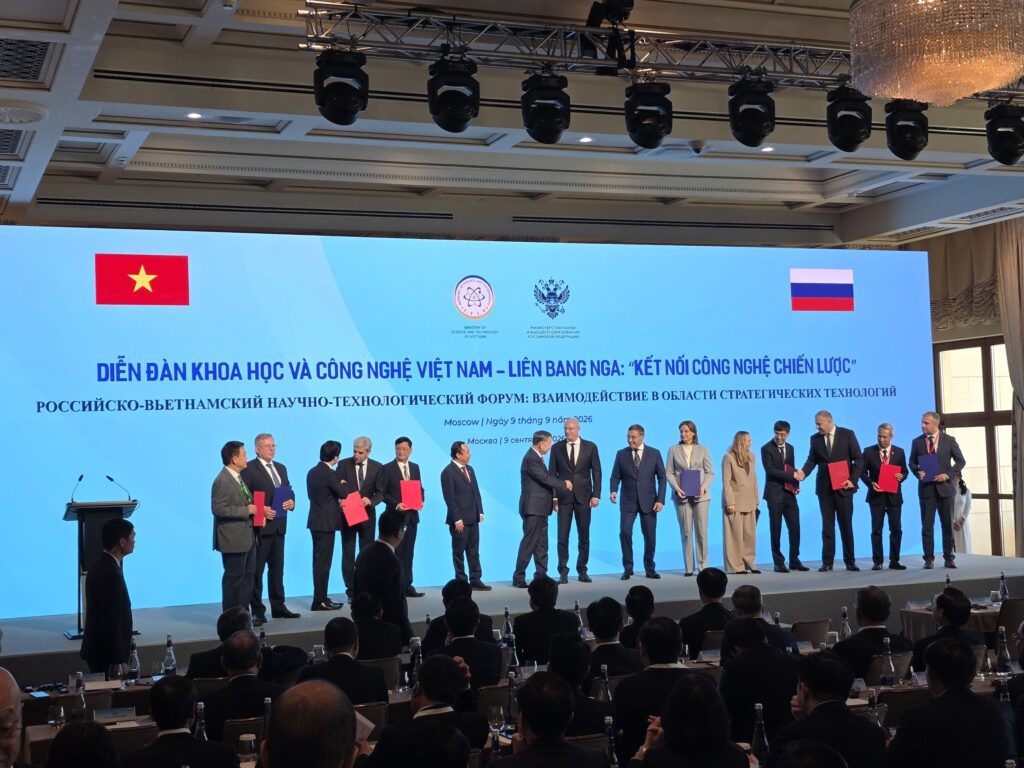
During Vietnamese President To Lam’s official visit to Russia, the Vietnamese delegation enjoyed an extensive engagement program organized by Rosatom. The parties reached agreements on conducting research at Russia’s unparalleled MBIR reactor, collaborating in quantum technologies, and establishing an additive manufacturing center in Vietnam.
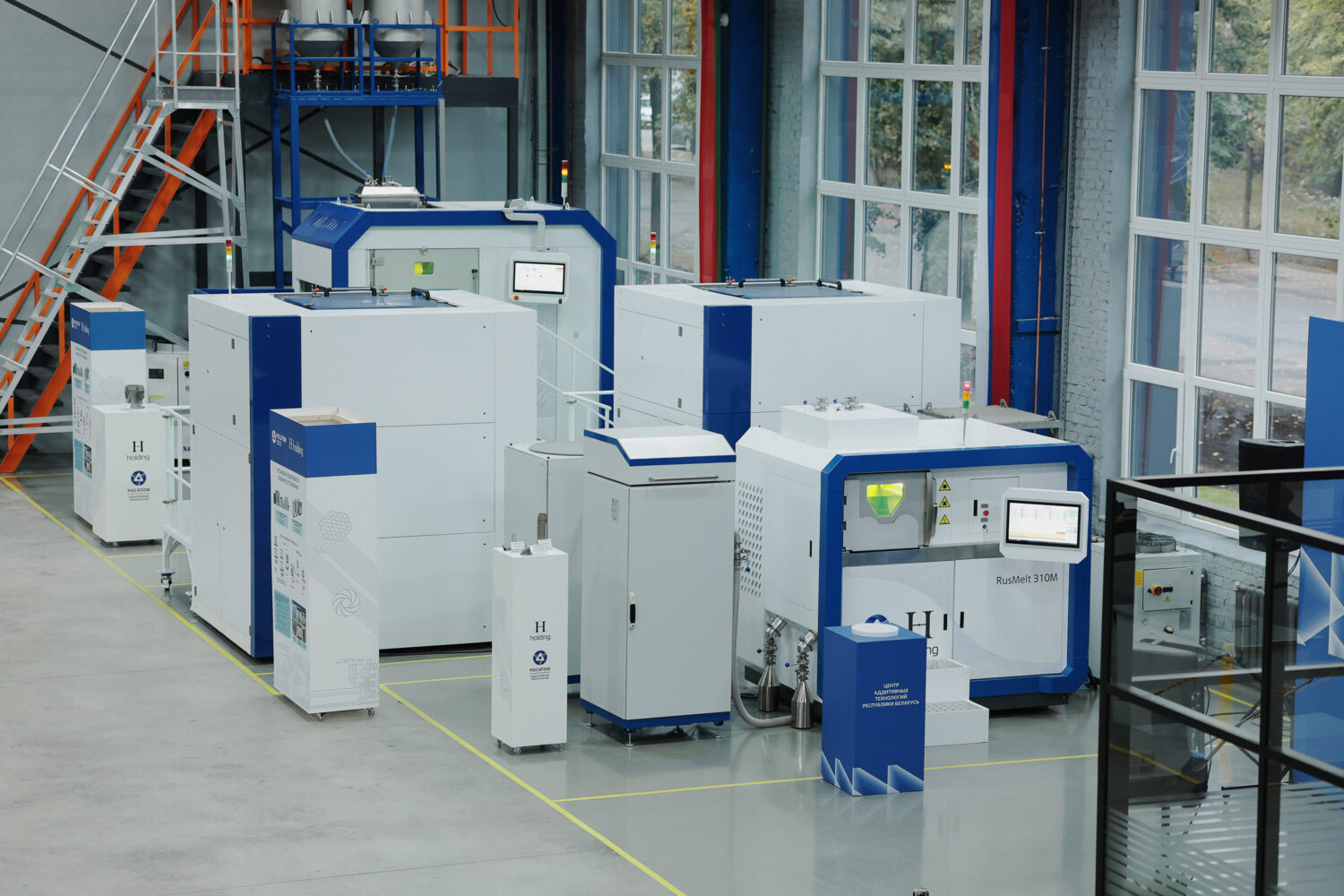
Petrovietnam has signed an agreement with TVEL, Rosatom’s Fuel Division, on joining forces to establish an Additive Manufacturing Center in Vietnam. The document provides for the supply of SLM (Selective Laser Melting) and L-DED (Laser Directed Energy Deposition) metal 3D printers manufactured by TVEL, and other Russian-made equipment. The agreement also establishes the framework for organizing metal powder production in Vietnam.
“The center will enable the rapid manufacturing of complex parts for drilling and pumping equipment, reduce downtime through rapid prototyping, and introduce advanced additive technologies for the restoration and repair of equipment and large-scale components. This goes beyond simply adopting 3D printing; it is a strategic tool for addressing the practical challenges of the fuel and energy sector,” said Phan Tu Giang, Vice President of Petrovietnam.
Looking ahead, TVEL is open to discussing the local production of 3D printers in Vietnam. “We have already gone through a similar process with our partners in Belarus: in 2025, we transitioned from simply supplying 3D printers to jointly assembling them and delivering them to third-party customers,” said Ilya Kavelashvili, Director for Additive Technologies at Rosatom’s Fuel Division.
Other technologies
3D printers are not the only equipment that Rosatom has helped bring into local production in a partner country. At the Innoprom.India international industrial exhibition in New Delhi, Rosatom showcased a locally produced 3D scanner developed by RangeVision, the Fuel Division’s technology partner in 3D scanning. The device was manufactured at the Indian partner’s facility. This will enable the product to secure “Make in India” certification.
Additionally, the JET Engineering and Technical Center (part of Rosatom) signed a distribution agreement with India’s Syngient Technologies for the Repeat Vision platform, which enables end-to-end design and modeling of complex industrial systems. The Giredmet Institute, also part of Rosatom, signed a contract with India’s Alt Metals Private Limited to establish a pilot production facility for titanium sponge.
MBIR: unique research opportunities
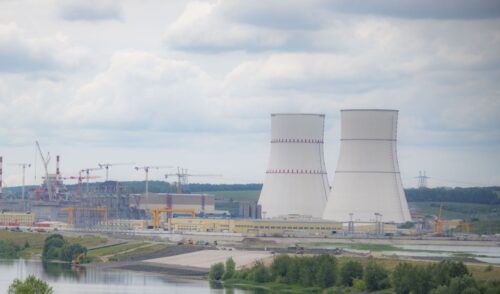
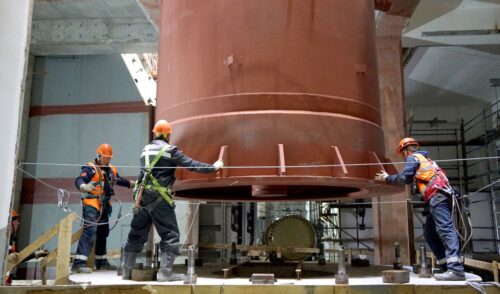
The Vietnam Atomic Energy Institute (VINATOM) has been designated as the lead organization for Vietnam’s participation in the MBIR International Research Center. This was announced at the Russia-Vietnam Science and Technology Forum on Cooperation in Strategic Technologies. Joining the MBIR International Research Center will give Vietnamese scientists access to an unparalleled research facility — the 150 MW multipurpose fast-neutron research reactor currently under construction by Rosatom.
Vietnamese scientists are interested in testing structural materials, specifically investigating radiation damage, creep, and the corrosion resistance of structural alloys exposed to fast neutron flux and high temperatures. They also plan to evaluate the reliability of equipment and components by conducting in-pile qualification of sensors, instrumentation, and mechanical systems under intense irradiation. This will allow them to obtain experimental data for multiphysics modeling, as well as to validate and verify calculation codes for safety assessments and licensing support in nuclear projects. Another area of interest is the development of nuclear fuel and coolant types and the study of their behavior. Finally, Vietnamese scientists plan to research the transmutation of minor actinides and explore ways to reduce the volume and activity of radioactive waste.
“This is an opportunity for us to expand our capabilities by gaining direct access to unique research infrastructure. It is a strategic step toward developing the expertise of our physicists and nuclear engineers in peaceful uses of nuclear energy. We look forward to a long-term technology partnership,” said Dr. Tran Chi Thanh, President of VINATOM.
At the quantum level
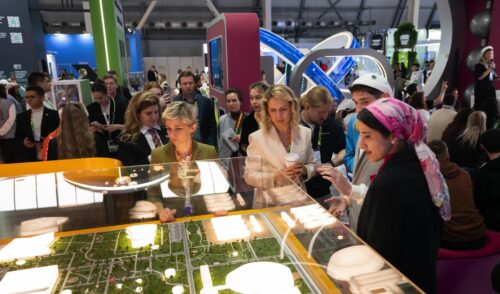
The Vietnam Academy of Science and Technology has reached an agreement with Rosatom to develop and subsequently implement a roadmap for the advancement of quantum science and technologies. A quantum technology center and associated laboratories are planned to be established in Vietnam. Workforce training is another key area of cooperation. “This is a significant and highly complex task: we will build a new high-tech industry in a very short period of time,” said Ekaterina Solntseva, Director for Quantum Technologies at Rosatom, speaking at the Russia-Vietnam Science and Technology Forum.
Since 2020, Rosatom has been in charge of rolling out Russia’s Quantum Computing roadmap, which involves 19 research institutes and universities. In Russia, seven processor prototypes have been developed across four platforms: ions, atoms, photons, and superconductors. Three of these have already reached a capacity of over 70 qubits. Current development efforts are focused on improving processor performance and solving applied problems, including those in the nuclear sector. Since 2026, Rosatom has also been involved in the development of quantum sensors.
Photo by: Consortium Leader of MBIR Reactor International Research Centre LLC; TVEL JSC; Rosatom Quantum Technologies
This site uses cookies. By continuing your navigation, you accept the use of cookies. For more information, or to manage or to change the cookies parameters on your computer, read our Cookies Policy. Learn more