A new edition of the Red Book — Uranium 2026: Resources, Production and Demand — was published in mid-September. Its authors conclude that identified uranium resources are sufficient to meet reactor requirements through 2050 and beyond. But keeping supply chains reliable will require more investment in exploration, mine construction and bringing reserves into production.
The report is prepared and published every two years by the OECD Nuclear Energy Agency (NEA) and the IAEA. The Red Book offers a comprehensive review of the global uranium market’s key dimensions, a statistical analysis of the industry, and 46 country reports describing exploration, the resource base, uranium production and reactor requirements in each of the countries mentioned. This latest edition analyses nuclear power growth projections to 2050 and long-term trends in uranium supply and demand. It covers the period from January 1, 2023 to January 1, 2025, and also includes information relating to 2025 and 2026.
$970 million
Global investment in uranium exploration in 2024
Prospecting and exploration
Investment in uranium exploration grew across 2023 and 2024, reaching USD 970 million in 2024. The upward trend began in 2021, when investment stood at USD 490 million — meaning the figure has almost doubled in four years. Preliminary data put 2025 investment at USD 930 million, but several of the largest spenders, including the United States and Kazakhstan, have yet to submit data. The Red Book authors therefore estimate the 2025 total at USD 1 billion, which would mean exploration investment is still rising.
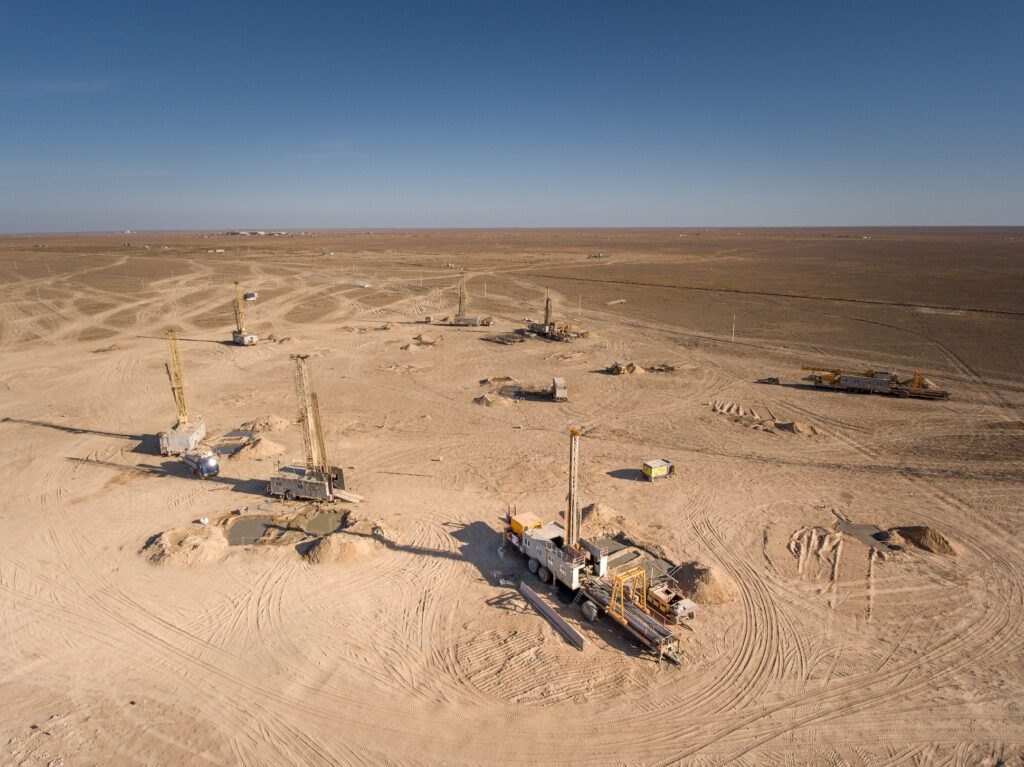
The growth is also physical, not just financial. Exploration and development drilling totaled about 8,500 km in 2023–2024, 27% more than in the preceding two years. Nearly 20% of that total was development drilling. The Red Book notes: “During the 2023-2024 period, Uzbekistan, China, Kazakhstan and the United States accounted for 31%, 28%, 12% and 11% of total drilling, respectively, while Namibia, Canada and India collectively contributed a further 16%.”
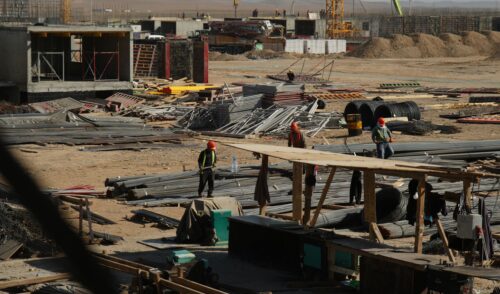
Russia is working its existing deposits, building and commissioning new mines, and exploring prospective areas. Development of the Dobrovolnoye deposit in the Kurgan Region began in 2025. In Buryatia, mining has started at Dybrynskoye, Namarusskoye is being prepared for commissioning, and a license has been obtained to develop Tetrakhskoye. In Transbaikalia, Mine No. 6 is under construction to work new flanks of existing deposits and the new Shirondukuyskoye deposit. The Elkonskoye deposit in Yakutia is being prepared for development. Meanwhile, a “Uranium of Russia” program is being drafted.
In October 2026, a decision was taken to build a hydrometallurgical plant in Transbaikalia to process uranium and uranium-molybdenum ores from the Argunskoye and Zherlovoye deposits. The plant will have two independent production lines, each rated at 5,500 tonnes of U3O8 per year. It is also expected to process concentrates from Rosatom’s other deposits in Russia and abroad.
8.1 million tU
Identified recoverable resources at costs below US$260/kgU as of 1 January 2025
Resources
As of January 1, 2025, world uranium resources had grown to 8.1 million tonnes of uranium (tU), up 2.1% from the previous edition of the Red Book. Reasonably assured resources account for 61% of this total, and inferred resources for the remaining 39%. All fall within the <USD 260/kgU cost category, which contains three lower-cost categories nested inside one another like matryoshka dolls. In the <USD 130/kgU category, total identified recoverable resources stand at 5.9 million tU — virtually unchanged from two years earlier.
Resources in the <USD 80/kgU category rose 3.5%, mainly on new data from Canada. Growth in the <USD 40/kgU category was 2.1%, driven by successful exploration at several deposits in Kazakhstan. China saw substantial changes in the <USD 130/kgU and <USD 260/kgU categories, up 20% and 19% respectively, again largely on successful exploration. US identified recoverable resources in the <USD 260/kgU category also increased, because the Red Book team incorporated inferred resource estimates based on publicly available data. According to the Red Book, Russia’s total recoverable uranium resources as of January 1, 2025 stood at 650,387 tU.
The authors note that the global shift of resources into higher-cost categories continued. They also recorded re-estimates that reduced the resource base: “Re-estimates of mineral resources in Botswana and Namibia resulted in significant and moderate reductions, respectively, in the higher cost categories.”
Another important trend flagged in the report is that the share of the lowest-cost resources (<USD 40/kgU) is gradually shrinking as mining, processing and development costs rise and low-cost deposits are progressively depleted.
61,924 tU
Global production of natural uranium in 2024
Production
Natural uranium production from primary sources (mines) rose about 20% in 2023–2024 compared with 2021–2022, from 96,851 tU to 116,487 tU. In 2024 alone, output reached 61,924 tU. The report says: “This increase marks a clear reversal of the previous downward trend observed from 2017, which bottomed out in 2021, and is expected to continue in the near and medium term due to favorable market conditions, the restart of previously idled mines and the development of new production capacity.”
Mines with a combined design capacity of about 9,400 tU per year have recently restarted or are in the process of restarting. The fate of a further 11,750 tU per year of idled capacity remains uncertain: production there was suspended roughly a decade ago, and restarting after such a long hiatus is costly and complex. “It is therefore reasonable to assume that only part of this remaining idled capacity will ultimately return to production, and likely at levels below the nominal listed capacity,” the authors note.
Kazakhstan remained the leading producer over the two-year period, with about 38% of world output. Canada (22%), Namibia (21%), Australia and Uzbekistan (8% each) completed the top five. Russia ranked sixth with 5%. According to the Red Book, it produced 2,738 tU in 2024.
Demand
As of January 1, 2025, the world had 441 commercial power reactors in operation, with a combined electrical capacity of 398 GWe. Fueling them requires about 64,500 tU per year. The number of units, their combined capacity and the associated uranium requirements are all expected to grow over the coming decades. The Red Book assesses two growth scenarios: “Taking into account changes in policies announced in several countries and nuclear programs as of 1 January 2025, world nuclear capacity by 2050 is projected to increase to 565 GWe in the low demand case, and to 916 GWe in the high demand case, an increase compared to 2024 capacity of around 42% and 130% respectively. Accordingly, world annual reactor-related uranium requirements are projected to rise to between around 84 800 tU/yr and 143 900 tU/yr by 2050.” The size of the reactor fleet in 2050 — and hence uranium demand — will depend on electricity demand growth, the economic competitiveness of nuclear against other generation sources, financing decisions for new build, supply chain resilience, and acceptance of nuclear energy by the public and governments, the report notes.
Is There Enough Uranium?
In 2024, uranium from natural sources covered 96% of reactor requirements, up 11 percentage points from 2022. The remainder came from various secondary sources. The authors are emphatic: “While secondary sources will continue to supply a portion of uranium demand, it is crucial to bring new facilities online from planned and prospective production centers and to sustain exploration efforts to identify additional resources.”
Scaling up exploration and mining matters over the long run, not just in the short term. Under the high-demand case, the global reactor fleet would consume roughly 46% of identified recoverable resources in the <USD 130/kgU category and about 33% of those in the <USD 260/kgU category — that is, of all resources currently counted — by 2050. Beyond 2050, even if the fleet stays flat, cumulative uranium requirements would exceed currently identified resources — by 2080 in the high case and by 2120 in the low case.
The Red Book authors see closing the nuclear fuel cycle and recovering uranium from unconventional sources, notably black shales and phosphates, as ways to broaden the raw material base for nuclear fuel. But securing supply both before and after 2050 will require a sharp increase in investment to bring identified resources into production. Investment growth and new mining technologies depend on prices investors find attractive: “For sustained uranium supply, both consumers and producers must ensure a stable framework for uranium exploration, mining and transportation, supported by pricing mechanisms that encourage long-term investments. Sustained, adequate uranium prices are essential to support both new projects and ongoing exploration, as global uranium demand could more than double by 2050 in a high-demand scenario and increase by 42% in a low-demand case.”
Rosatom is working on two fronts to secure more raw material for nuclear fuel: expanding its uranium resources, and bringing depleted uranium and fissile materials from spent nuclear fuel into the fuel cycle. Rosatom leads in developing and deploying closed fuel cycle technologies. This is the goal of the Proryv (Breakthrough) project, under which a power unit with the BREST-OD-300 reactor and an adjacent facility for spent fuel reprocessing and fabrication of new fuel assemblies are being built in Seversk, Russia. By design, closing the fuel cycle will reduce natural uranium requirements over time.
Photo by: BHP, Orano, Kazatomprom, Rössing Uranium Limited, U.S. Nuclear Regulatory Commission