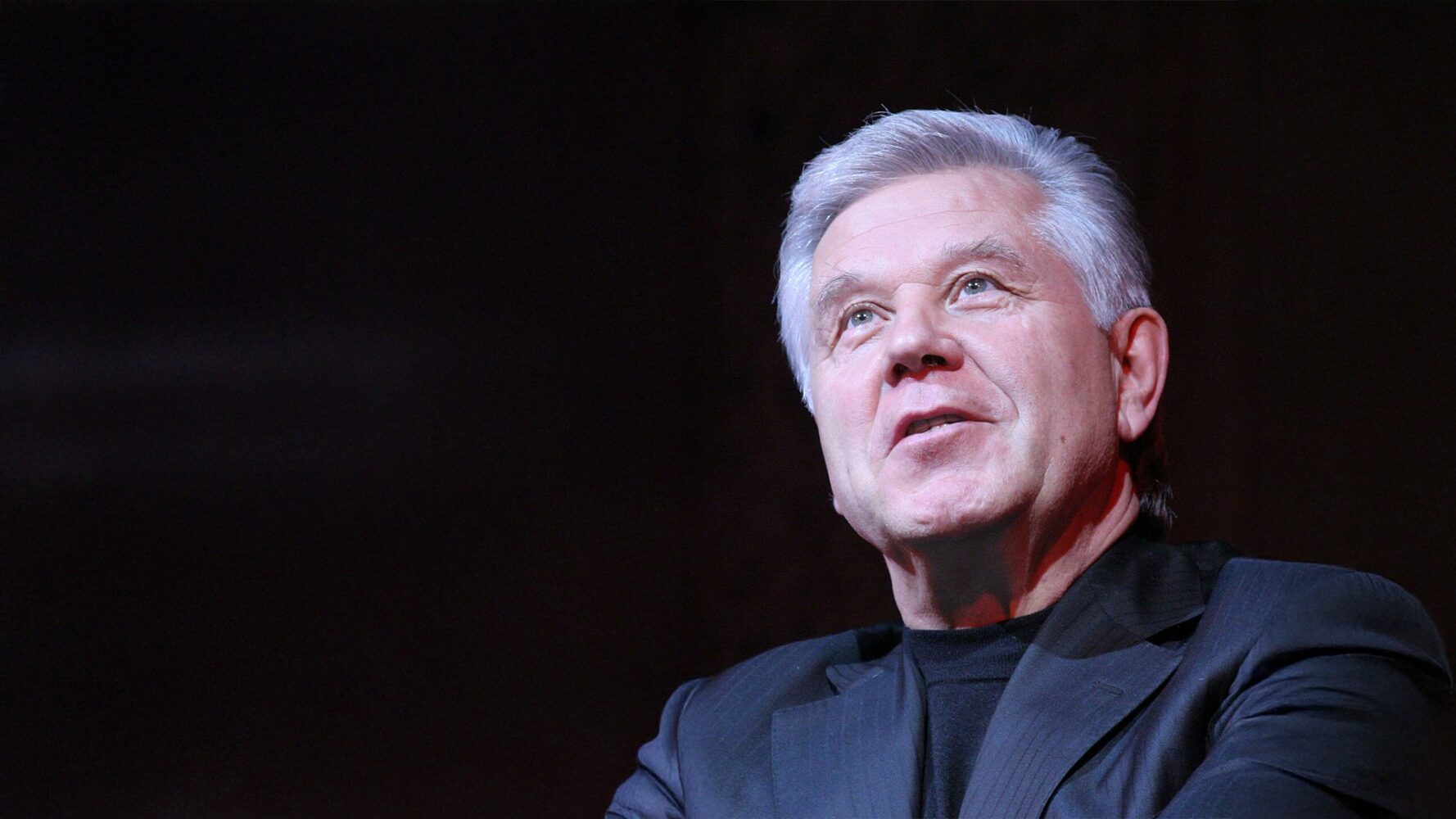
This year, the International Union of Nuclear Energy and Industry Veterans (the Union) celebrates its 15th anniversary. We asked the Union’s Chairman, Pavel Ipatov, to tell us about the Union’s work and share his reflections on the development of the nuclear industry.
Mr. Ipatov, could you please briefly describe your professional journey in the nuclear industry?
I graduated from the Power Engineering Department of the Ural Polytechnic Institute. I began my career at the South Ukraine Nuclear Power Plant as a shift supervisor. From 1989 to 2005, I worked at the Balakovo Nuclear Power Plant, where I advanced from chief engineer to plant director. Later, I moved into public service for some time, but eventually returned to the industry.
Your work experience is impressive. How do you think the industry has changed over that period?
Much has changed for the better. First and foremost, attitudes toward safety. The accident at the Chernobyl Nuclear Power Plant made safety the top priority for all nuclear industry organizations. Requirements for the quality, properties and reliability of materials have increased considerably. Overall, every aspect of nuclear plant operation is now evaluated primarily through the lens of safety.
I have witnessed the Russian nuclear industry grow and develop. Rosatom effectively handles all the tasks assigned, and its areas of responsibility continue to expand. Today, Rosatom is not about conventional nuclear power alone — the corporation operates across a whole range of new businesses, from supercomputers and nuclear medicine to environmental projects. This work is important. Nevertheless, I believe that nuclear technologies should remain Rosatom’s core.
Which latest achievements of the Russian nuclear industry are you particularly proud of?
There are many reasons for pride, but I would highlight two things in particular.
First, Rosatom is a global company, a world leader in terms of nuclear construction projects and number one in uranium enrichment. This instills well-deserved pride in the Russian industry.
Second, and equally important, is Rosatom’s tremendous contribution to human capital development, in my view. The nuclear industry is one of the most high-tech sectors and requires highly qualified personnel. Today, hundreds of thousands of people work at Rosatom, and the corporation has created an unparalleled educational system that enables continuous improvement of employees’ professional skills and qualifications.
I am proud of such meticulous and focused work with people because far from every company can boast of this.
Now, could you please tell us more about the activities of the Union you lead?
I have held this position for over ten years, and I can honestly say: the Union is one of its kind — I know of no similar organization. It is an independent international non-profit organization that now unites veterans of the nuclear industry from 14 countries. These are scientists, engineers, and managers. Many held leadership positions for decades and accumulated one-off experience that must be passed on to the next generations of nuclear professionals.
Specialized knowledge is acquired at universities. But it is priceless to learn about the industry’s development directly from the people who were firsthand involved in those events. I see that young people are genuinely interested, so we have regular meetings with students. We not only pass on our own experience but also promote knowledge about nuclear energy. Here are recent examples: not long ago, Oleg Muratov, a member of Rosatom’s Public Council and an expert for our Union, delivered a lecture on radioecology, natural and artificial radioactivity to faculty and students of the Tajik Technical University. Dmitry Astakhov, a surgical oncologist and Associate Professor at the Department of Oncology and Radiation Medicine at the Burnazyan Federal Medical Biophysical Center, spoke to medical students at the Tajik National University about treating cancer using nuclear technologies.
The second key aspect of the Union’s work is raising socially important issues for discussion. These vary by country and include promoting Russian nuclear technologies, combating radiophobia, attracting youth to the industry, and many others.
How often does the Union hold events?
Every year, we organize four to five conferences and roundtable discussions. For example, we held a conference in Dushanbe (Tajikistan) this April, discussing prospects for the application of nuclear technologies and radiation safety issues in Central Asian countries. In May, a roundtable in Minsk (Belarus) assessed the role of nuclear energy in the energy mix of various regions. In June, we celebrated the Union’s 15th anniversary and the 80th anniversary of the nuclear industry at the international scientific conference titled “Consolidating Forces and Knowledge in Support of Nuclear Energy and Technology Development in the Central Asian Region” held in Bishkek (Kyrgyzstan).
In September, a conference was held in Almaty (Kazakhstan) dedicated to digitalization, accumulation, preservation, and transfer of critical industry knowledge. In the same month, members of the Union participated as observers in the IAEA General Conference. We organized roundtables on the sidelines of the General Conference, participated in other delegates’ events, and established contacts with researchers from the IAEA member states.
In October, we plan to hold a roundtable in Tashkent (Uzbekistan) to address tasks related to nuclear infrastructure development, personnel training, and community engagement. Specifically, we will consider radioactive waste management, repair of environmental damage, and rehabilitation of nuclear legacy sites. In November, we plan to hold our reporting and election conference.
In your opinion, what qualities should nuclear professionals possess?
First, dedication to the industry, its traditions and values. Second, deep knowledge of specialized disciplines (which, I might add, are far from being simple to study). Third, a nuclear professional should be a well-rounded individual with broad professional and personal interests.
What advice would you give to aspiring nuclear professionals?
You have chosen to dedicate your lives to the nuclear industry — and I am deeply convinced this is the right choice! Now your task is to bring maximum benefit to the industry and the country. I wish you success on this challenging yet fascinating journey!
Photo by: Wikipedia