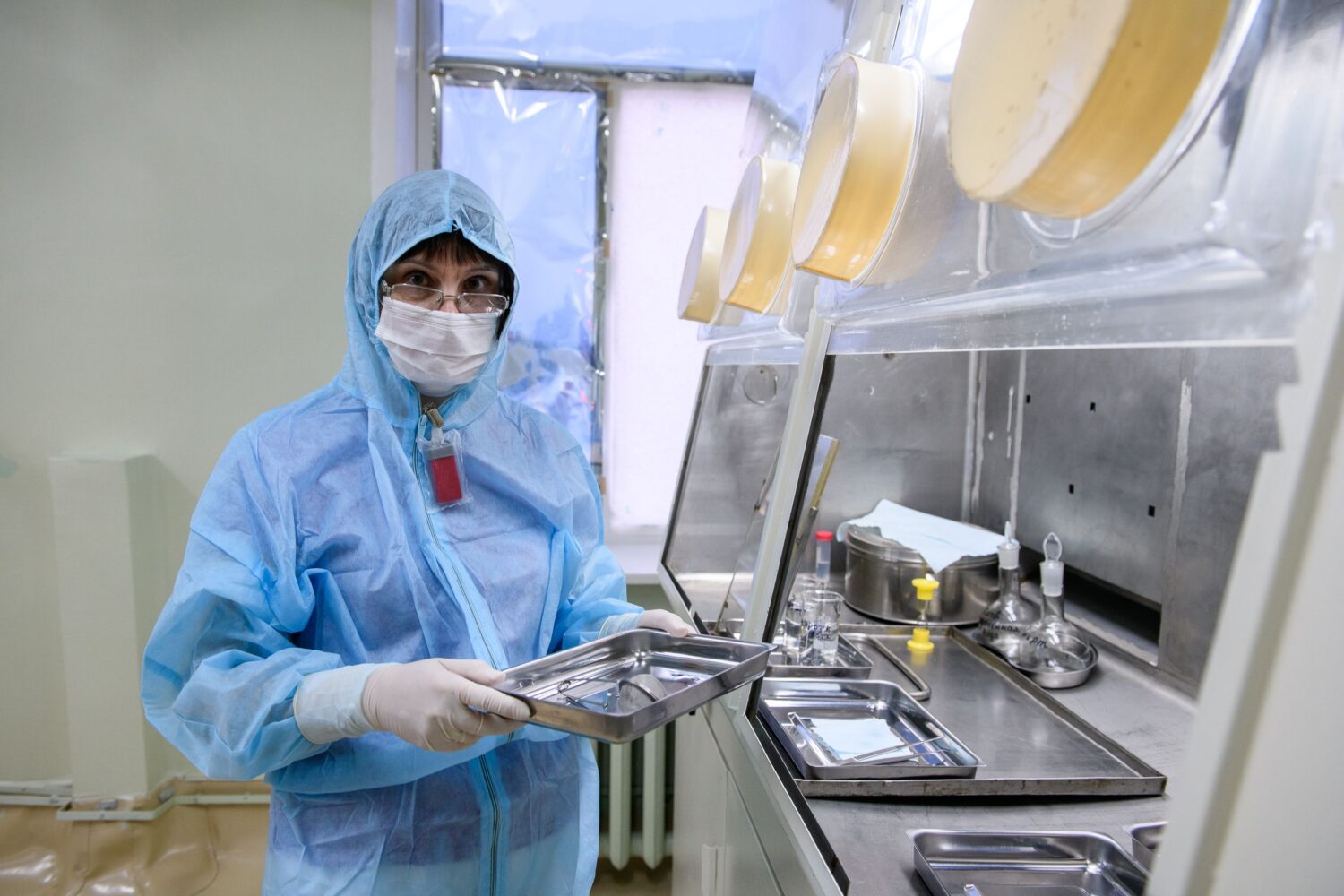
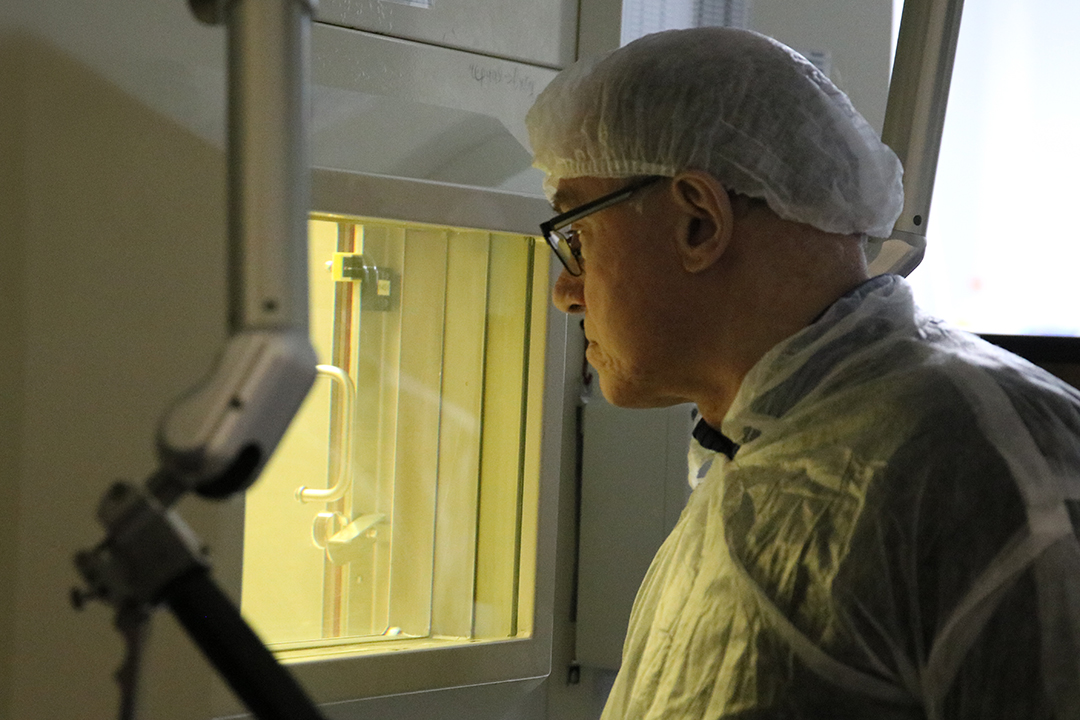
Rosatom is a world leading supplier of medical isotopes that are used to fabricate radiopharmaceuticals for the diagnostics and treatment of severe medical conditions. The Russian nuclear corporation is also actively developing other areas of nuclear medicine and promoting international cooperation in this field.
Nuclear medicine encompasses various diagnostic and therapeutic applications. These include positron emission tomography (PET) and single-photon emission computed tomography (SPECT). In PET, a patient is administered a radiopharmaceutical that emits positrons, and the resulting gamma radiation is detected, allowing for the assessment of metabolic activity in tissues. SPECT is an imaging method using radiopharmaceuticals that emit photons, revealing functional changes in tissues and organs.
Advanced approaches to such diagnostics and treatment were discussed at the 4th Nuclear Medicine 2025 Congress in December, featuring representatives from Russia, Japan, India, Brazil, Saudi Arabia, the United States, and international organizations. Experts presented reports on the technical aspects of equipment operation, methodologies for interpreting results, and issues of image quality control.
Another key focus was the use of new radionuclides, personalization of administered radioactivity doses, and prevention of side effects during treatment. Attention was also given to combined therapy methods, interdisciplinary collaboration, and professional training.
The Congress President and Director General of the Research Institute of Clinical and Experimental Radiology at the N.N. Blokhin National Medical Research Center of Oncology, Boris Dolgushin, detailed the specifics of boron neutron capture therapy. This method for treating malignant tumors involves administering a boron-10 compound that accumulates in cancer cells. The tumor is then irradiated with a neutron beam, which is captured by the boron nuclei, triggering a local nuclear reaction that destroys the cancer cell while sparing healthy tissue. The Blokhin Center is preparing to introduce this new technology, which was developed with Rosatom’s involvement.
A recurring theme of the conference was Russia’s transition toward personalized medicine, which aims to tailor individual treatment plans for each patient based on their genetic and other specific characteristics.
In November, Rosatom held a nuclear medicine seminar in Algeria. Algerian Minister of Energy and Renewable Energies Mourad Adjal noted that, on the President’s instruction, the government is prioritizing the fight against cancer and the development of nuclear medicine. Rosatom experts presented the corporation’s comprehensive capabilities for extending human life and improving its quality. These include the supply of medical isotopes and radiopharmaceuticals; prosthetic solutions utilizing additive manufacturing; the development and production of diagnostic and therapeutic equipment; the construction of medical infrastructure and multifunctional centers for processing medical and food products; and inbound medical tourism services.
“We are ready to expand cooperation with our Algerian partners to make these solutions available in your country,” said Igor Palamarchuk, Deputy Director General for the Middle East and North Africa at Rosatom.
Overall, Rosatom places significant emphasis on fostering international scientific and expert cooperation aimed at developing new radiopharmaceuticals and medical devices, as well as organizing multicenter clinical trials.
Radiopharmaceuticals
Rosatom’s activities in nuclear medicine cover the entire value chain spanning from producing medical radionuclides to introducing both proven and novel radiopharmaceutical solutions to international markets. A key priority is the production and export of medical isotopes and radionuclide products.
Rosatom has patented a technology for manufacturing a radioactive agent based on actinium-225. This alpha-emitting isotope is considered one of the most promising for cancer therapy. There are only four producers of Ac-225 in the world, and Rosatom is one of them.
Russia has registered a radiopharmaceutical drug based on Rosatom-produced radium-223, called Rakurs (223Ra). It is used in radionuclide therapy for patients with prostate cancer and holds great promise for treating metastatic bone lesions from other primary tumors.
A drug for neuroendocrine tumors has been introduced in Russia. It contains lutetium-177, also produced by Rosatom. The compound octreotide in this drug binds to receptors on the tumor surface, while lutetium-177 delivers targeted radiation that destroys the tumor cells. This combination ensures minimal impact on surrounding healthy tissues.
Rosatom’s nuclear medicine products and solutions are supplied to countries in Europe, Asia, Latin America, and the Middle East, aiding in the diagnostics and treatment of over 2.5 million patients annually. Rosatom’s competitive advantage in the international market is its broad portfolio: generators of medical radionuclides, ready-to-use radiopharmaceuticals, and diagnostic kits for oncology, cardiology, nephrology, and endocrinology, as well as products for radioimmunoassay and labeled compounds for scientific and applied research. Building on these, Rosatom offers its international partners comprehensive solutions aimed at enhancing the quality of life.
Photo by: Rosatom’s Scientific Division