As the national coordinator for quantum computing, Rosatom is at the forefront of Russia’s push into this next technological frontier. But what exactly are quantum computers? Could they ever replace the customary machines we use today? More importantly, what real-world problems can they solve, and where does Russia stand in the global race? We break it down.
Quantum computing solves tasks by manipulating quantum objects like atoms, molecules, photons, electrons, and specially designed macrostructures.
Quantum computers represent a new generation of computing devices based on the principles of quantum physics.
Quantum and classical computers are not competitors, and one will not replace the other in the future. They are like different types of transport, each being more suitable for specific purposes.
Classical computers operate on transistors that process bits of information as either 0 or 1. The foundation of a quantum computer is the qubit, or quantum bit, which can exist in a state of 0, 1, or both simultaneously—a condition known as superposition. For a quantum computer to function, its qubits must be entangled. Quantum entanglement means that any two qubits and their actions can be interconnected.
To double the power of a classical computer requires roughly doubling the number of transistors, but for a quantum computer, this requires adding just one qubit.
Quantum computers excel at solving complex computational tasks in optimization and modeling—tasks that would take the most powerful classical supercomputers years to solve by linear search.
From medicine to AI
Experts forecast that quantum computers will be in high demand across several key sectors in the near future.
First, in pharmaceuticals and medicine, where they will enable the development of personalized drugs, predict epidemic spread, accelerate vaccine creation, and model complex molecules.
Second, in logistics and transport, where quantum algorithms will optimize routing for cargo and passenger traffic and manage vehicle flows in megacities.
Third, in digital security, where quantum key distribution already ensures absolutely secure information transfer and storage, and where a ‘quantum shield’ will transform existing cryptography.
Fourth, in materials science, as researchers use them to model innovative materials with specified properties.
Fifth, in artificial intelligence, where they will accelerate machine learning and enhance the recognition and analysis of images, speech, and text.
Among the leaders
Russia entered the global quantum race not long ago. In 2019, the Russian government approved a national roadmap for quantum technologies. That was the time when Russia had only one quantum computer prototype with just two superconducting qubits.
Since 2020, Rosatom has led the implementation of this roadmap through its Quantum Project, an ecosystem uniting 19 research institutes and universities and over 600 researchers and engineers.
This coordinated effort has quickly produced results. Russia is now among the top six countries to have created operational quantum processors with 50 or more qubits, and one of only three nations with working quantum processors on all four major technological platforms.
Today, the Russian quantum initiative is recognized as one of the world’s most cost-effective in terms of results per investment.
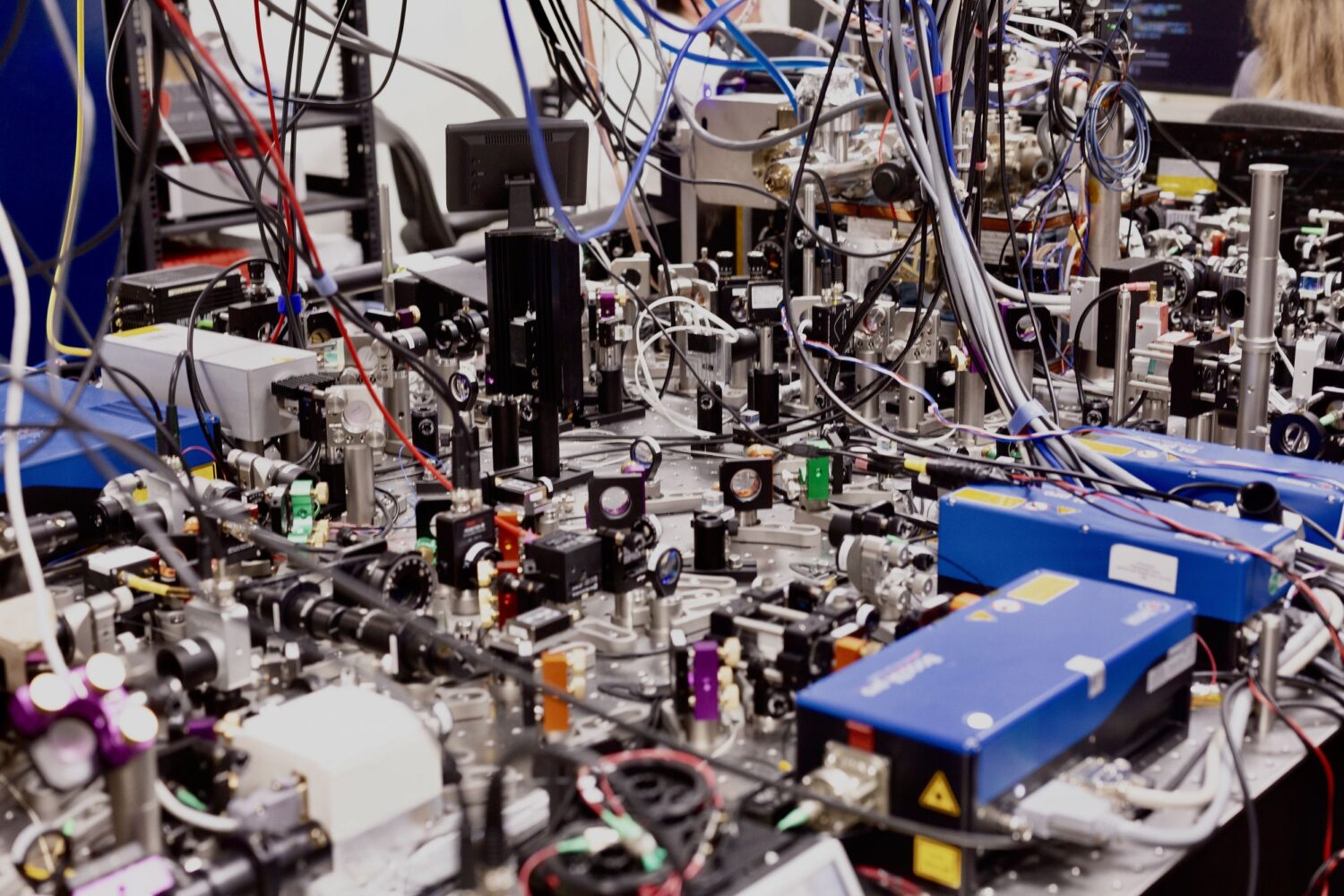
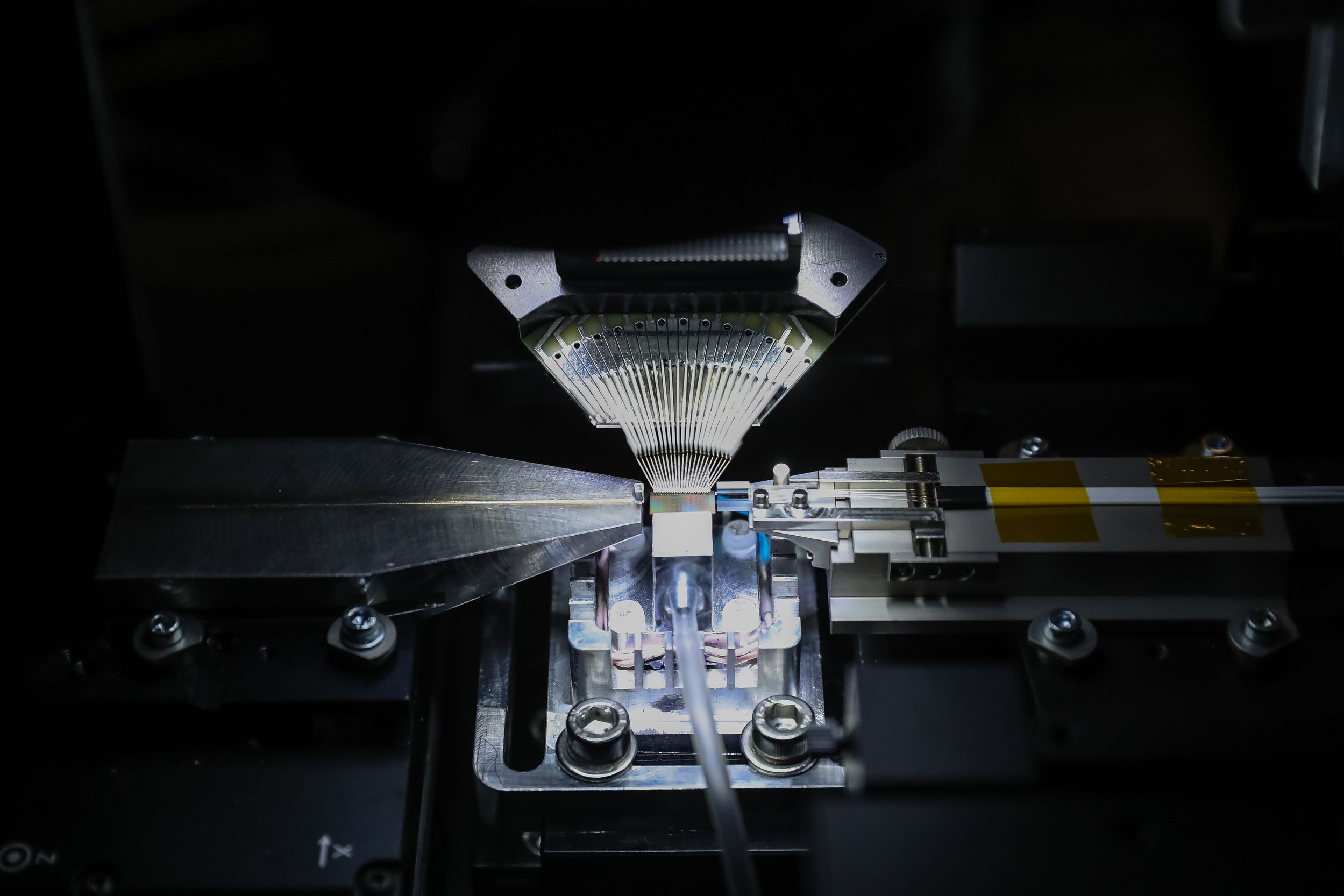
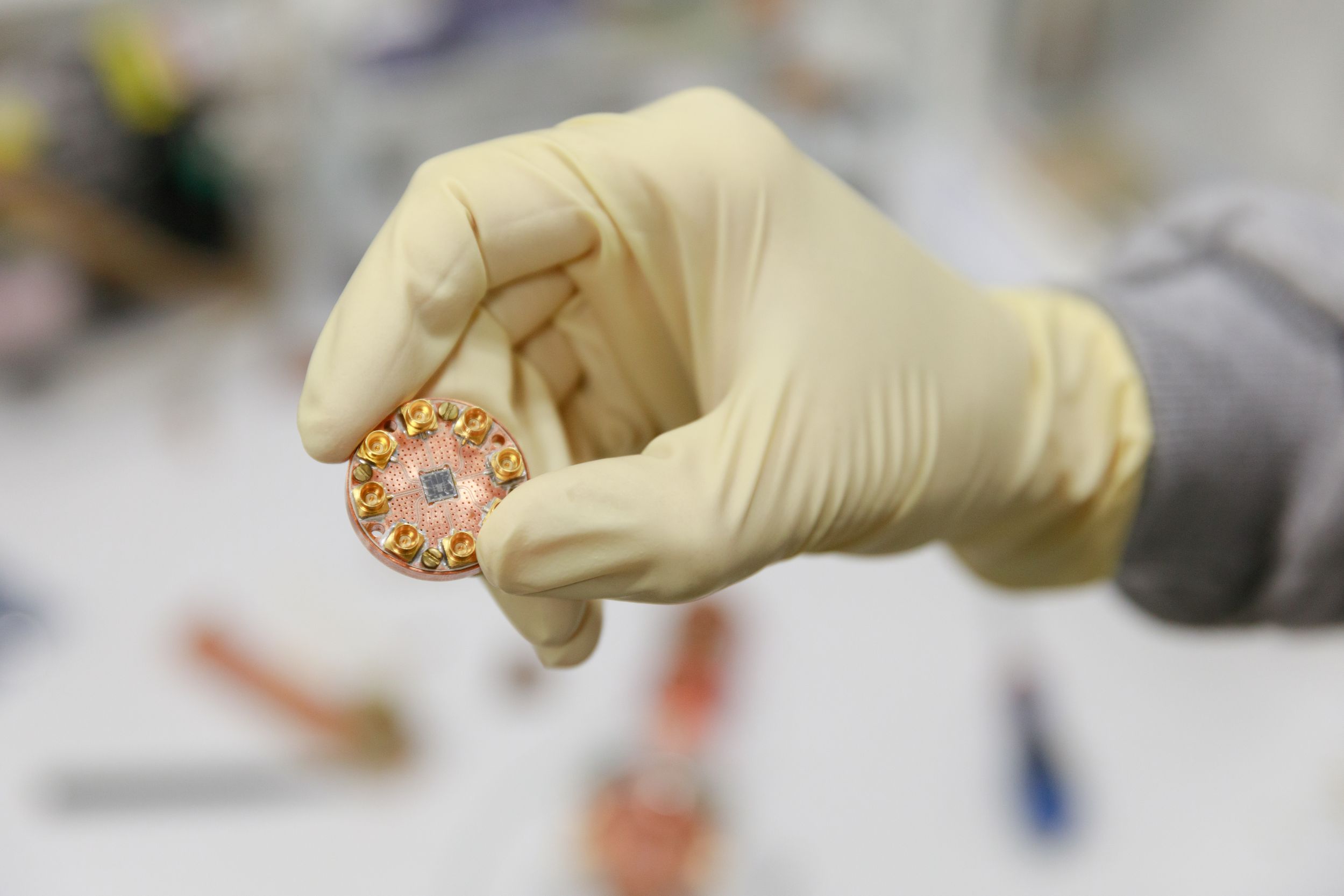
Russian scientists have developed prototypes of four quantum processors. The most powerful is a quantum computer that uses ytterbium ions: as of December 2025, it has reached 70 qubits. This computer has already been used to run Grover’s algorithm, calculate molecular structures, simulate dynamic systems, and conduct machine learning experiments. The others are a 50-qubit neutral-atom processor, a 35-qubit photonic processor, and a 16-qubit superconducting processor.
A cloud quantum platform is also in development to provide access to these quantum computers for solving tasks with specialized algorithms.
So far, 34 quantum algorithms have been created and are being used to tackle test problems in optimization, chemistry, simulation, and big data processing.
The goal of Russia’s 2025–2030 Quantum Computing Roadmap is to move these technologies from lab to industry, starting with nuclear energy and expanding into broader applications.
“We are entering an era where quantum technologies will tackle humanity’s greatest challenges,” says Ekaterina Solntseva, Rosatom’s Director for Quantum Technologies. “It is therefore crucial that these advances become an asset for the entire global community. The key question is how to move from a quantum race among nations to their collaborative use, ensuring these powerful tools serve the benefit of humanity.”
Photo by: MSU Media Center, “Strana Rosatom” newspaper