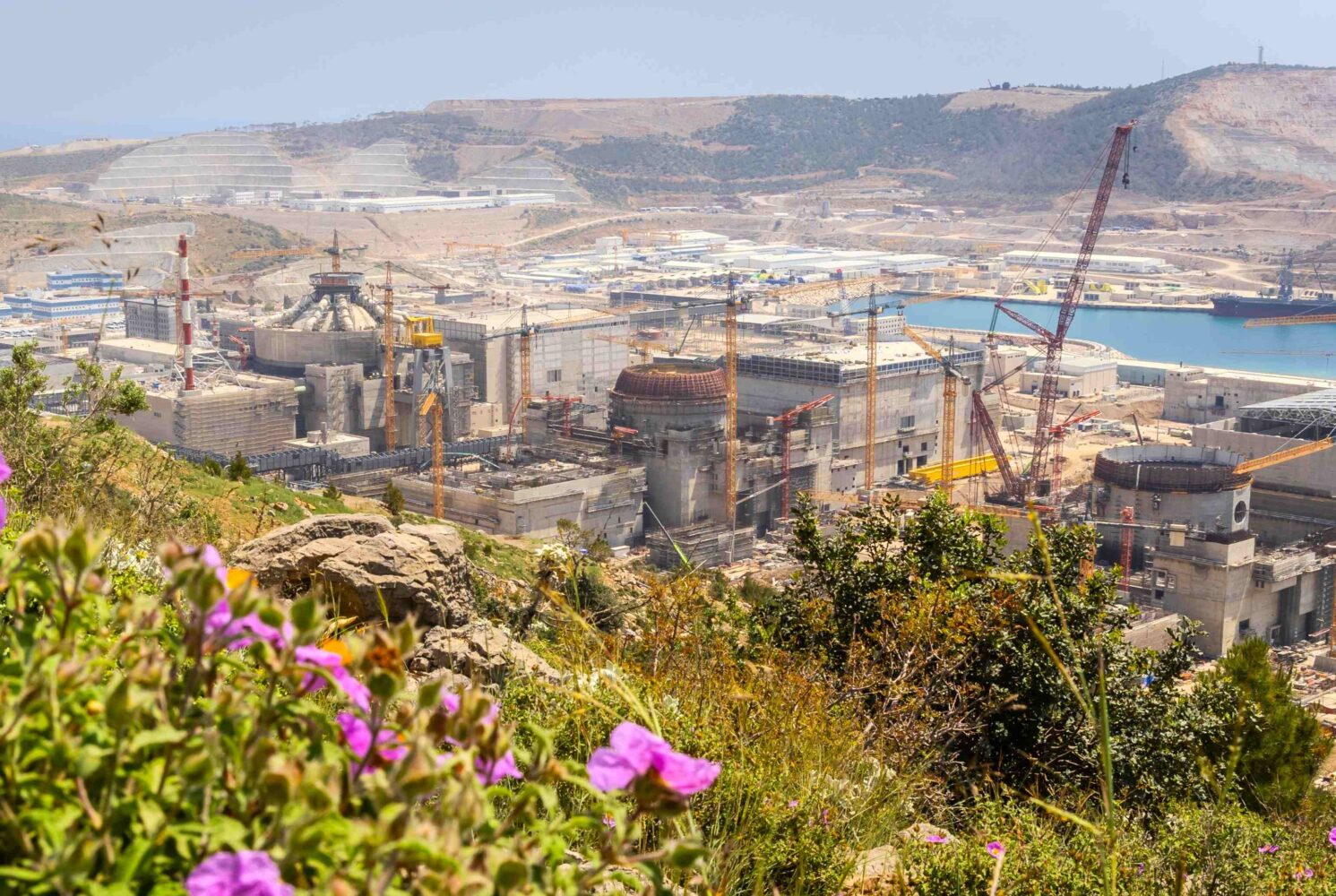
Construction of the Akkuyu NPP is in full swing. Once all four units are commissioned, the plant will cover up to 10% of Türkiye’s electricity needs and prevent the emission of about 18 million tonnes of CO2 equivalent annually. Akkuyu will enhance Türkiye’s energy resilience and help achieve its climate goals.
In May, Türkiye’s Nuclear Regulatory Authority (NDK) Board granted Akkuyu Nuclear JSC a pre-commissioning permit for the second unit of the Akkuyu Nuclear Power Plant. The document formalizes the interaction procedures with the NDK during the upcoming pre-commissioning phase: all operations will be subject to monitoring and approval by the Turkish nuclear watchdog. As part of the application, Akkuyu Nuclear JSC submitted a set of documents to the regulator detailing the stages of the unit’s entry into service, related plant processes, and the operating personnel training program. The application documents totaled more than 22,000 pages.
In late April, all components of the passive heat removal system (PHRS) were installed on the dome of the reactor building at Akkuyu Unit 1, comprising a total of about 90 equipment items and structures.
“This is the result of well-coordinated professional work over many months and a key stage in preparing the power unit for initial criticality. The PHRS is one of the numerous safety systems installed at advanced power units featuring VVER-1200 reactors. This system operates relying on natural physical processes that do not require a power supply or operator intervention,” noted Sergey Butskikh, CEO of Akkuyu Nuclear JSC. The PHRS is designed to continuously remove heat from the reactor core and release into the atmosphere in the event of a power supply failure.
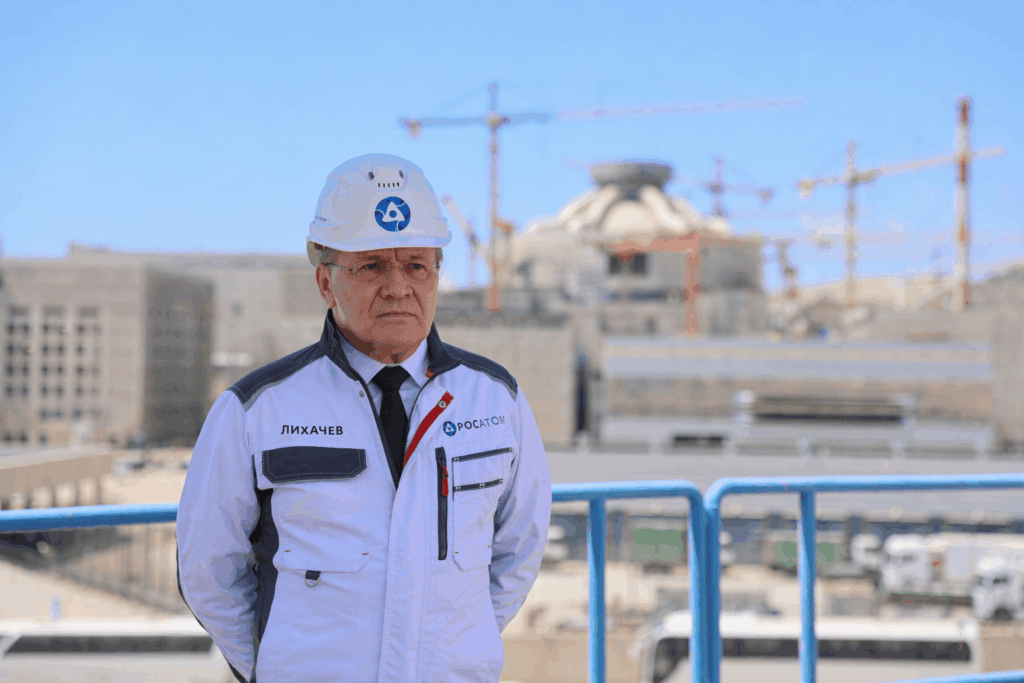
Also in April, Rosatom Director General Alexey Likhachev visited the Akkuyu NPP construction site. He reiterated that the key objective for the current year is to transition to initial criticality and subsequent operational activities at Unit 1.
“Currently, there is a great deal of interest from Turkish companies in entering the project. This is linked to the opportunity to participate in electricity generation and earn a profit. We have begun substantive discussions with several Turkish companies regarding the terms of their participation in the share capital — this is serious, extensive work. It is extremely important for us to have partners in Türkiye both during the construction stage and throughout the entire lifecycle of the nuclear plant, which can reach 100 years,” Alexey Likhachev said.
The Rosatom chief held a working meeting with the management of Akkuyu Nuclear JSC and the project’s main contractors. He also visited the residential quarters for plant employees and their families, located 50 km from the construction site and currently under construction. The first section, comprising 48 residential buildings, a school, a kindergarten, and other social infrastructure facilities, is being prepared for commissioning.
“People — our employees, Russian and Turkish nationals — are, of course, the key asset of any project. Preparations are currently underway for residents to move into the nuclear host town designed for 8,000 people. It incorporates the best housing practices, as well as extensive municipal and social infrastructure,” Alexey Likhachev emphasized.
Sustainable development as a priority
Social initiatives and comprehensive development of the host region are among Rosatom’s top priorities. In its operations, the Russian nuclear corporation is guided by its commitment to the 17 UN Sustainable Development Goals (SDGs), paying special attention to contributing to six of them: Affordable and Clean Energy; Decent Work and Economic Growth; Industry, Innovation and Infrastructure; Responsible Consumption and Production; Climate Action; and Partnerships for the Goals.
Once all four units are commissioned, the plant will prevent the emission of about 18 million tonnes of CO2 equivalent annually by replacing hydrocarbon-based generation. This accounts for approximately 3.2% of Türkiye’s annual greenhouse gas emissions.
The Akkuyu NPP’s contribution to Türkiye’s low-carbon development was discussed at the 11th Istanbul Carbon Summit, held in May. Rosatom acted as a partner of the event and participated in the summit’s business program.
In 2025, Türkiye adopted its first climate law, establishing a legal framework for reducing greenhouse gas emissions, developing a national carbon market, climate financing, and green taxonomy. The role of nuclear energy takes on special significance under these conditions, Rosatom’s Chief Sustainability Officer Polina Lion pointed out in her speech. The carbon footprint of the Akkuyu NPP project across its entire lifecycle is less than 4 grams of CO2-eq per kWh, one of the lowest figures among modern electricity sources.
“It is important to consider all technologies capable of delivering a real reduction in greenhouse gas emissions while simultaneously supporting the reliability of power supply. Nuclear energy meets these criteria: it provides a stable generation of low-carbon electricity, operates independently of weather conditions, and can become an important part of Türkiye’s path to carbon neutrality by 2053,” Polina Lion emphasized.
According to her, nuclear power plants create a green ecosystem that both ensures climate efficiency and lays the groundwork for comfortable living conditions for several generations to come thanks to their contribution to infrastructure and industrial development and through employment opportunities for the local population.
Photo by: Akkuyu Nuclear JSC