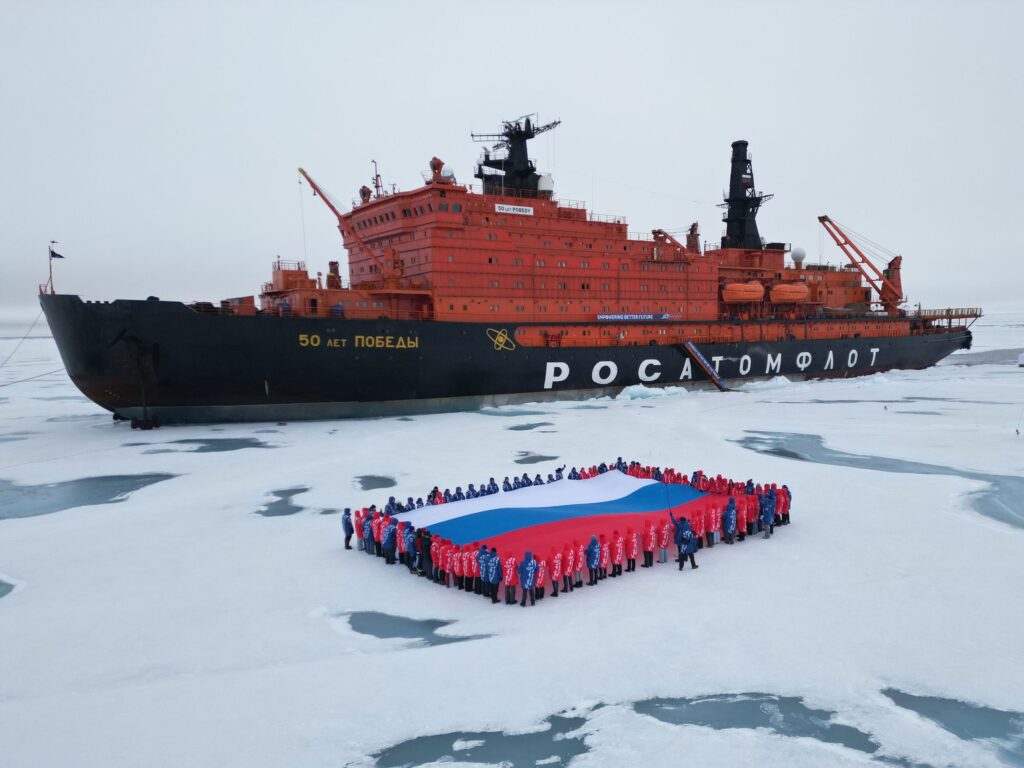
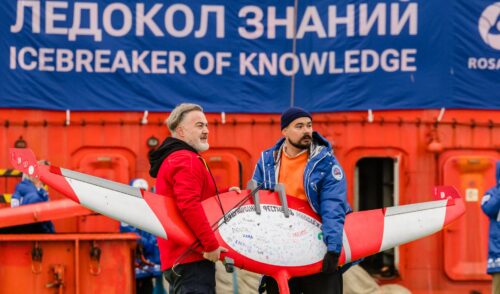
The seventh season of the Icebreaker of Knowledge initiative, organized with input from Rosatom, has kicked off. The competition for teenagers aged 14 to 16 will take place in Russia and 22 other countries. The winners will embark on an expedition to the North Pole aboard the 50 Let Pobedy nuclear icebreaker.
This year, contestants will compete across three tracks: Seeker (aimed at future scientists, researchers, and science communicators); Creator (for young people who see themselves as engineers, designers, and developers); and Master (for those interested in pursuing technical and vocational professions). The Master track is a new addition to the competition. “Today, equipment adjusters, digital production system specialists, and other skilled trades professionals are in unprecedented demand,” Russian Minister of Education Sergey Kravtsov commented on the new track.
After selecting a track, the contestants participated in webinars featuring scientists, engineers, and experts from Rosatom. At the end of each session, they answered review questions to earn points. They then took tests evaluating their stress resistance, general knowledge, and creative problem-solving skills through thematic case studies. The tasks were designed to closely mirror the realities of the nuclear industry. In Russia, over 73,000 people took part in the selection process. The top 240 advanced to the next stage, where they filmed videos based on a thematic assignment.
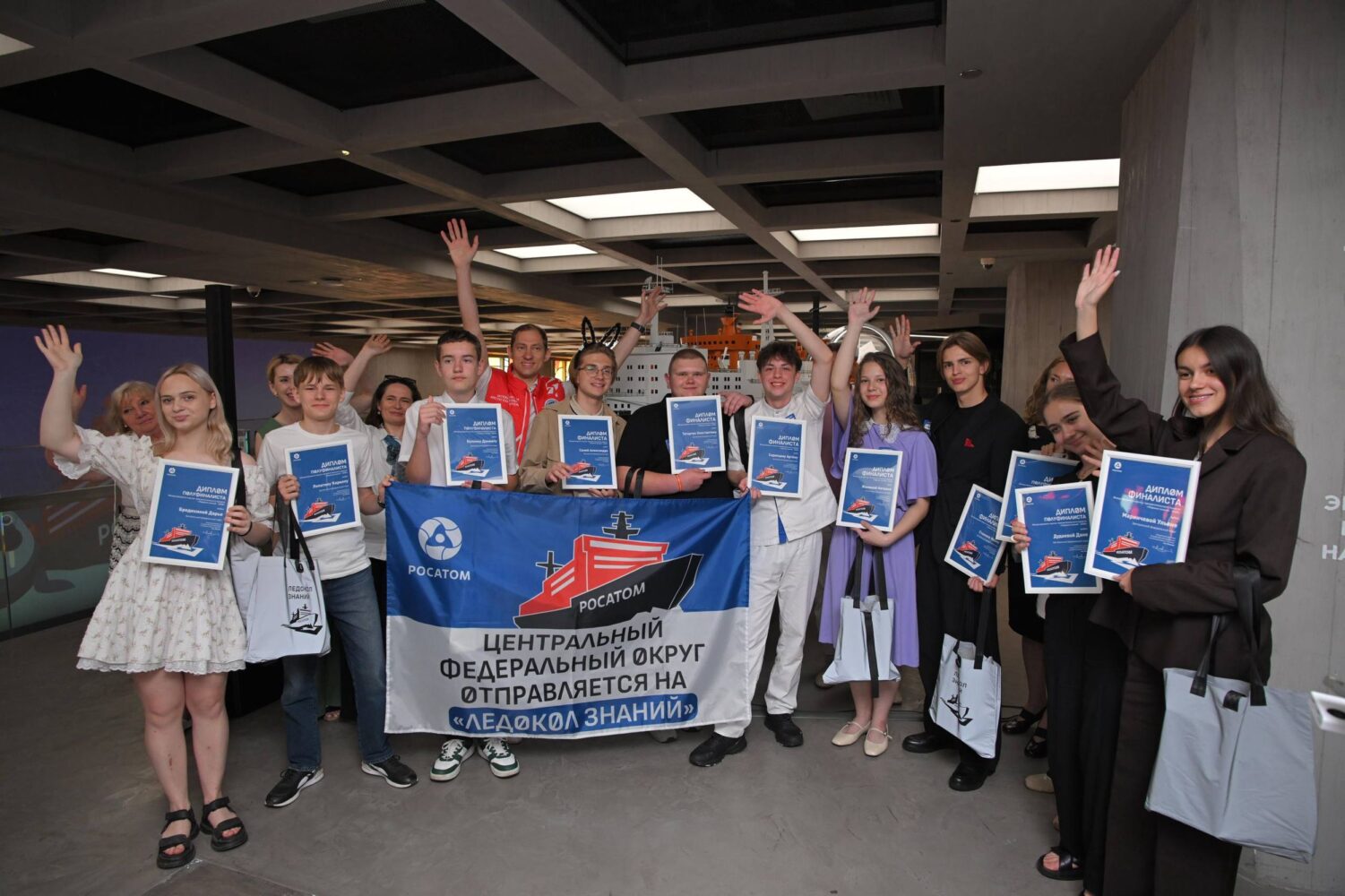
In Russia, the selection process was organized by region. The 96 high school and university students who demonstrated the best results in the online stages — four from each of Russia’s eight federal districts — traveled to the in-person semifinals. There, the contestants solved practical challenges facing the nuclear sector in areas such as nuclear energy, quantum technologies, nuclear medicine, and the sustainable development of the Arctic. Two teams from each district competed in the final held in June in Moscow. The team with the highest score will travel to the North Pole.
Young people from Armenia, Bangladesh, Belarus, Bolivia, Brazil, China, Egypt, Hungary, India, Indonesia, Kazakhstan, Kyrgyzstan, Mongolia, Myanmar, Namibia, Rwanda, Serbia, South Africa, Tanzania, Türkiye, Uzbekistan, and Vietnam participated in the Icebreaker of Knowledge project for the third consecutive year. This year, the competitive selections ran from May 5 to June 15 in three stages. The first was a science quiz. The second involved completing assignments that were based on a series of webinars covering topics vital to Rosatom. The ten finalists from each country with the highest scores from the first two stages created video pitches on the final assignment’s theme. Ultimately, one representative from each country will board the icebreaker.
Several other participants will travel to the North Pole as winners of the Bolshaya Peremena (Big Break) competition and other international, federal, regional, and industry-specific educational initiatives.
The students will spend 10 days aboard the nuclear icebreaker, exploring the Arctic alongside top experts, science communicators, and bloggers. A packed educational program awaits the members of the expedition, while outside the ship lies the harsh Arctic environment: icebergs and ice floes, polar bears, seabird colonies, and, with a bit of luck, whales.
The Icebreaker of Knowledge scientific and educational initiative promotes natural sciences and nuclear technologies, supports talented children, and fosters their skills and career guidance. Over the previous six seasons, more than 400 high school and university students from various countries have participated in these Arctic expeditions. The 50 Let Pobedy icebreaker, along with seven other nuclear icebreakers, belongs to Rosatom’s subsidiary Atomflot, the Russian nuclear fleet operator. Russia remains the world’s only country having a nuclear-powered icebreaker fleet.
Photo by: Rosatom Communications Center, Nuclear Industry Information Center (ANO ICAO), Atom Foundation
This site uses cookies. By continuing your navigation, you accept the use of cookies. For more information, or to manage or to change the cookies parameters on your computer, read our Cookies Policy. Learn more