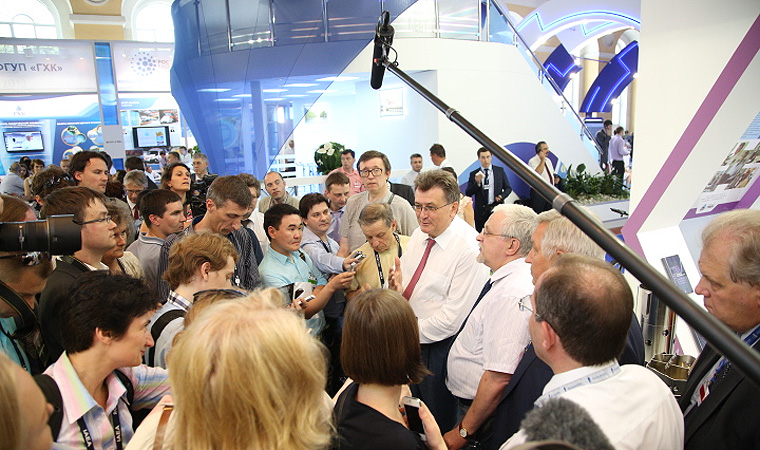
The memorandum for joint efforts aiming for zero fuel failure for Russian-designed NPPs was signed on May 31 of this year between TVEL (Russia), Energoatom (Ukraine), NPP Kozloduy (Bulgaria) and CEZ (Czech Republic). Today the plans concerning realization of the project practical steps are being discussed. Yuriy Olenin reminded about goals and tasks of the program: “Many years lasting movement towards zero failure is already set. Any fuel can fail due to three reasons: design damage, production and operation. Thus, not uniting efforts of a producer, science and operators, we won’t achieve anything good. That’s why TVEL has signed this four-side agreement with the Czechs, Bulgarians and Ukrainians, plus a special agreement with Rosenergoatom. Today we’ve organized a committee for finding methods to achieve zero failure”. Earlier the project documentation concerning zero fuel failure was handled by three international work teams – doing design, production and operation of nuclear fuel with meetings conducted in Moscow and Prague.
Reference
TVEL fuel company combines production and research assets in the field of nuclear fuel fabrication, separation-sublimation complex, as well as the production of gas centrifuges and equipment to them. NNEGC Energoatom State Enterprise is the major Ukranian energy-producer with its part in the country’s electric energy production more than 50%. It is responsible for safety of all NPPs operation. Bulgarian Kozloduy is situated on the Danube River 5 km far from the namesake town after which it was named.
Czechs are the best
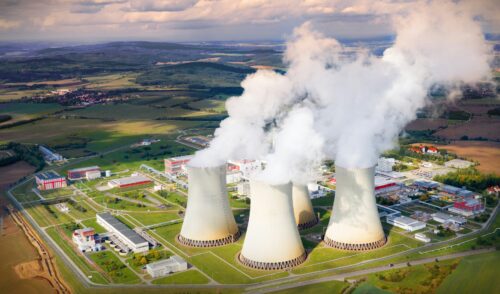
Speaking about the parties, Olenin especially noted CEZ, saying that this company has the best practice. That’s why the Czech model was taken as a basis. “Today the “Dukovany” station shows the best result: there wasn’t a single failure during the last 25 years, – says the head of fuel company. – And there haven’t been any failures for three years, since Americans left. We’ll stay oriented on these results”. A special part in signing documents was played by the ALVEL Russian-Czech joint enterprise. First comes safety, then – economy Answering the question if this step had had more to do with image or the agreement is looking forward to some financial benefits, Olenin replied that was rather the former. However the most important agreement signed would perform another function – sufficiently raise the level of NPP safety for all four partner countries. “You must be understanding quite well that containment failure means replacement. Thus, of course, we are speaking of economic efficiency. But for us this is not the issue number one, which is safety. If there’s no contact between bearer and fuel in the active zone, an accident will follow. In fact that’s the reason why accidents happen” – explains the President of TVEL. According to studies 90% of units with VVER-440 reactors never fail. However the fuel company wants it to be absolute 100%. As we remember, earlier the top-management kept offering all interested atomic enterprises to join their efforts in order to achieve zero failure while using nuclear fuel. In order to do this one needed to develop and imply several organizational-technical measures. TVEL was self-appointed as a coordinator and together with other enterprises of the industry prepared recommendations for constructors, operating organization and fuel producers. The first steps in this direction were reported by Piotr Lavreniuk, the TVEL Vice-President, in his recent interview to “Strana Rosatom”, as successful.