The installation of one reactor vessel and the start of manufacturing for another mark the key July milestones at Egypt’s El Dabaa Nuclear Power Plant, currently under construction by Rosatom. The scope of bilateral cooperation between Rosatom and Egypt continues to expand. Beyond nuclear energy, joint interests now encompass water desalination, nuclear medicine, additive manufacturing, energy storage, and digital and quantum technologies.
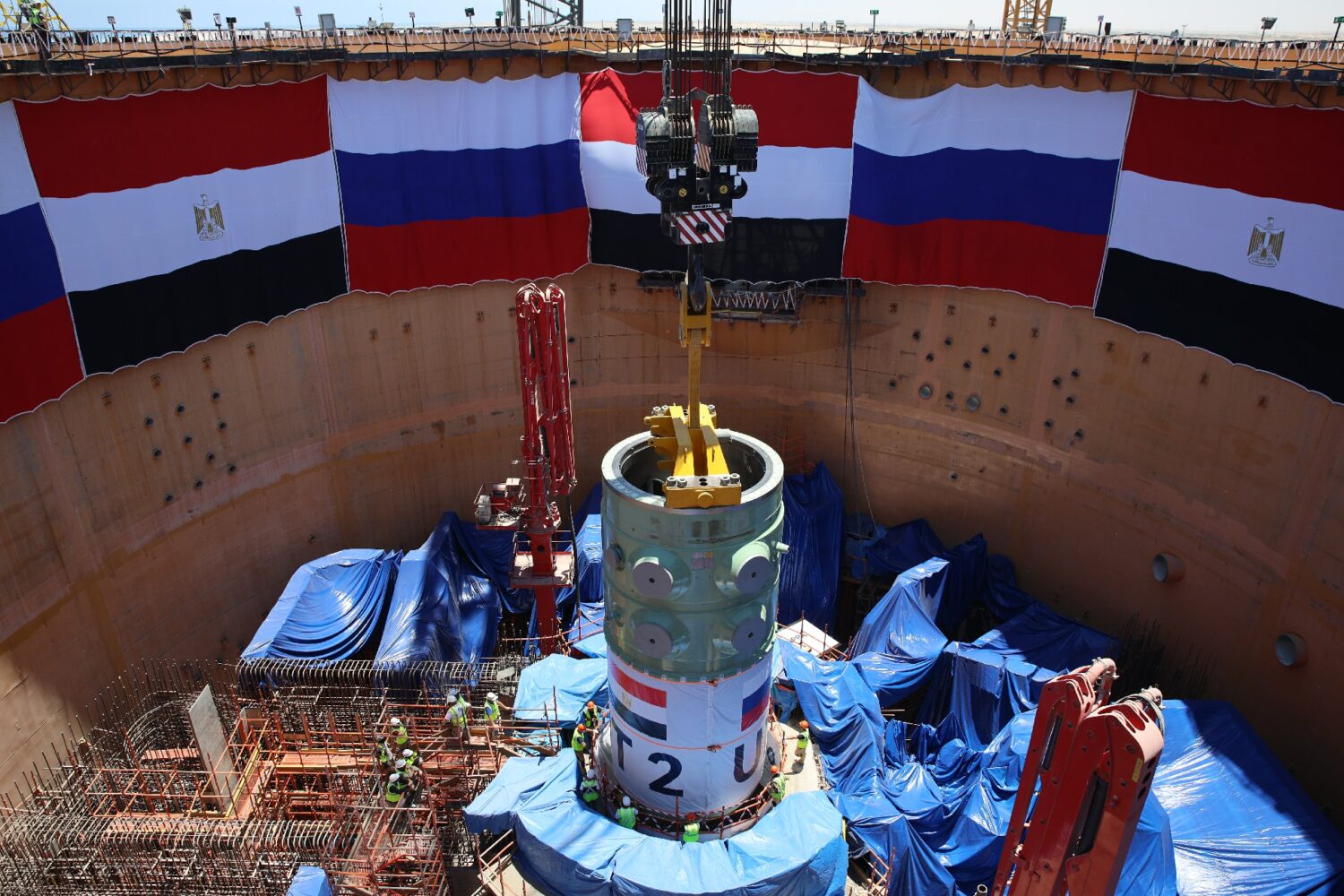
The installation of the reactor pressure vessel at Unit 2 was marked by a major ceremony attended by Rosatom Director General Alexey Likhachev, Russian Ambassador to Egypt Georgy Borisenko, Egyptian Prime Minister Mostafa Madbouly, and Egypt’s Minister of Electricity and Renewable Energy, Dr. Mahmoud Esmat.
“Our El Dabaa construction project is progressing at an excellent pace. Seven months ago, we installed the reactor vessel for Unit 1, and today we are completing the same operation for Unit 2. This is a major milestone for both the power unit and the entire project. We can now proceed to the next key stage, the welding of the primary coolant piping,” Alexey Likhachev said.
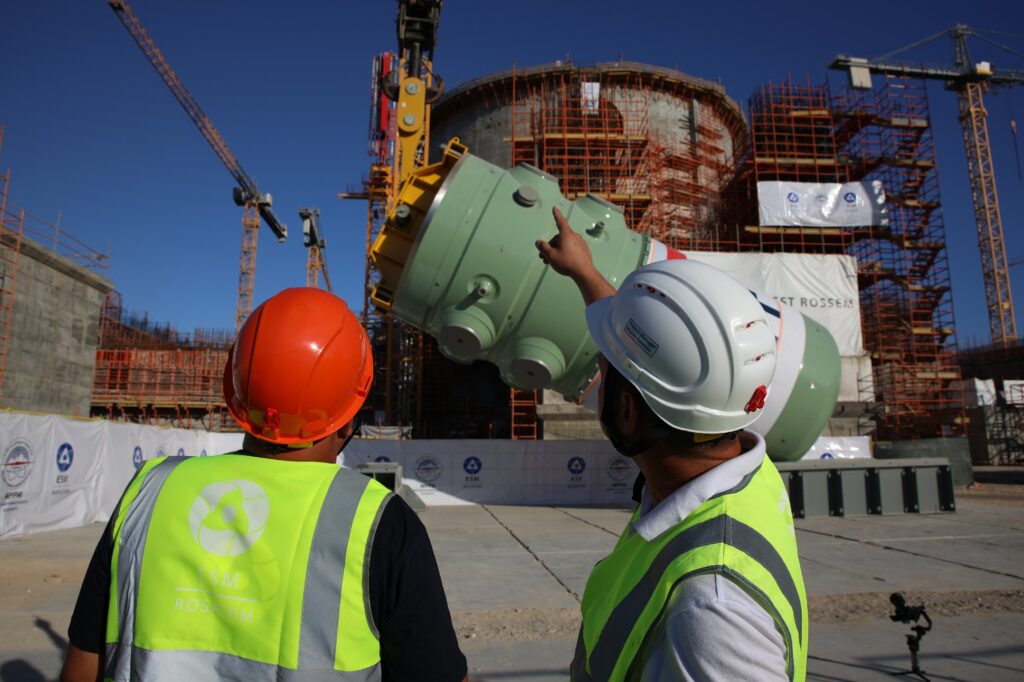
The VVER‑1200 reactor vessel, weighing more than 340 tons, was manufactured at Atommash, Rosatom’s production facility in Volgodonsk, Russia and shipped to El Dabaa in a special cover ornamented with modern scientific imagery of the atom stylized as traditional Russian folk art. The reactor arrived at the site in May.
Work begins on Unit 4
On the eve of the reactor installation ceremony, Rosatom’s manufacturing division began producing the reactor vessel for El Dabaa Unit 4. Steel workpieces weighing over 65 tonnes are being machined on specialized equipment to ensure a perfect fit. The next stage involves anti-corrosion cladding. This protective layer enhances the steel’s strength, ensuring the reactor can operate safely and reliably for decades.
Russian manufacturers are also producing the reactor vessel for El Dabaa Unit 3, along with 12 steam generators for Units 2, 3, and 4, primary coolant pumps, and primary coolant piping. Equipment for the Egyptian nuclear power plant is being produced using a new technology that ensures the uniformity of steel at the joints connecting the primary coolant pumps to other primary circuit components. This improves weld integrity and, consequently, the overall operational reliability of the power unit.
Plant-wide progress
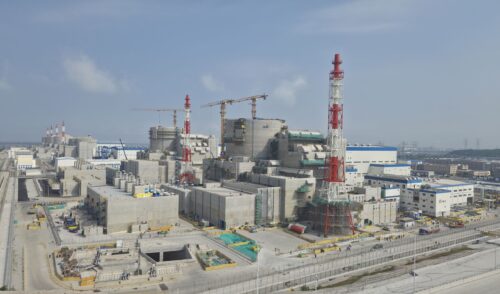
At the El Dabaa site, Rosatom is constructing four units equipped with Russian-designed Generation III+ VVER-1200 pressurized water reactors. Rosatom will supply nuclear fuel for the entire operational lifespan of the plant and assist its Egyptian partners with personnel training during the first 10 years of operation. Additionally, the Russian corporation will construct storage facilities and supply casks for spent nuclear fuel.
“Work is now underway simultaneously at all four units. The construction site employs over 25,000 workers daily, more than 18,000 of whom are Egyptian nationals. This workforce is expected to reach 30,000 in the near future. Together with our Egyptian partners, we are making every effort to ensure the site is ready to receive the first shipment of nuclear fuel in the first half of 2027 and to bring the units online in 2028,” Likhachev noted.
Beyond energy
The Egyptian government and Rosatom are discussing cooperation that extends well beyond nuclear power. A key non-energy initiative is the construction of a nuclear medicine center in Egypt, with an agreement to this effect signed on June 17 of this year.
The baseline design for the center includes a radiopharmaceutical production facility equipped with a cyclotron, a molecular imaging department featuring PET and SPECT scanners capable of conducting up to 30,000 scans annually, and a radionuclide therapy department that can treat up to 400 patients per year. The center will improve access to advanced medical care in Egypt and position the country as a destination for medical tourism.
Rosatom is also in discussions with the Egyptian government regarding seawater desalination projects for agriculture and resort areas, as well as the local assembly of batteries and energy storage systems. “I was particularly encouraged by the interest of Egyptian scientists in collaborating with us on quantum technologies. The relevant agreements between government agencies have already been drafted,” Likhachev stated.
Photo by: JSC Atomstroyexport