The Northern Sea Route (NSR) and, more broadly, the Trans-Arctic Transport Corridor are rapidly transforming into a major global maritime trade artery. This is evidenced by the launch of regular transit cargo services from China to Europe and a test voyage from South Korea. Other Global South nations are also looking to launch cargo operations via the NSR.
Chinese ocean carrier Sealegend Shipping launched regular services this year between the Chinese port of Ningbo-Zhoushan and European ports via the Northern Sea Route. In August, the container ship Dubai Tower, loaded with batteries, photovoltaic modules, and other electric equipment, set sail for Felixstowe (UK), Rotterdam (the Netherlands), Hamburg (Germany), and Gdynia (Poland). This marked the inaugural voyage of the China-Europe Arctic Express (CAX) service. The Dubai Tower entered NSR waters on August 28 and exited on September 3, traversing the route in less than a week.
This year, seven vessels are expected to complete a total of eight voyages through NSR waters, operating on a weekly schedule from August to October, when the entire route offers the most favorable ice conditions. All vessels have obtained the mandatory transit permits from Rosatom, the NSR infrastructure operator.
The test transit voyage that prompted Sealegend Shipping to establish the regular service was carried out in September–October 2025. The container ship Istanbul Bridge traveled from Ningbo-Zhoushan to Felixstowe in a record 20 days.
Cargo services via the NSR between China and Russia were launched even earlier. Thirteen years ago, the cargo ship Yong Sheng became the first Chinese vessel to reach Europe via this route. More recently, in 2026, the container ship Xin Hai 1, operated by NewNew Shipping Line, delivered 500 containers of automotive components to Murmansk. In early September, the vessel was loaded with potash fertilizers for its return voyage.
In August of this year, NewNew Shipping Line CEO Ke Jin announced plans to deploy six new ice-class container ships, each with a capacity of 4,800 TEU (twenty-foot equivalent units), on the NSR. Four of these vessels are scheduled to begin operations in October on the route between Chinese and Russian ports. Along with the existing fleet on this route, they will ensure two sailings per month. The remaining two container ships are slated for deployment in June 2027.
Furthermore, Russia and China aim to increase bilateral cargo traffic via the Northern Sea Route to 20 million tonnes by 2030.
South Korean debut
Following the Chinese carriers, South Korean ships have also begun transporting cargo via the NSR. South Korean ocean carrier Panstar Line recently launched its inaugural NSR voyage. Its container ship, Panstar Acro, spent less than seven days in NSR waters, exiting the route on the morning of September 6.
Busan Mayor Chun Jae-soo noted, “The Northern Sea Route is already commercially viable. Therefore, the Lee Jae-myung administration fully understands the critical importance of seizing the moment and taking proactive steps through close coordination among the government, the private sector, financial institutions, and port authorities.”
Interest from the Global South
Other nations are also showing interest in maritime shipping via the NSR. In August, Venkatesapathy Shivaperumal, Joint Secretary at India’s Ministry of Ports, Shipping and Waterways, said at the Arctic Regions forum in Arkhangelsk, Russia, that the country is keen to collaborate on the Trans-Arctic Multimodal Transport Corridor and sees much potential in NSR cargo operations. According to him, India’s first voyage via the NSR could take place in 2027.
In May 2026, Vietnam signed a maritime cooperation roadmap with Russia, extending through 2030. The document outlines coordinated efforts regarding the use of the Northern Sea Route.
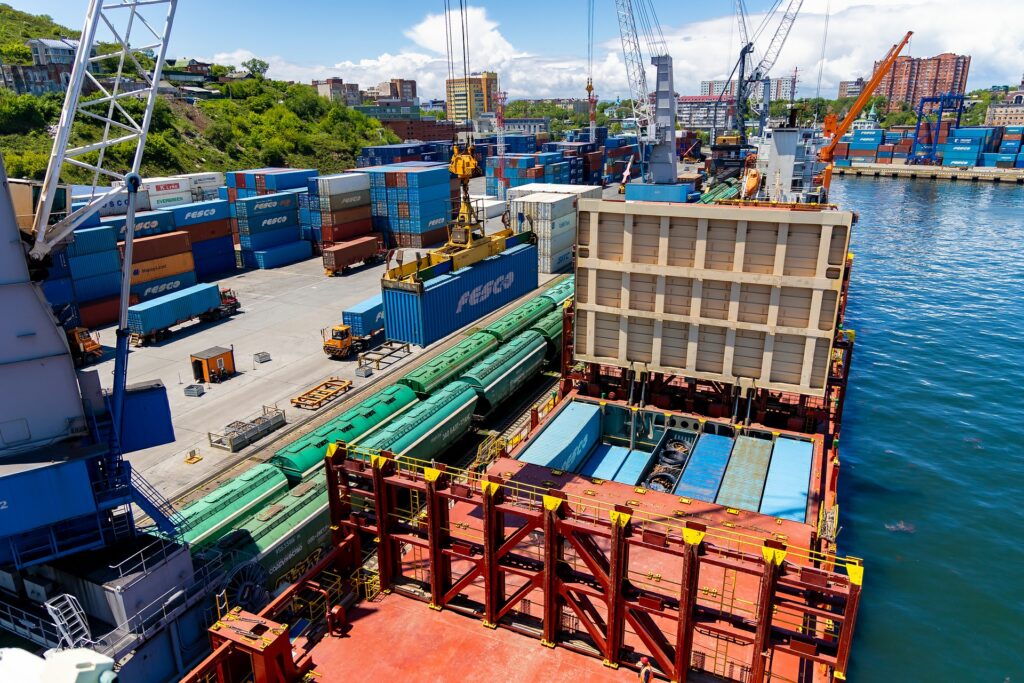
Furthermore, major international port operators are also demonstrating a keen interest in Arctic logistics. A Russian government commission has approved the establishment of a joint venture between Rosatom and UAE-based DP World. Rosatom will contribute its shares in the FESCO Group to the joint venture, while DP World will provide cash investment. The new enterprise will focus, in particular, on developing cargo operations along the NSR.
All these examples demonstrate that leading players in global maritime logistics view NSR shipping as a distinct competitive advantage.
Shorter, Safer, More Efficient
Two key factors support this Arctic shift: the route from Asia to Europe via the NSR is shorter than the Suez Canal route, let alone the passage around Africa. Additionally, the Arctic route offers shipping companies a reliable alternative amid ongoing geopolitical tensions along traditional southern maritime corridors.
For their part, Russian government agencies—including Rosatom in its capacity as the NSR operator—are actively driving efforts to upgrade NSR infrastructure and enhance navigational safety. The Russian space agency Roscosmos is launching satellites for space-based Arctic monitoring; the Ministry of Emergency Situations is deploying a network of emergency rescue centers in the Arctic; and regional governments alongside private businesses are upgrading port infrastructure and building new terminals.
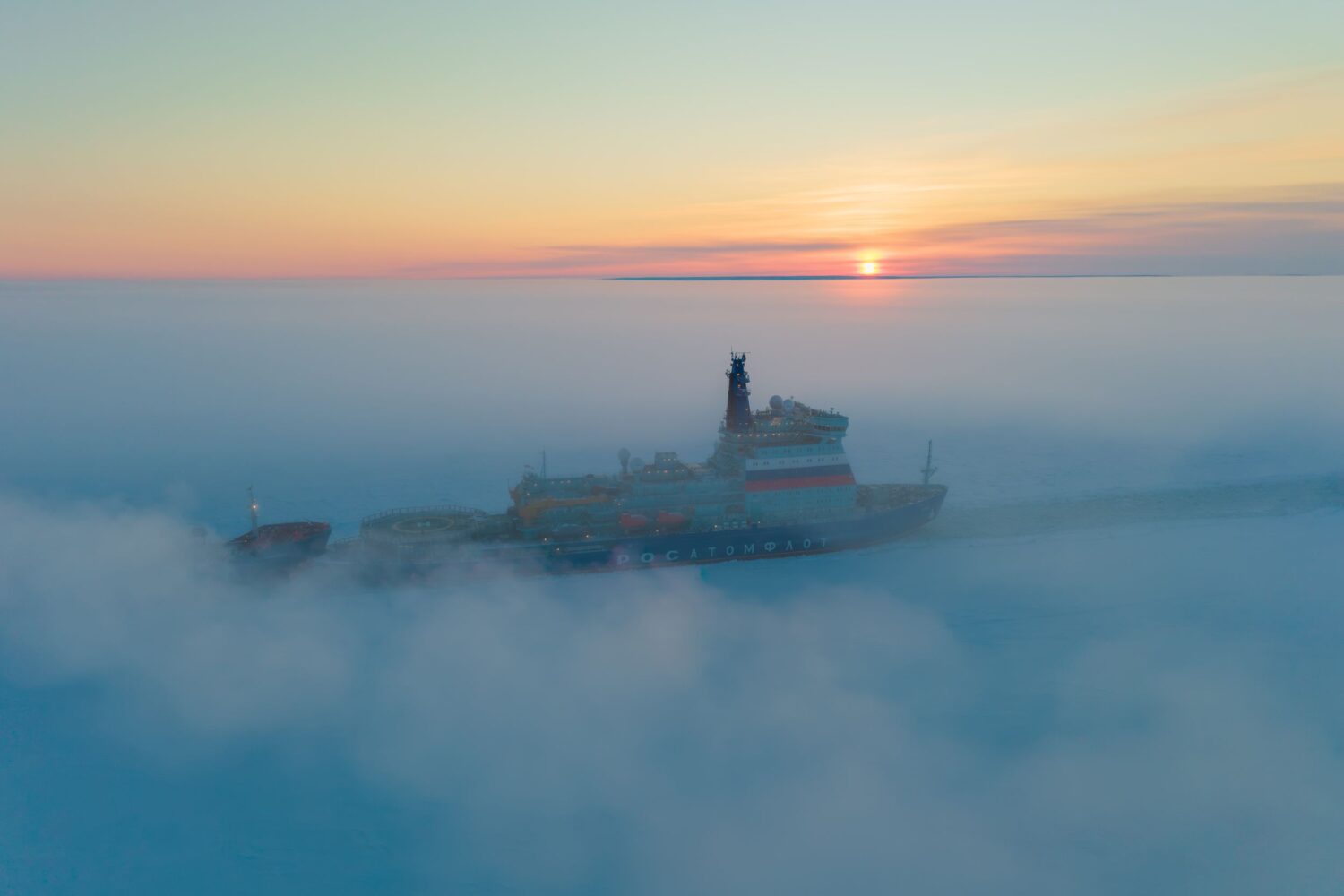
The core elements of Russia’s Arctic transport infrastructure have been developed over decades, and today the country remains the only one in the world capable of serially building powerful nuclear icebreakers using its proprietary technology. Rosatom continues to advance this capability. The existing fleet of state-of-the-art Project 22220 icebreakers (Arktika, Sibir, Ural, and Yakutia) will be joined in the coming years by the Chukotka, Leningrad, and Stalingrad. These icebreakers boast unparalleled performance: they can break through ice up to three meters thick, ensuring safe navigation across Arctic seas. Their reactors can operate for up to seven years without refueling. Furthermore, nuclear icebreakers produce virtually zero carbon emissions, making them an environmentally neutral form of maritime transport. Additionally, the Project 10510 icebreaker Rossiya, which will be the most powerful in the world, is currently under construction.
Since 2018, Rosatom has served as the administrator of the Northern Sea Route. Its mandate includes organizing safe vessel operations within NSR waters, providing icebreaker escorts, ensuring navigational and hydrographic support, and managing the permitting system. Under the current operating model, specific transit conditions are established for each vessel, including the requirement for icebreaker escorts in designated areas based on real-time ice conditions.
Together, these measures are making navigation along the Northern Sea Route increasingly predictable, safe, and fast—and therefore commercially viable. The business community is placing growing confidence in this transport corridor. Ultimately, the greatest rewards will go to those who secure a strong foothold along the route.
Photo by: FSUE Atomflot; FESCO Transport Group