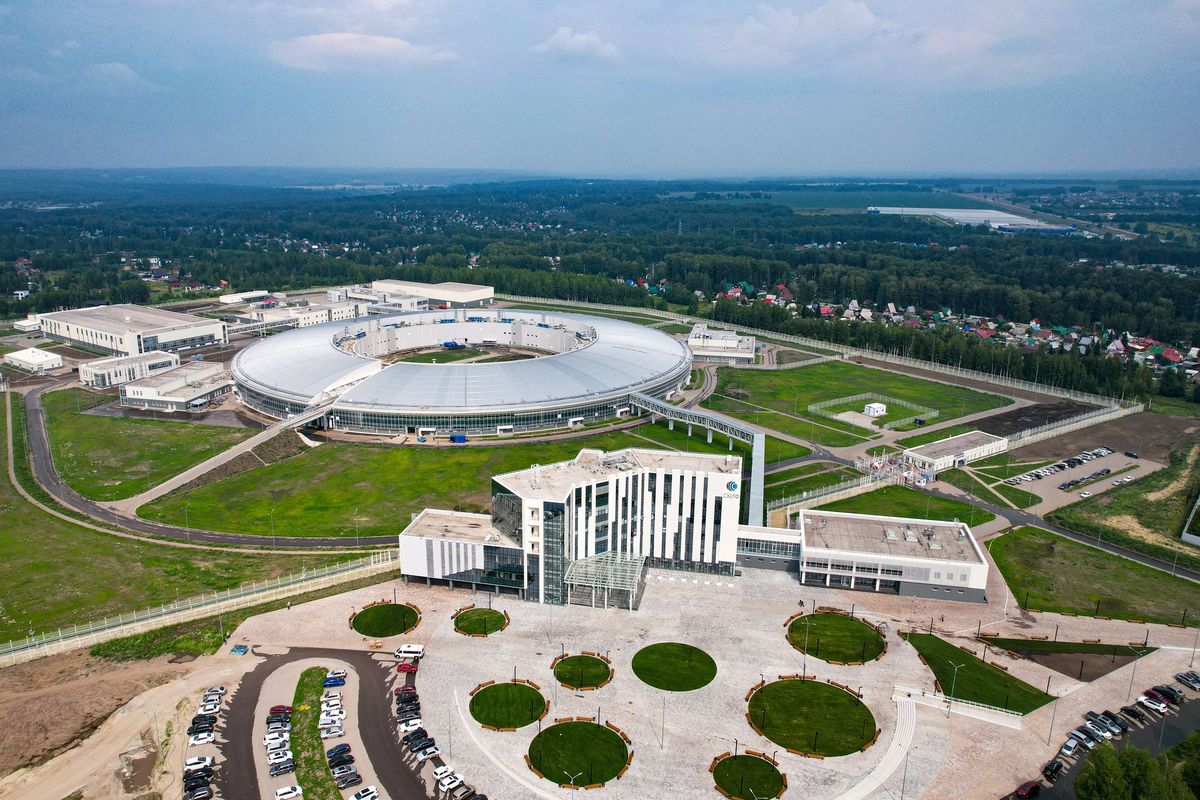
The summer months proved highly productive for Russian science. In July and August, researchers implementing the national quantum computing roadmap, supervised by Rosatom, announced new breakthroughs in quantum technologies. Additionally, Rosatom completed construction of a major megascience facility — the Siberian Circular Photon Source (SKIF) shared-use research center — in Novosibirsk.
Rosatom oversees the implementation of the Quantum Computing roadmap, which brings together research teams from universities and research institutes across Russia.
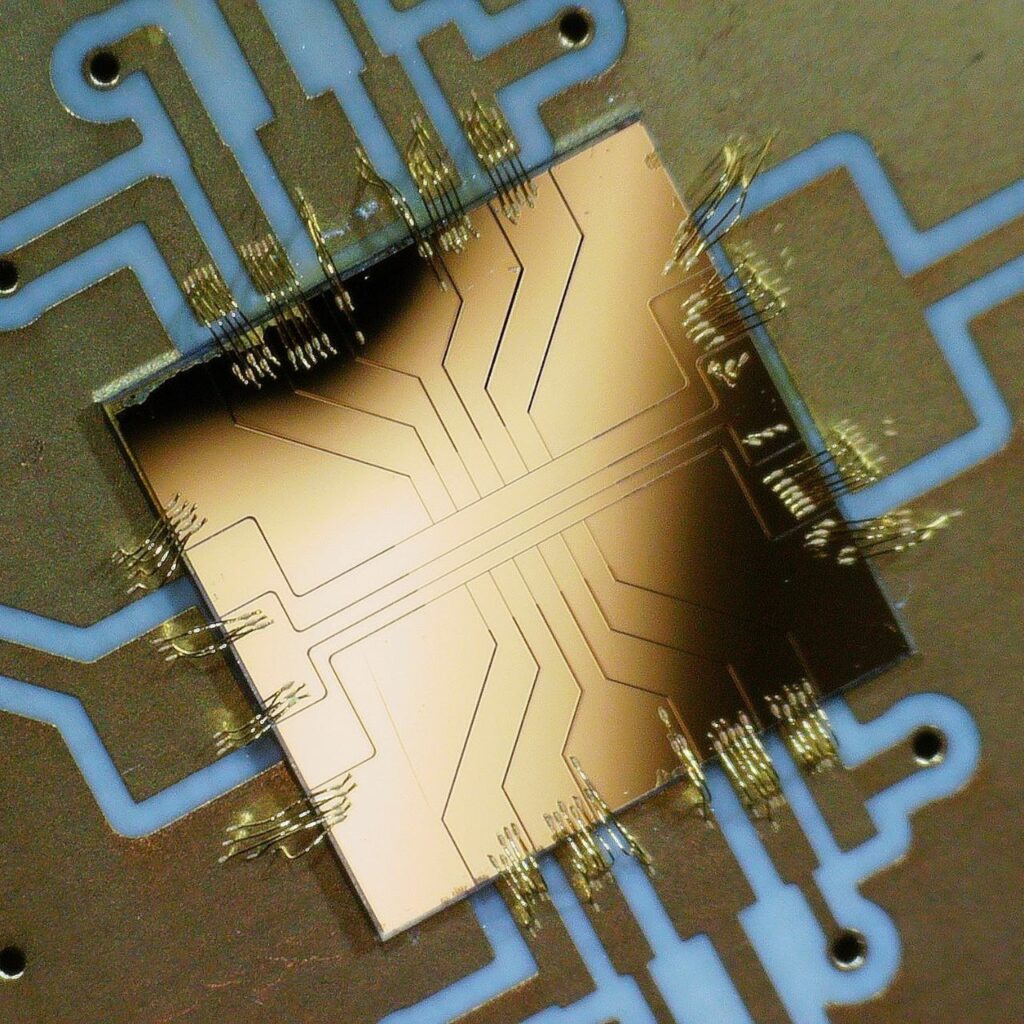
In July, Russian physicists reported significant advances in photonics. Notably, research teams led by Igor Bilenko and Dmitry Chermoshentsev became the first in Russia — and among the first globally — to develop a compact, on-chip source of “squeezed” light.
“We are in the vanguard of countries and companies achieving tangible results. Our immediate plans include developing quantum computing systems based on squeezed light and applying our expertise to create new detectors, including those for biological applications,” said Dmitry Chermoshentsev, Head of Research Groups at Rosatom Quantum Technologies and the Quantum Center.
That same month, physicists from the Quantum Center, ITMO University, and the Moscow Institute of Physics and Technology (MIPT) demonstrated for the first time that the collective behavior of electrons in an ultrathin material — a tungsten diselenide monolayer — can be observed using light. Their findings were published in the Physical Review B journal. “In our experiment, electrons in an atomically thin semiconductor align into a regular structure, and its formation alters the material’s optical response. This provides the scientific community with a new tool for studying quantum states where a large number of particles behave as a single entity,” noted Alexander Chernov, a co-author of the study and Head of the Research Group at the Quantum Center and MIPT. Typically, such states are studied via electrical measurements or in strong magnetic fields. The key advantage of the optical approach is that it allows for nearly non-contact observation of electron states. Looking ahead, these 2D structures could serve as the foundation for solid-state quantum simulators.
In August, research teams led by Ilya Semerikov at the Lebedev Physical Institute of the Russian Academy of Sciences (LPI RAS) and Kirill Lakhmansky (RQC) reported further breakthroughs in developing ion-based quantum processors. The scientists successfully demonstrated the trapping of ytterbium-171 and calcium ions in planar traps, along with ion transport and single-qubit operations. Researchers at the LPI RAS also measured the ion heating rate, one of the most critical performance metrics for planar traps. “The advancement of trapped-ion quantum computers is closely tied to the transition toward planar technologies. This opens up vast avenues for platform optimization,” explained Ilya Zalivako, LPI RAS Senior Researcher.
SKIF reaches full scale
The SKIF shared-use research center officially opened on August 11. The facility comprises a complex of 34 buildings equipped with advanced engineering and instrumentation systems, spanning a total area of about 90,000 square meters. The center will host cutting-edge scientific research utilizing synchrotron radiation beams. “For Rosatom, this is far more than just a research center. First, it is a facility where our designers, general contractors, engineers, and construction workers worked side by side, proving that Rosatom is capable of delivering projects of any scale. Second, we view SKIF as a platform for addressing our strategic objectives,” Rosatom Director General Alexey Likhachev said at the opening ceremony.
Rosatom is currently developing a joint research program with the Boreskov Institute of Catalysis (Siberian Branch of the Russian Academy of Sciences). The focus will be on studying melt structures and phase transitions — research that is critical for materials science. Rosatom is also particularly interested in the Izotop experimental station, which will enable the study of new materials and radiochemical processes essential for closing the nuclear fuel cycle and advancing nuclear medicine. “This is a direct contribution to the future of the nuclear industry and the nation’s technological sovereignty,” Likhachev emphasized.
The general contractor for the project was Titan-2, a construction holding company within Rosatom. The facility was designed by Rosatom’s Central Design and Technology Institute (CDTI), which developed both the basic engineering and detailed design documentation, alongside an engineering data management environment to facilitate centralized collaboration on information and digital twin models of the facility. Within this digital environment, virtual and augmented reality technologies were piloted to support and streamline the construction process.
Photo by: Siberian Circular Photon Source (SKIF); Russian Quantum Center; P. N. Lebedev Physical Institute of the Russian Academy of Sciences
This site uses cookies. By continuing your navigation, you accept the use of cookies. For more information, or to manage or to change the cookies parameters on your computer, read our Cookies Policy. Learn more