– Just a short time ago the “50 Let Pobedy” delivered Olympic flame to the North Pole. What did this mean to Atomflot?
– For us first of all it was an opportunity to show the power of nuclear fleet. We work with foreign companies, so it is important that our work is seen abroad, that people get to know about it. Before tourism used to help. After we had joined Rosatom they started speaking of us more. Everyone knows what the Suez Canal is, but the NSR also has its advantages. Of course, for now we are not very good competitors, speaking about our traffic volume. But we want to show that at least half of cargo going through the Suez Canal to the Northern Europe might as well use the NSR, and with more profit.
– Does this mean economy?
– I think it does. In 2009 we started piloting vessels in transit. We were doing our best to develop the traffic, attract ship-owners. The cargo traffic is growing. From West to East it is mainly LNG, iron-ore concentrate, crude oil, gas condensate. But there also is return cargo – coal from Canada, fish, light-oil product, seasonal containerized cargo from Korea, China, Japan. What is important that we are gradually moving towards company navigation. It is impossible to increase traffic with only single line piloting. By the way, next year we are planning to pilot 8-10 ships of just Chinese ship-owners.
– If to look a few years ahead, what the Arctic navigation is going to look like? What are the prospects?
– Now it is already clear that the main handler in the Arctic will be Yamal LNG, one of the major Russian projects. In the river Ob estuary the port Sabetta is being built, as a result of public and private partnership. The port infrastructure is being constructed on behalf of the state, it is 60-70% ready by now. Novatek in consortium with foreign partners is constructing a liquefied natural gas plant. 60% of shares belong to Russian company, 20% – to the French Total, 20% more – to Chinese state oil company. By 2020 the project will generate 15-18 million tons of cargo, with 5 million tons going to China. To understand it better: these are 200-250 entries of special tankers to the Sabetta port annually. Now there is a tender for choosing contractor for gas transportation. By the way, only for the coming year the amount of general cargo for the LNG plant facilities, the port itself, will be 1 million tons. But this is not all. Right here, in the Ob estuary, a little lower that Sabetta, there is the Gazpromneft project developing. Next year they plan to transport 8 million tons of oil, which means that just Sabetta and New Port will generate about 25 million tons of cargo. According to our calculations, the NSR transit will give another 15 million tons, which is 40 million tons of cargo altogether.
– Let’s speak about icebreaker fleet as it is. How many vessels are currently working?
– Two double-reactor icebreakers “50 Let Pobedy” and “Yamal”, and two one-reactor, “Taymyr” and “Vaigach”, built for operating on Yenisei and in Siberian rivers’ estuaries. Their capacity is smaller, draftiness and icebreaking capability too. There also is a double-reactor icebreaker “Sovetsky Soyuz”, which also can be used if necessary.
– The NSR will develop – how long can those icebreakers serve?
– “Taymyr” and “Vaigach” can work until 2018 and 2019 respectively. After service life extension one can add 3 years more. The “Sovetsky Soyuz” and “Yamal” can operate until 2022; with service life extension it will be until 2026. Our newest icebreaker, “50 Let Pobedy” is beyond planning. And don’t forget that we are laying down totally new type of icebreakers. The first one is supposed to appear in 2017, the second and the third – in 2019 and 2020. Their appearance corresponds with decommissioning of the ones now operating.
– Why those icebreakers are better? What is the difference?
– The essential one is the size. We are first of all interested not in the length, but in the width. The today ones are 30 meters wide, so they can pilot ships of no more than 70 thousand tons. The new icebreaker will be 34 meters wide, which means, it will be able to pilot bigger vessels. The new ship will also be of double draftiness. It is universal: can work both in oceans and in shallow waters. It is more potent: can go through ice three meters thick.
– What about reactor installment?
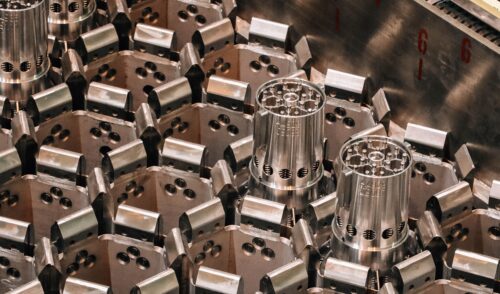
– It’s absolutely new, taking into consideration all today’s demands. It already has physical basis of internal safety. After the alarm protection system goes off on the first stage there will be no need in human assistance in order to stop nuclear reaction. Heat removal, which is very important for eliminating emergency situation, is provided due to passive systems. The installment size is smaller; refueling will be done less often. If today’s icebreakers require refueling once in 5-6 years, the new one will need it only every 8-10 years. This prolongs operating life and is good for economy. Besides, the reactor installment is totally open. It can have commercial use not only in Russia, but also abroad.
– Well, this type of icebreaker seems efficient enough to go through any ice. Moreover, due to the global warming there will be less and less ice.
– For some reason everyone links the development of the NSR with the global warming. But we in Atomflot believe the warming to be a part of cyclical process. Of course, to understand this just one human life is not enough. They don’t take into consideration that we enter the Arctic with the newest technologies, which have something to do not just with our vessels, their capacities, size, maneuvering abilities. What I speak about, among all, are space technologies. Today we can get very good photos of ice situation, which makes piloting way easier, helps us to make a long-term prognosis of ice conditions.
– Does Atomflot do anything else besides icebreaker support?
– We have a vast coast infrastructure, necessary for icebreaker parking. We conduct reactor refueling, an almost full cycle of maintenance and RAW management. Besides, we take part in most ecological projects connected with nuclear submarines decommissioning. By the way we’ve already unloaded fuel from 15 nuclear submarines.