The fourth conference held by the European Nuclear Safety Regulators Group (ENSREG) turned to be one of the key events for the European power industry. It brought together major industry players from the EU countries, international organizations, and representatives of neighboring countries. The conference was attended by almost 300 experts from around 30 countries, among them international experts, nuclear industry decision-makers and management of large energy companies. The aim of the conference was to provide an update on nuclear safety in Europe in a global context. The event addressed potential challenges for nuclear safety regulation, key recent developments in the EU policy (directives on nuclear safety, spent fuel and waste management, and basic safety standards) and emerging topics in the field of nuclear safety, such as long-term operation of nuclear facilities, prevention of irregularities, and supply chain control. It was not a highly technical event, but rather a forum to discuss topical issues of the nuclear sector with a wide range of stakeholders.
In his opening speech, Vice President of the European Commission Maroš Šefčovič stressed ENSREG’s position on promotion of nuclear safety in the EU and the adjacent countries. “ENSREG will play a decisive role in implementation of nuclear safety directives and, among other things, provide advice on practical measures for improvement of nuclear safety in the EU. ENSREG is also fully engaged in providing expert reviews under the directives governing the operation of old nuclear power plants,” Mr. Šefčovič said.
Safety as priority
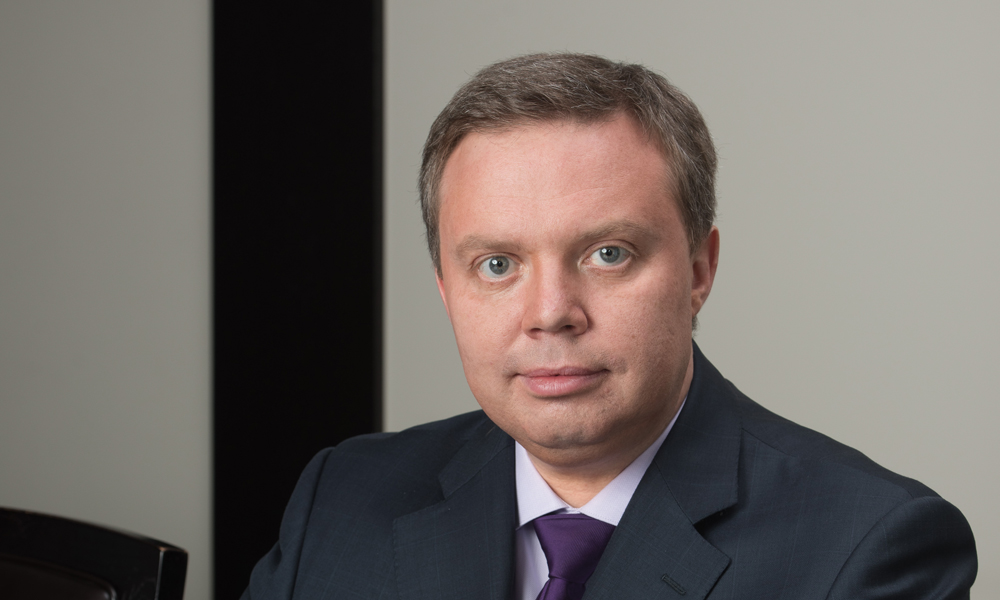
Kirill Komarov, Rosatom’s First Deputy CEO for International Business, stressed that the Russian company welcomed ENSREG’s efforts in the promotion of nuclear safety in and outside the European Union. He also emphasized Rosatom’s commitment to ensuring maximum security and radiation safety at nuclear facilities, and the need for developing international cooperation in this area. “It is beyond doubt that ambitious projects aimed at sustainable energy supplies in Russia and the EU and environmental safety must be a matter of joint research and discussion. We are convinced that, alongside nuclear safety issues, environmental safety and sustainable development challenges now faced by the energy sector hold much promise as areas of cooperation,” Mr. Komarov said. He also hoped that the joint EU-Russia working group on nuclear power would soon resume its activities.
No obstacles to cooperation
In his interview to RIA Novosti news agency, Kirill Komarov said Rosatom was ready to expand civil nuclear cooperation with the EU countries. “Today, I see absolutely no obstacles to cooperation between Russia and the EU in the nuclear power field. We have a long track record of successful cooperation that started 47 years ago and has never paused for a day. At present, our bilateral trade – I mean both shipments from Russia to the EU and vice versa, and our joint project in third countries – reaches billions of euros a year. This is a very successful and mutually beneficial cooperation, and we persistently develop and expand it. Things are evolving very rapidly, so we keep launching one project after another.”
When asked about the impact of Brexit on the cooperation with Russia, Mr. Komarov replied that Russia and the UK had a necessary legal basis for cooperation, and it did not depend on whether the latter was in the EU or not. “The United Kingdom has long been supplied with nuclear fuel that is mostly manufactured in Russia, although under a license from France’s Areva.” Kirill Komarov also noted that Rosatom saw many opportunities to provide back end services, particularly nuclear decommissioning and fuel reprocessing, in the UK.
“Today much is discussed about how to build spent fuel repositories. Our strong opinion is that the current state of technology allows for spent nuclear fuel to be thoroughly reprocessed prior to being put into storage. In other words, we can extract all reusable materials from the fuel, and then dispose the remaining waste that will clearly have a smaller volume and a shorter half-life. This also provides common ground for cooperation with the UK and all EU countries.”