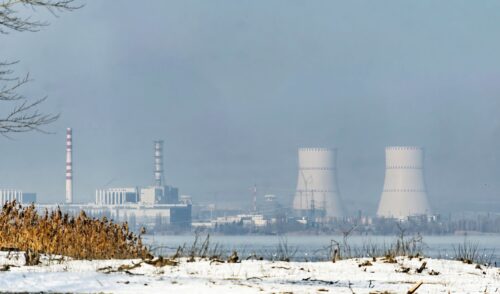
At the beginning of the year the Munich Environmental Institute in Germany had spread the information of the Federal Government concerning possible future purchasing of atomic energy from the NPP currently under construction. Among all, it says that the government plans to “transmit power from the Baltic NPP in Kaliningrad upon the Baltic undersea route to Germany”.
The article also says that the possible undersea cable construction may be financed by the EU. The members of Bündnis 90/Die Grünen ecological party in Germany, scandalized by this piece of news, had written a letter to the Federal Government asking for comment. A few days ago the reply was published.
Responsible approach
One of the questions of the ecological party was the general opinion of the government concerning NPP construction in Kaliningrad. The reply of the parliamentarians was that the decision concerning the usage of nuclear power is a sovereign right of every state, with the state being responsible for the safety. Germany consulted with Rosatom on the subject, using the right given by the Espoo Convention (The Convention on Environmental Impact Assessment in a Transboundary Context).
Back in 2009 the Federal Government received the EIA for the Baltic NPP prepared by Rosatom, after which Germany expressed its interest in consultations with the State Corporation. This was followed by two meetings concerning details of ecological safety of the project. The first meeting took place on February 2, 2011, in Berlin and was “awareness-raising”, as says the Federal Government reply. In September, the same year, a meeting of experts was held in Moscow, where there was given a detailed analysis of the EIA and safety substantiation. Besides, the German side accepted the Rosatom invitation to take part in the forum-dialogue with society in Kaliningrad and the construction site inspection in November 2011.
During their meetings Rosatom gave a detailed description to the German side about principles of choosing a construction site. “There are no known drawbacks in safety planning of the Baltic NPP” – was the conclusion of the German specialists after the meetings. The representatives of the ecological party in their inquiry to the Federal Government expressed the concern about the condition of ground waters at the construction site. “The conclusion of the EIA suggests that the condition of ground waters is evaluated as “good”” – the parliamentarians respond.
The representatives of the ecological party were also concerned about the spent fuel removal from the NPP in Kaliningrad, lest the SNF be removed via German territory. The reply of the Federal Government was that the Russian side will remove the waste via Saint-Petersburg, “according to the Russian and international requirements”.