Rosatom is expanding its international educational initiatives. Female African students from Rosatom’s partner universities won a competition organized by the IAEA; winners of the Atoms Empowering Africa 2025 video contest visited key Russian nuclear sites, and foreign students from MEPhI took a technical tour of the Novovoronezh Nuclear Power Plant.
Female African students from Rosatom’s partner universities have won the international IAEA competition for female students “Shaping Africa’s Future Through Nuclear Sciences and Technology.” The event provides young scientists with an opportunity to present their ideas and research to international experts in nuclear energy. Among the winners were Sohyla Montasser Ahmed Aboudeif, a graduate student at the Moscow Institute of Physics and Technology from Egypt; Meron Mazenga Demesse, a student at the Nuclear Energy Institute of the National Nuclear Research Institute (MEPhI) from Ethiopia; and Grace Nabbe Mbofvana, a student from Zambia.
“Participating in this competition gave us a chance to demonstrate our knowledge and skills, and also to propose nuclear-based solutions for the current challenges faced by our countries. We are very happy that our efforts have been duly recognized, and we hope our experience will inspire other students to actively participate in international initiatives,” said Sohyla Montasser Ahmed Aboudeif.
The proposals of these young professionals were recognized as the best among those of other numerous competitors, emphasizing the high level of theoretical and practical training at Russian universities and their professional potential in nuclear sciences. The winners were formally awarded at the 69th IAEA General Conference, where they joined mentoring sessions with female nuclear industry leaders organized with support from the Women in Nuclear Global, and also took part in a technical tour.
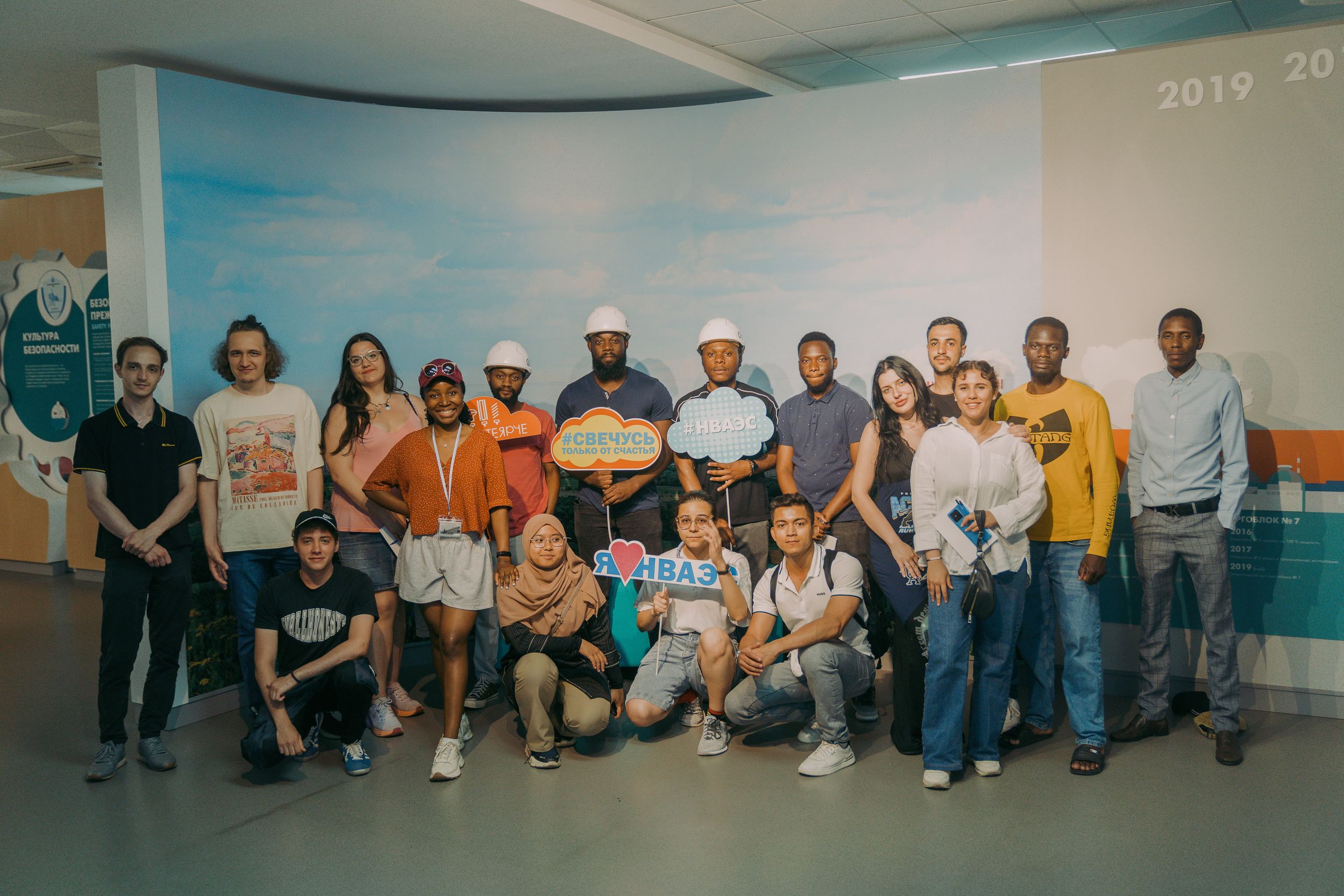
Winners of the Atoms Empowering Africa 2025 video contest
Meanwhile, winners of the Atoms Empowering Africa 2025 video contest visited landmark sites of the Russian nuclear industry. In Moscow, they visited the Atom Museum, one of the most advanced science promotion centers in the country. The cultural program included guided tours of Red Square and the Kremlin, allowing young professionals from South Africa, Egypt, Kenya, the Democratic Republic of the Congo, Burundi, and Namibia to explore Russia’s rich heritage in greater depth. The finalists also visited Rosatom’s Technical Academy in Obninsk, a leading training center for nuclear professionals, and the Obninsk Nuclear Power Plant.
“This trip opened new horizons for me. Visiting Obninsk and learning about the educational and technological aspects of nuclear energy has inspired me to contribute to the development of clean energy in Africa,” said Angel Makibi, one of the finalists.
Technical tour of the nuclear plant
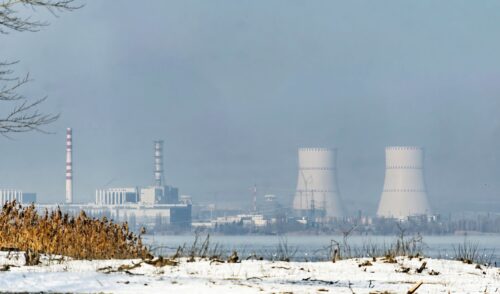
Simultaneously, the Novovoronezh Nuclear Power Plant hosted a technical tour for foreign students of the National Nuclear Research Institute (MEPhI) from 10 countries. Thirty-nine students from Zimbabwe, Zambia, Turkey, and other countries participated in the tour. Novovoronezh employees provided detailed explanations about the principles of safe equipment operation and the specifics of technological processes.
During the visit, students learned about the operation of the innovative Novovoronezh Unit 6. Equipped with a VVER-1200 reactor, this unit belongs to Generation III+ and represents Rosatom’s flagship design. This reactor design is used at six operating power units, four in Russia and two in the Republic of Belarus. Besides, power units with VVER-1200 reactors are being built in Bangladesh, Hungary, Egypt, Turkey, and China.
“I really liked that I could see the actual equipment of an operating nuclear station after studying theory. It was fascinating to see everything with my own eyes. I want to build a career in the nuclear industry, but I will have to go to Brazil or Argentina for that. In Ecuador, more than 60% of electricity comes from hydropower stations — we do not have any nuclear power plants yet. However, seminars are starting to be held, and strong interest is emerging. If I became president, I would immediately approach Rosatom to build Ecuador’s first nuclear power plant,” said Bryan Fernando, a fifth-year student at the Obninsk Institute for Nuclear Power Engineering from Ecuador.
Photo by: Woman in Nuclear, Novovoronezh NPP, IPPE (Institute of Physics and Power Engineering)