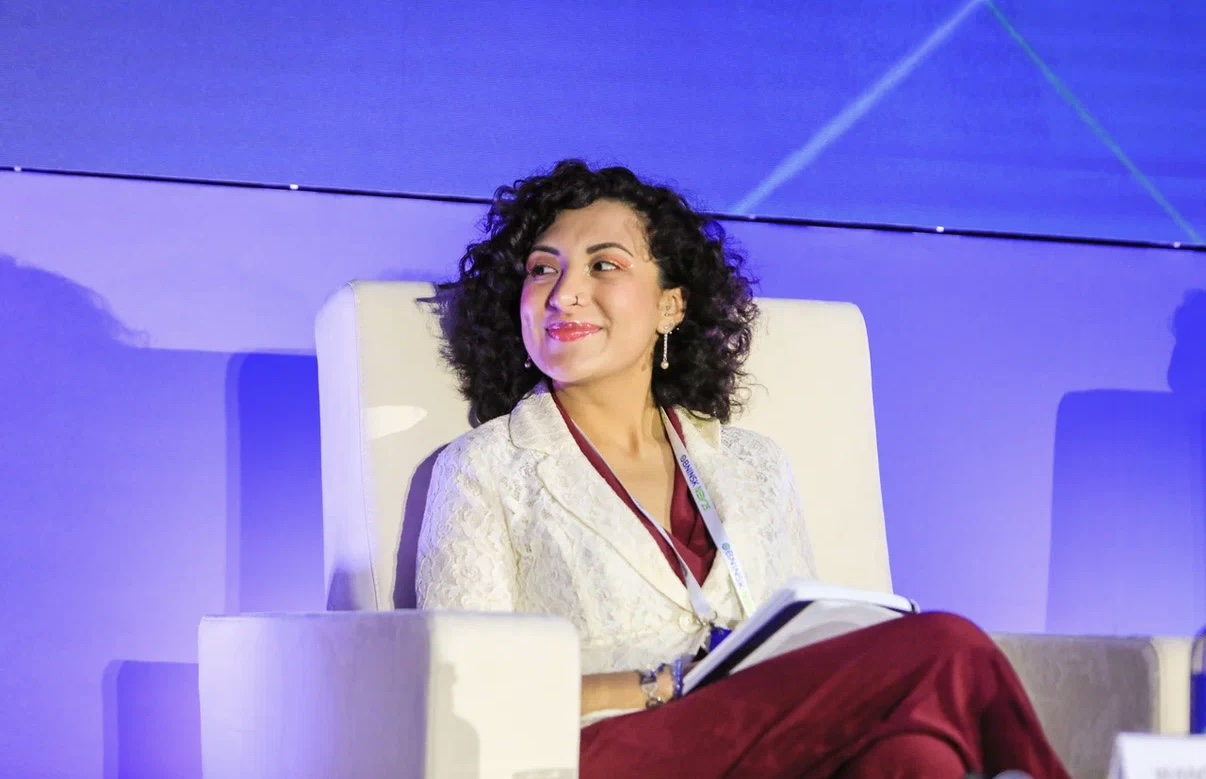
Wanda Natalia Camacho Vasquez is a participant of the Russian Nuclear Education Ambassadors Program. The ambassadors are foreign students enrolled in Russian universities and spreading knowledge about the nuclear industry. In this interview, Wanda speaks how she has chosen her profession, how her studies at the National Nuclear Research University MEPhI (Rosatom’s partner university) are going, and what prospects for the nuclear power development her native Bolivia has.
I was born in La Paz, Bolivia, in the very heart of the South American continent. I am a nuclear engineer—one year ago I received my bachelor’s degree in nuclear physics and technology from the National Nuclear Research University MEPhI. Currently, I am in the first year of my master’s program in nuclear medicine.
Growing up, I was always interested in everything that surrounded me. Unfortunately, my country does not offer the possibility of getting a degree in nuclear physics, but Russia does. I was lucky to win a scholarship to study at MEPhI.
To fulfil my dream, I needed to learn a new language that is completely unlike mine. And that was far from being the only challenge—another one was, for example, a totally different climate with temperatures outside sometimes reaching -15°C.
I arrived in Russia in October 2018, and received my bachelor’s degree in nuclear engineering in July 2023.
I like helping people. This is why I decided to continue my studies and get a master’s degree in nuclear medicine. I hope that my future job will be related to oncology, so that diseases like cancer are no longer a synonym for death. My mother is a great example for me. She survived cancer and then used her knowledge to help other cancer patients. She started working in the field of oncology, inspiring me to follow that path.
I would love to contribute to the development of new technologies that make nuclear medicine even more precise and effective in diagnosing and treating diseases.
Studying in Russia
Russian education places strong emphasis on theoretical knowledge and rigorous training in technical and scientific fields. Education in Russia is also much more affordable than in many other countries known for the high quality of education, and this creates a more comfortable environment for young people while they study.
The admission process for my master’s program in nuclear medicine was very competitive, but I had the advantages of solid academic performance in my undergraduate studies, strong passion for the field and a clear motivation. My training is going well so far. I have completed some theoretical courses, and I have already been introduced to practical applications of nuclear medicine.
Language and national specifics
Russian is not an easy language to learn, particularly its grammar and cases, but I enjoy learning it. I was surprised by how rich and poetic Russian is.
As for Russia, I was impressed with the deep respect for traditions and history. For example, the Russian New Year celebrations are very special, with people gathering with family and friends for big feasts and giving gifts. The hospitality and warmth of the people, despite the cold winters, really surprised me.
Nuclear industry in Bolivia
The development of nuclear technology in my country could greatly benefit the people, improving access to advanced diagnostics, more effective cancer treatments, and new therapeutic methods.
Bolivia’s nuclear industry is still in its early stages, but there have been important steps made towards its development in recent years. The government has been investing in nuclear technology. In 2010, the Bolivian Nuclear Energy Agency (ABEN) was established to promote peaceful uses of nuclear energy, particularly in healthcare, agriculture, and industry. The country is focusing on nuclear medicine, with new facilities for nuclear diagnostics and treatment being set up.
I believe the prospects for nuclear medicine in my country are promising. As healthcare technologies advance, there will be growing demand for trained professionals in nuclear medicine. The country will need professionals specializing in the development of radiopharmaceuticals, medical imaging, and radiology. There is a rising need for nuclear medicine technologists and regulatory experts to ensure safe uses of nuclear technology.
Photo by: From personal archives