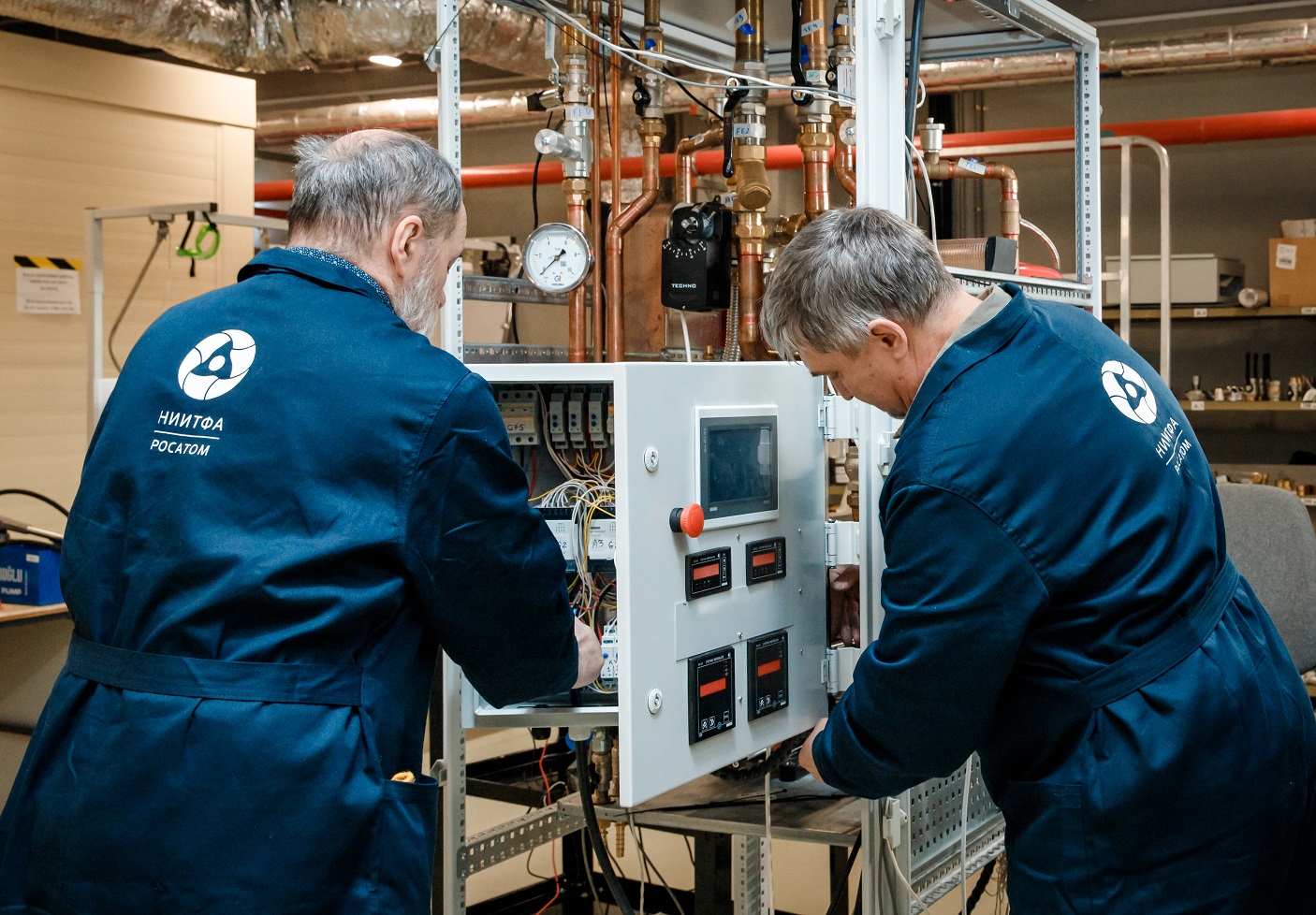
The Research Institute of Technical Physics and Automation (NIIITFA) is celebrating its 65th anniversary. Historically known for producing radiation equipment, radioisotope thermoelectric generators, and non-destructive testing devices, the institute is now developing an export version of the Brachyum gamma therapy system, working on biofabrication of tissues and organs and preparing to manufacture titanium implants using additive technology.
NIIITFA (formerly the All-Union Research Institute of Radiation Engineering, VNIIRT) was established on October 6, 1960. Serving as the leading research organization for radiation engineering and technologies, the institute grew rapidly.
At VNIIRT, researchers studied the effects of ionizing radiation on various materials and food products. They developed inspection instruments, such as gamma radiography equipment for non-destructive testing of metal structures, and power sources, such as radioisotope thermoelectric generators (RTGs). The latter are used to power low-consumption devices in the Arctic and space. All Soviet and Russian RTGs were developed at NIIITFA.
For a long time, the institute had had the only product for nuclear medicine in its portfolio, the Agat gamma therapy system, which works as follows: according to an irradiation map developed by a doctor and a medical physicist, isotopes are mechanically guided to the tumor, which is then destroyed by high-energy gamma quanta.
In 1989, the institute established a branch in Saransk. This is where they produce Geiger-Müller gas-discharge counters, better known as Geiger counters, and ionization chambers for neutron flux measurements.
Current activities
Today, NIIITFA specializes primarily in the development and production of nuclear medicine equipment. Its flagship product is the Brachyum gamma therapy system designed for brachytherapy of pelvic organs, breast, esophagus, nasopharynx, and oral cavity. Brachyum is already being supplied to Russian clinics, with 10 such devices to be delivered to hospitals in 2025-2026.
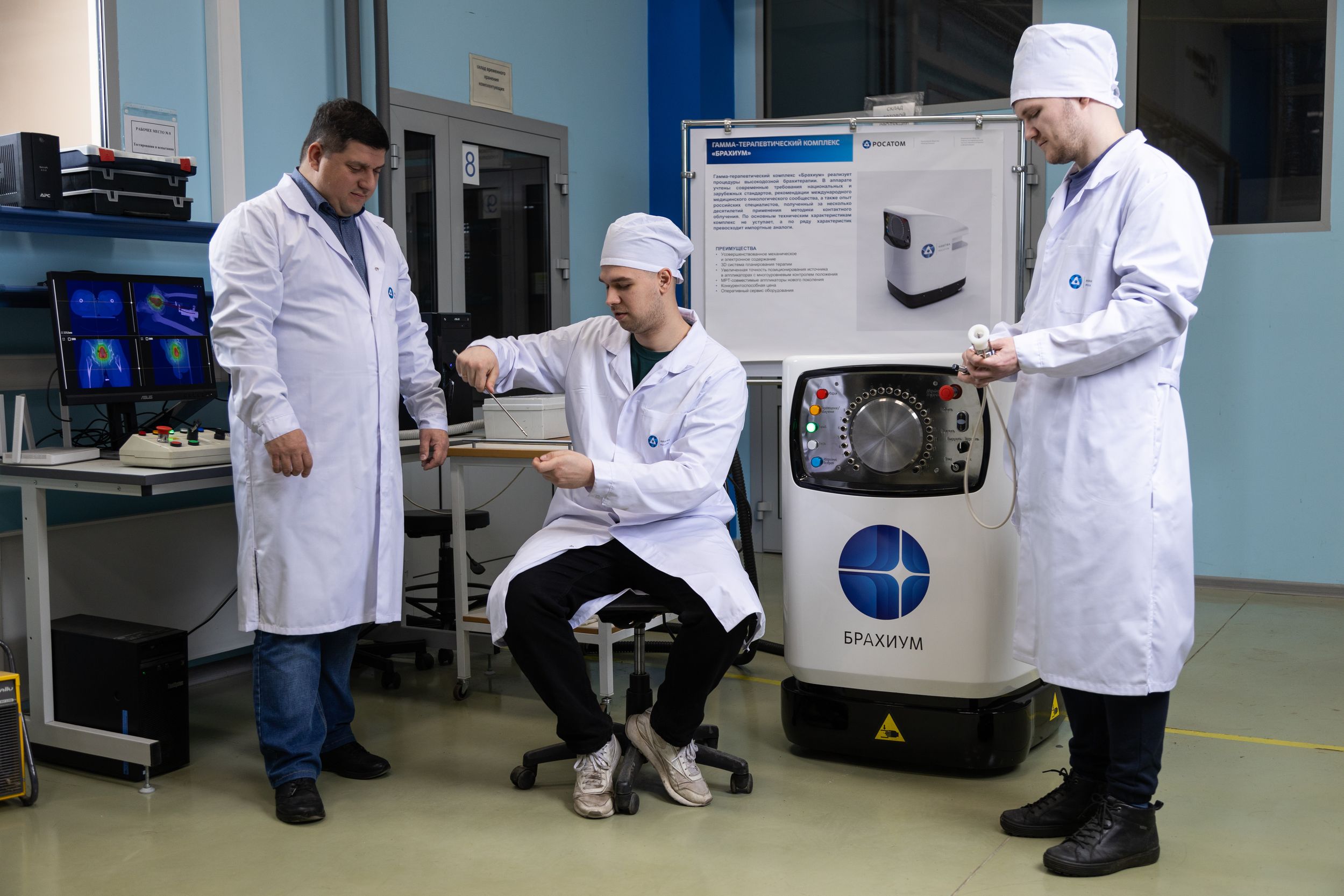
The institute’s production capabilities fully meet the needs of the Russian market, so NIIITFA plans to produce an export version of the device by the end of 2027. It will feature improved proprietary software, while its dimensions and weight will be reduced by approximately 20%. Applicators, through which the radiation source is inserted, will also be improved. Special adapters will be introduced to enable the use of imported applicators. The upgraded features will be later incorporated into the Russian version, and the process of updating the registration documents has begun.
NIIITFA is also developing a 1.5T magnetic resonance imaging (MRI) scanner. Such scanners are the ‘workhorses’ of medicine, well-proven in daily practice. NIIITFA plans to supply 25% of the Russian market, which amounts to approximately 40 scanners per year. The first three serial installations are scheduled for delivery and trial operation in 2027. In 2028, the institute will manufacture 10 MRI scanners, with plans to reach full production capacity in 2029.
Future prospects
3D implant printing is among the most interesting areas NIITFA is engaged in. This is where Rosatom’s subsidiary is involved in every link of the supply chain, from the development of powders and specialized software to final products and sterilization. Working in collaboration with the Sechenov First Moscow State Medical University, NIIITFA is developing osteotropic implants, having already created an implant coating that improves implant integration. The joint research results are intended for an investment project involving 3D printing of custom and serial products. Work is underway to prepare a feasibility study for the project.
Furthermore, NIIITFA is involved in research of biofabrication of tissues and organs. Scientists have managed to grow an equivalent of a rabbit blood vessel in a biofabricator. It was successfully implanted into the animal’s femoral artery. In the future, such technologies will allow for the replacement of damaged tissues and even organs in patients. Work in this field continues, with scientists hoping to showcase new developments at the Future Technologies Forum in February 2026.
Space plans
NIIITFA has not abandoned nuclear instrumentation either. The institute continues to produce, among other things, boron concentration meters. These are also planned to be upgraded as requested by Indian and Russian customers. Specifically, engineers are considering the option of moving the signal processing unit from the hot zone to a separate cabinet. The institute also plans to further develop the RTG technology. This will advance alongside the ongoing development of the Northern Sea Route and space exploration, primarily of the Moon and Mars.
Photo by: Rosatom State Corporation