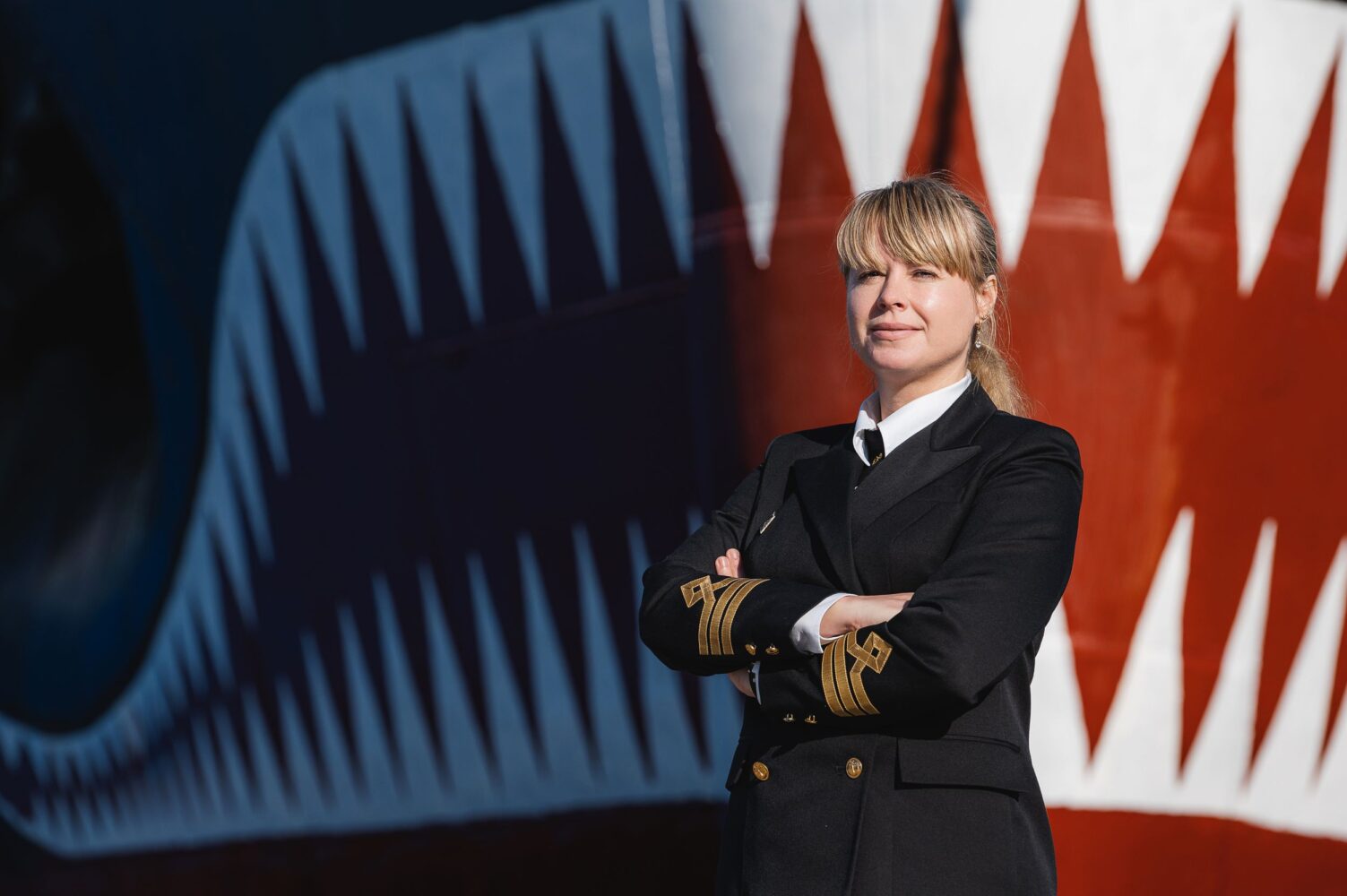
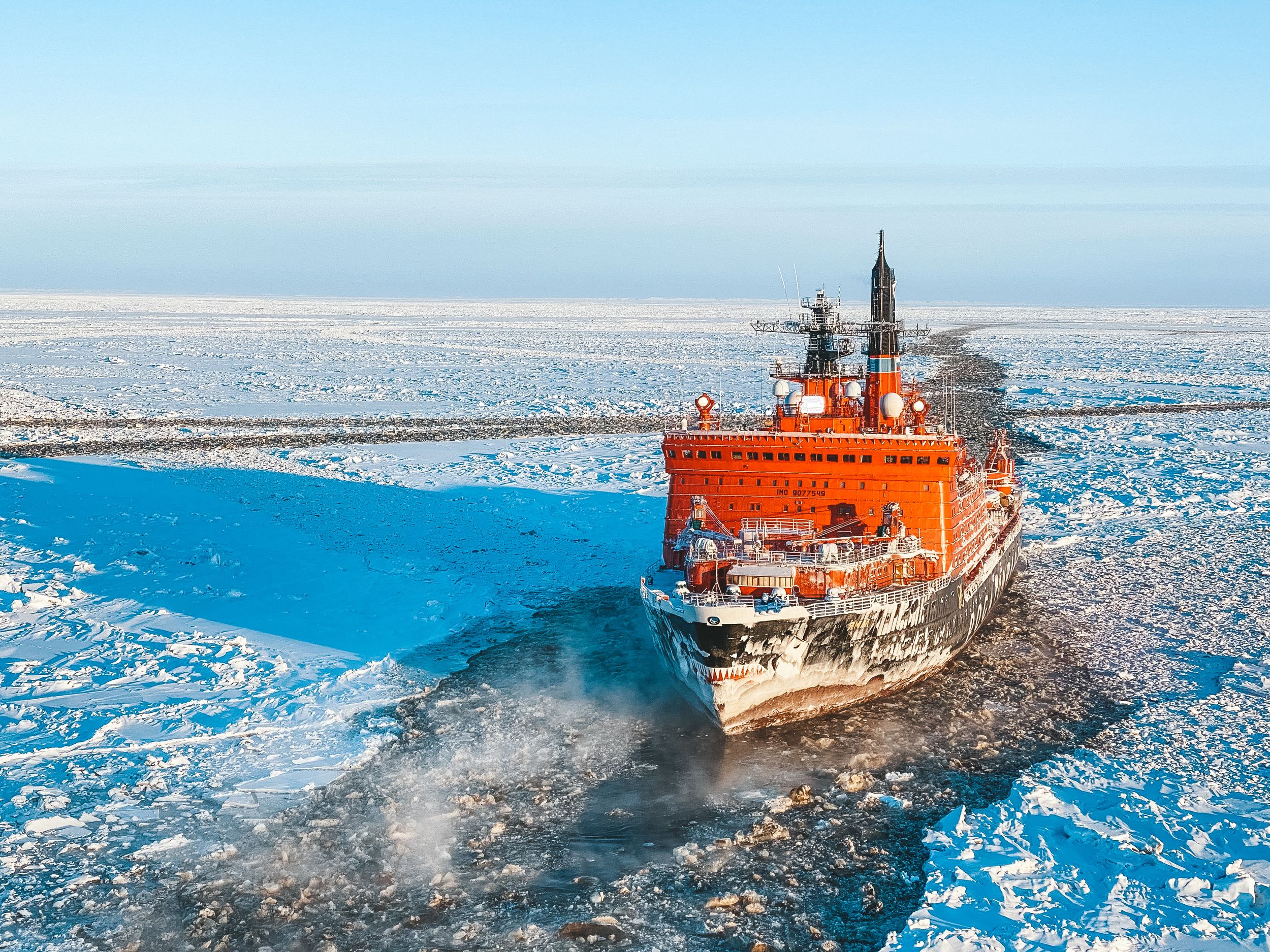
Rosatom is systematically developing Arctic shipping as part of establishing the Trans-Arctic Transport Corridor. This initiative has the potential to significantly increase cargo traffic on the Northern Sea Route. In this context, the nuclear icebreaker fleet takes on the key role. Becoming the captain of such a vessel is no easy feat. It is traditionally considered a male profession. But Rosatom is breaking stereotypes: last year, Marina Starovoytova became the first female captain of a nuclear icebreaker in the world. Here is her story.
By her first education, Marina Starovoytova was a teacher of Russian language and literature. But one day, friends told the young teacher that the Murmansk Shipping Company was hiring women for work at sea, and she decided to give it a try. She says her spirit of adventure and romance of travel took over.
At first, she worked as a mess attendant: she maintained order, washed dishes, and served food. But she realized fairly quickly that she loved the sea and wanted to steer the ship herself.
To make her dream come true, Marina Starovoytova enrolled in the correspondence department of the Admiral Makarov State Maritime Academy to study navigation. At that time, women were not accepted into the full-time department. She continued working as a mess attendant in parallel. The most difficult part for her was meeting an eligibility criterion of working as a sailor or cadet on a ship for 12 months. This sea time is mandatory to obtain a certificate of competency.
To get hired as a sailor, Marina approached the Association of Sea Captains in Murmansk. They supported her, and she got a job as a second-class sailor on a merchant vessel. She learned from senior colleagues, and participated in mooring operations and deck work. Later, she passed her exams, received the qualification certificate of an able seaman, and stood at the helm, steering the ship.
Having received her academic diploma and a certificate of competency, Marina Starovoytova took a job as a Third Officer. She went through mooring and complex self-unloading operations in the Arctic, earning authority among sailors through hard work. “The transport fleet hardened me and gave me invaluable experience. I recall those years and the people with whom maritime fate brought me together with warmth and deep respect. I still stay in close contact with many of them,” recalls Marina Starovoytova.
The dream: a nuclear icebreaker
Later, Marina wanted to pilot nuclear icebreakers. “I was fascinated by how professional icebreaker crews carved transport vessels out of ice with jeweler’s precision. And the power of the icebreakers was impressive. I asked myself: could I do it like them? I decided to have a try,” says Marina Starovoytova.
She was accepted onto the nuclear icebreaker Yamal, though with a demotion in rank as nuclear icebreakers require special skills and abilities. However, mentors helped her and offered guidance, so the learning process went smoothly. She passed her exams, became a Second Officer, and then a Chief Officer. There are three Chief Officers on an icebreaker: one is responsible for the operations department, the second for the domestic service, and the third for ship drills and firefighting equipment.
Marina Starovoytova did not specifically strive to become a captain. She said it was more important for her to feel that she was in the right place, doing what she loved, and that every successful escort operation she conducted was part of a greater effort.
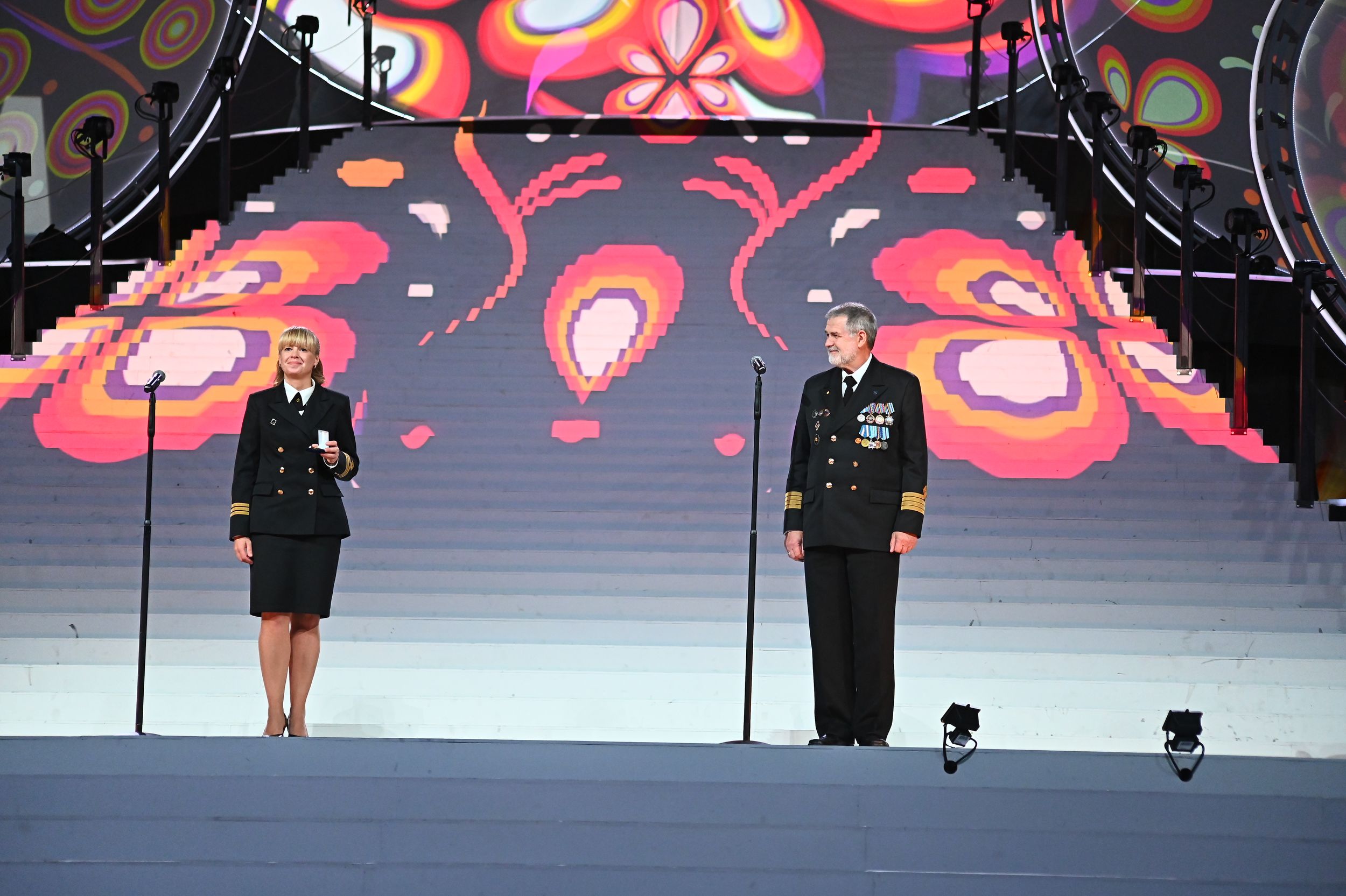
Marina Starovoytova was appointed captain in August of last year, during a festive ceremony dedicated to the 80th anniversary of the Russian nuclear industry. “The Arctic is not just ice and snow; it is also the sea — harsh, majestic, and incredibly beautiful. All seas are different. The Kara Sea, where we have to work most often, is cold, with frequent fogs and storms, and covered with ice for most of the year. The Barents Sea is aquamarine, crystal with turquoise, but stern. Each sea has its own character, just like an icebreaker, just like a person,” says Marina Starovoytova.
The new captain took command on September 30. Marina Starovoytova oversaw the docking of the Yamal, its scheduled repair, and its exit from the dock. Then came the first voyage and the escorting of vessels in the western sector of the Arctic.
The main task the new captain of the Yamal sets for herself is to do her work safely and efficiently. “It is never easy at sea. You are responsible for the entire crew and the icebreaker. This requires utmost composure and constant concentration,” notes Marina Starovoytova.
Another task is to maintain a good working atmosphere. “As a teacher, I use different motivation methods, but it is very important to hear people. My crew is experienced and competent; their opinion is important to me, and we discuss many things because trust within the team is the foundation of safety,” says the Yamal captain. Moreover, Marina Starovoytova wants everyone to see her not as the “first female captain,” but simply as a captain.
Marina Starovoytova views her new position as a height conquered — not a finish line, but rather a beginning. There is much to learn: guiding cargo ships through the ice and leading a team in a new status. “A captain is an administrator, a judge, a diplomat, a psychologist, and a rescuer. They are the official representative of the flag state. A captain must foresee everything, be ready for anything, and be responsible for everything that happens on the ship,” says Marina.
Photo by: Rosatom State Corporation, Nikita Boev