Rosatom presented new energy solutions for Uzbekistan, including an integrated nuclear power plant and electromobility technologies, at the 6th Innoprom. Central Asia exhibition. Concurrently, educational and sports events organized with Rosatom’s involvement — the national stage of the Global HackAtom championship and the first digital sports festival — took place in the country.
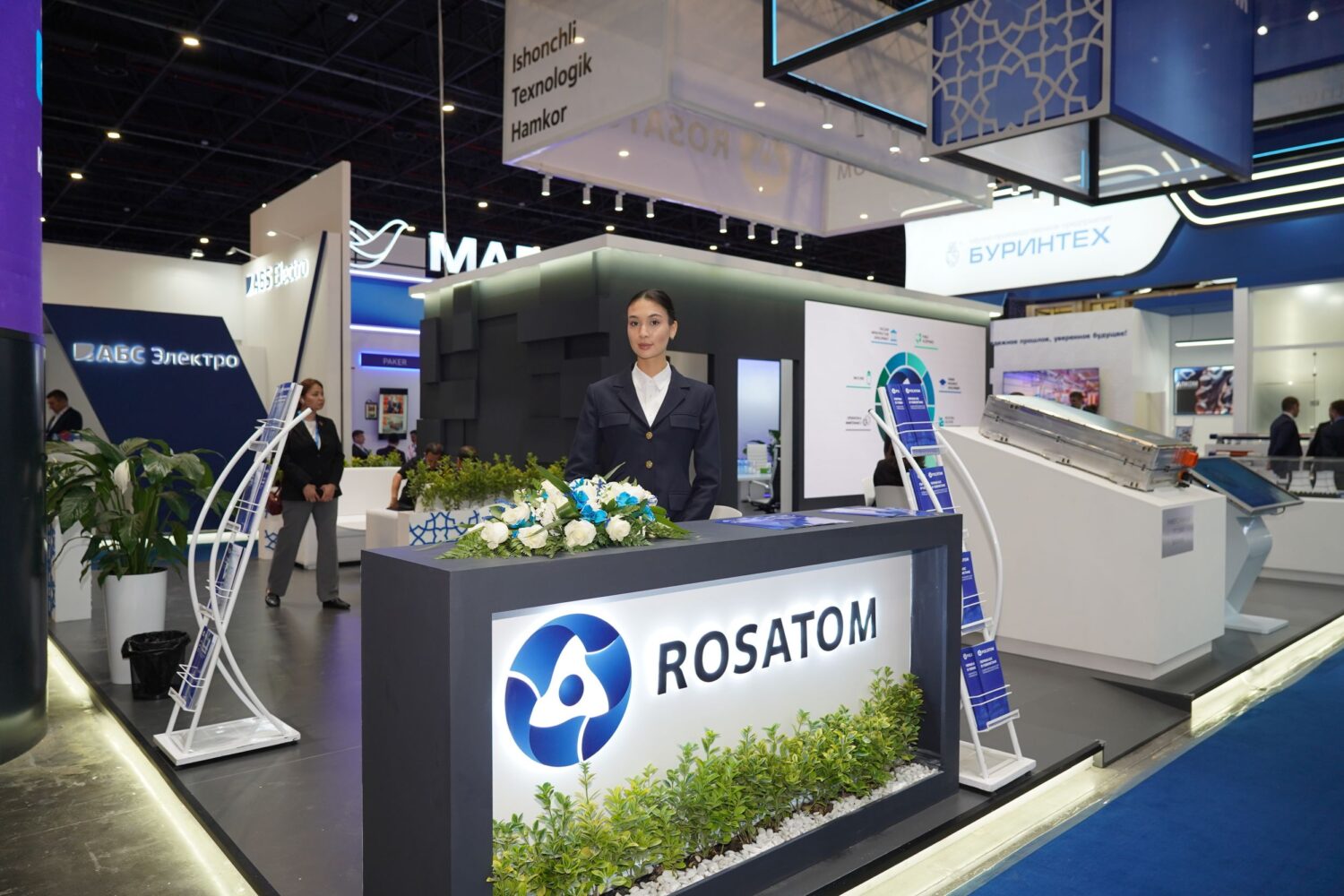
At the Innoprom. Central Asia international industrial exhibition, Rosatom Director General Alexey Likhachev showcased a model of an integrated nuclear power plant featuring RITM-200N and VVER-1000 reactors, as well as electromobility technologies, including a lithium-ion cell, a lithium-ion battery module, and an all-purpose battery.
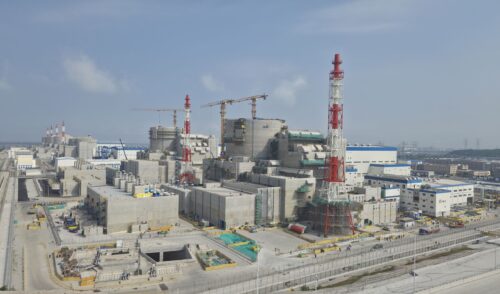
The integrated nuclear power plant was approved for construction in Uzbekistan through an agreement signed between Rosatom and the Uzatom Agency on March 24 of this year. The project provides for the construction of a small modular reactor (SMR) plant and a large-capacity nuclear power plant on a single site. Once completed, the new facility will cover up to 14% of the country’s power consumption.
Alexey Likhachev emphasized that nuclear power in Uzbekistan should serve as a development driver across a wide range of areas, from industry and science to education and social infrastructure. “The town that will emerge near the plant will become a hub for the development of both nuclear energy and other promising sectors, such as nuclear medicine, materials science, and sterilization technologies for agricultural produce, food products, and medical devices. It is in such a nuclear host town that a new community of scientists, technologists, and researchers will be formed, capable of not only acquiring advanced knowledge but also making a real contribution to strengthening Uzbekistan’s technological sovereignty and creating new growth points for decades to come,” Likhachev noted.
Global HackAtom national stage
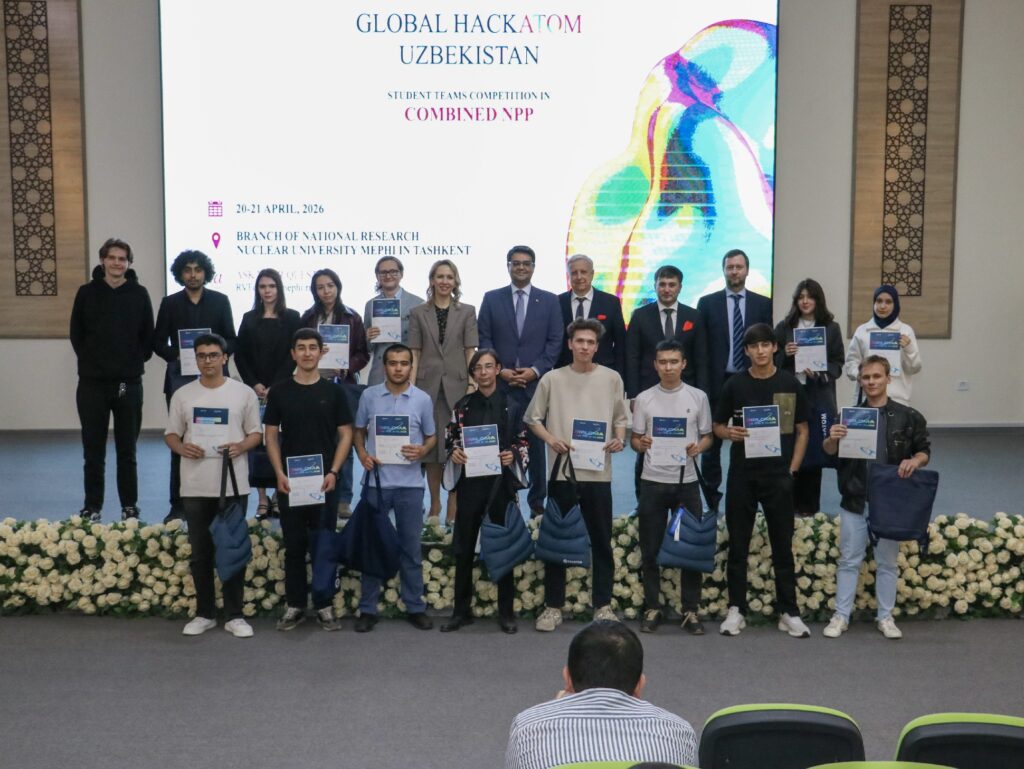
Concurrently, Uzbekistan hosted the national stage of the Global HackAtom international student championship with Rosatom’s support. During the event, participants attempt to find solutions to real-world nuclear industry challenges within 24 hours. The championship consists of two phases: national qualifying stages and the Grand Final in Russia. The national stages will be held in 15 countries, including Bolivia, Brazil, Egypt, Hungary, and Vietnam. Following these, 15 winning teams, including the one from Uzbekistan, will compete for the Global HackAtom championship title in the final.
More than 100 students from seven universities participated in the national stage in Uzbekistan. Over two days, 20 student teams worked on a case study dedicated to the nuclear cluster project in Uzbekistan. On the first day, contestants attended educational lectures featuring representatives from Rosatom’s flagship universities. On the second day, the students defended their projects before an expert jury comprising professionals from the National Nuclear Research University MEPhI, the Nuclear Plant Construction Directorate, and the Nuclear Physics Institute of the Uzbekistan Academy of Sciences.
“You are already the best — the pride and the future engineering and technological elite of Uzbekistan. Keep dreaming, bring your boldest ideas to life, because the future is in your hands,” said Tatiana Terentyeva, Rosatom’s Deputy Director General for Human Resources.
The winner of the national stage was the Synthesis team from the Tashkent branch of MEPhI. They will represent Uzbekistan in the Global HackAtom Grand Final, which will be held in September 2026 as part of the International Youth Festival.
Atomic Energy of Sports festival
Another spring event held by Rosatom in Uzbekistan was the first international youth digital sports festival, Atomic Energy of Sports. The event took place at the IT Arena in Jizzakh and the Jizzakh Olympic Reserve College. The festival featured sports combining digital and physical disciplines: phygital basketball and phygital soccer, as well as cyber basketball, cyber soccer, algorithmic programming, and Counter Strike. More than 350 school and university students took part in the tournaments.
As part of the festival, cooperation agreements were signed between the Center for Modern Sports Technologies of RosEnergoAtom, the phygital sports and basketball federations of Uzbekistan, and the Tashkent branch of MEPhI. The festival was attended by over 3,000 spectators, while the broadcast in Russian and Uzbek gathered an audience of around 10,000 people.
Photo by: Rosatom State Corporation, ASE JSC, Tashkent branch of the National Research Nuclear University MEPhI