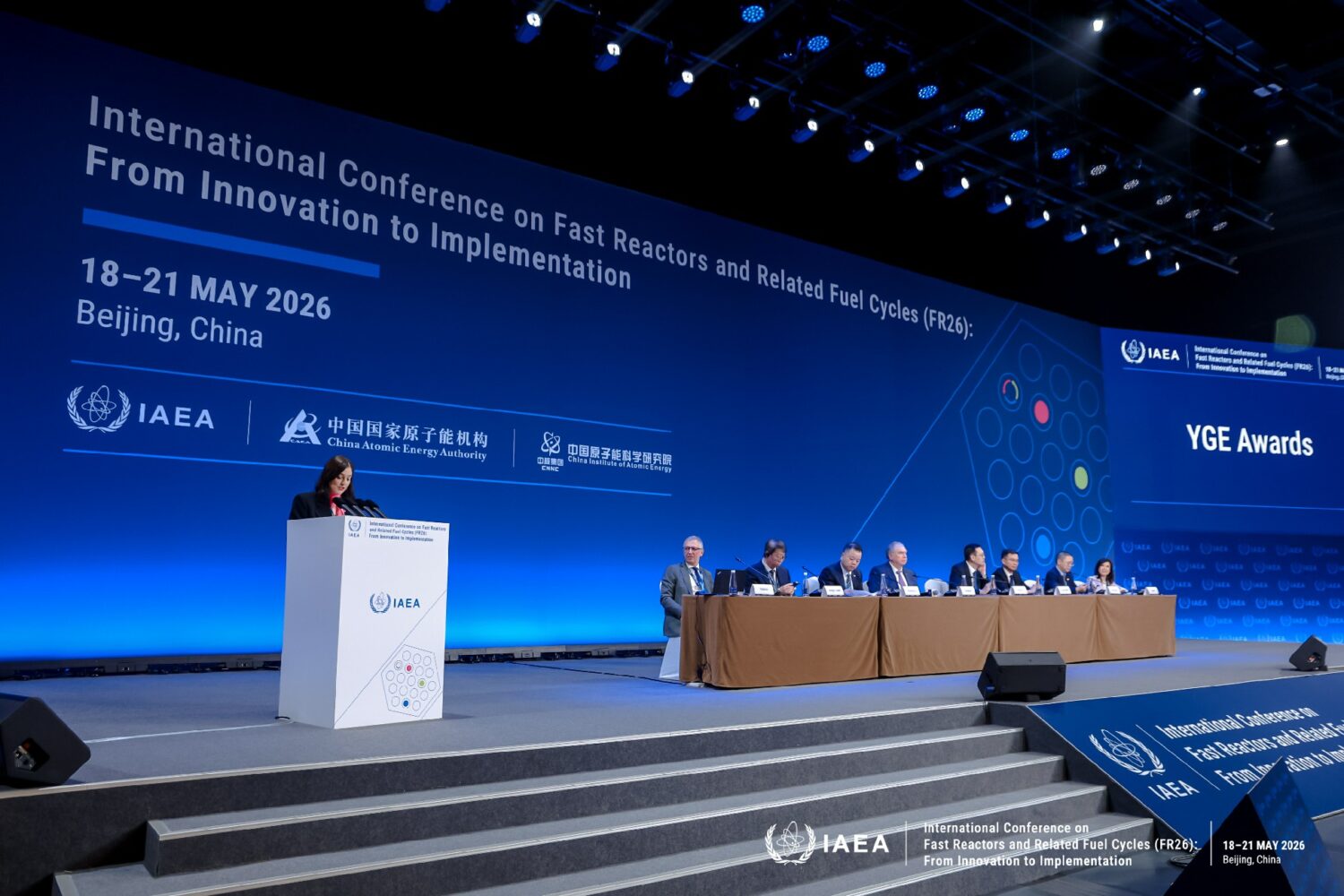
Rosatom researchers and executives took part in the IAEA International Conference on Fast Reactors and Related Fuel Cycles (FR26) held in China from May 18 to 21. Russian nuclear professionals presented their concepts and developments regarding the role of fast reactors in the future of nuclear energy.
The conference, the fifth in its series, was themed “From Innovation to Implementation.” Evgeny Adamov, Honorary Chair of the conference and Scientific Director of Rosatom’s Proryv (Breakthrough) Project, addressed the attendees during the plenary session. “Today, Russia and China are at the forefront of developing Generation IV nuclear energy technologies, and holding two of the five IAEA fast reactor conferences in these countries is a logical recognition of this fact,” he noted.
Evgeny Adamov also outlined the challenges facing the global nuclear industry. These include a growing uranium deficit, the underutilization of its energy potential, delayed solutions to the spent nuclear fuel problem, non-proliferation issues, and the fact that the competitiveness of nuclear generation is not obvious to everyone.
Generation IV chooses fast reactors
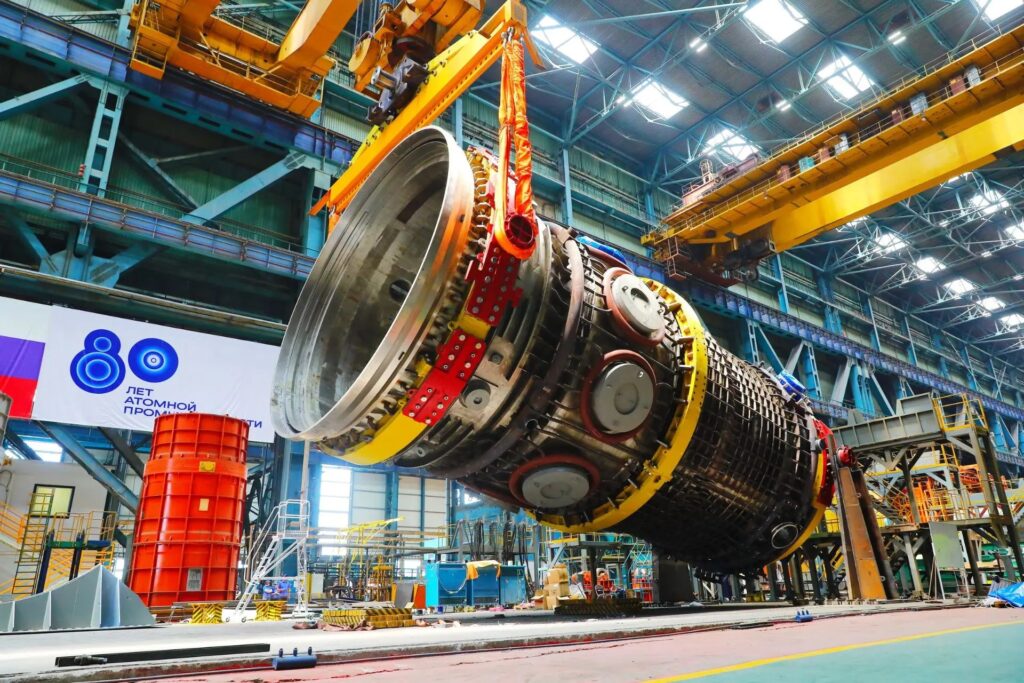
A new nuclear technology platform involving fast neutron reactors can address these challenges, Evgeny Adamov pointed out. This is precisely the approach being implemented in Seversk (Russia) under the Proryv Project. A Pilot Demonstration Energy Complex (PDEC) is currently under construction there, featuring the lead-cooled BREST-OD-300 reactor and an on-site closed fuel cycle facility with modules for fuel fabrication/refabrication and spent nuclear fuel reprocessing.
Speaking at the plenary session, Alexander Lokshin, Rosatom Deputy Director General for New Nuclear Energy Products, also discussed the ability of Generation IV fast-reactor systems with closed nuclear fuel cycle solutions to enhance the appeal of nuclear energy and increase its contribution to a sustainable global energy supply for millennia to come. “Fast neutron reactors coupled with a closed fuel cycle technology are not just a means to increase the efficiency of nuclear power — they are a prerequisite for its long-term survival,” he emphasized.
Russia is a long-standing leader in fast reactor technologies. For instance, Unit 3 at the Beloyarsk NPP, equipped with a BN-600 fast neutron reactor, has been operating in the country since 1980. Along with safely generating electric power, it is used for fuel research. In 2015, Beloyarsk Unit 4, featuring a BN-800 reactor, was connected to the grid. It is currently the world’s only commercial power unit running on mixed uranium-plutonium oxide (MOX) fuel. It is also used to research new fuel types, which are essential for closing the nuclear fuel cycle.
The construction of power units with fast reactors at the Beloyarsk NPP will continue. Preparations are currently underway to begin the construction of Unit 5 with a BN-1200 reactor. Overall, according to the current Power Plant Location Master Plan 2042, Russia intends to build nine power units equipped with fast reactors.
Fuel with minor actinides
Rosatom is busy developing fuel for Generation IV systems. In April, the world’s first pilot operation program for uranium-plutonium MOX fuel doped with minor actinides was completed at Beloyarsk Unit 4. Minor actinides are the most radiotoxic and long-lived artificial transuranic elements contained in spent nuclear fuel (SNF). Primarily, this refers to neptunium, americium, and curium. Transmuting (or “burning”) them in fast reactors will drastically reduce SNF storage times and the volume of waste requiring deep geological repositories.
“The transmutation of minor actinides in a reactor is not a one-off experiment; it is a long-term strategy. Before scaling this solution to a commercial level, we are demonstrating its technological feasibility, proving that the concept works,” said Alexander Ugryumov, Senior Vice President for Research and Development at TVEL.
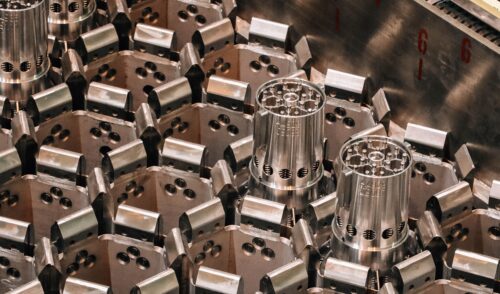
At the next stage, TVEL intends to increase the minor actinide content in experimental MOX fuel assemblies, add minor actinides to mixed uranium-plutonium nitride (MUPN) fuel for fast reactors, and trial heterogeneous transmutation. In this approach, minor actinides are not mixed into the uranium-plutonium fuel but are instead placed into separate fuel rods or dedicated assemblies to be loaded into specific zones of the reactor core.
To validate the minor actinide transmutation technology on a commercial scale, there are plans to construct a molten salt research reactor at the Mining and Chemical Plant (part of Rosatom) in Zheleznogorsk.
Photo by: Engineering Division of Rosatom State Corporation, Balakovo NPP, the IAEA
This site uses cookies. By continuing your navigation, you accept the use of cookies. For more information, or to manage or to change the cookies parameters on your computer, read our Cookies Policy. Learn more