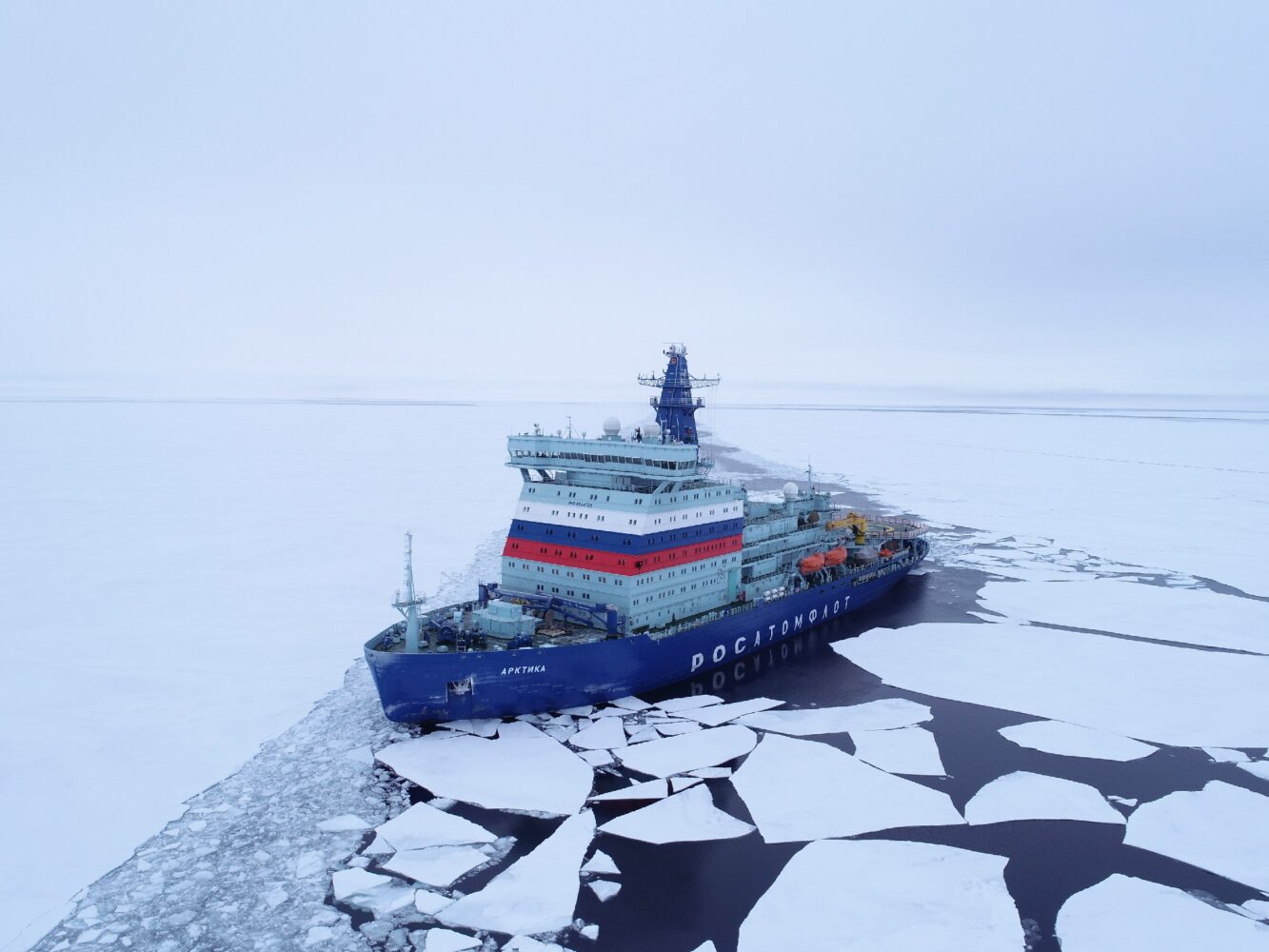
This year, the Russian nuclear fleet operator Atomflot celebrates the fifth anniversary of raising the flag on the flagship multi-purpose nuclear-powered icebreaker Arktika. This vessel marked the beginning of a new era for the nuclear icebreaker fleet, small-scale nuclear power plants, and the Northern Sea Route.
The fact that Russia needs more nuclear icebreakers to complement its existing fleet was first conceived in the early 2000s. More powerful and more advanced nuclear vessels were needed to develop large Arctic deposits and escort commercial vessels exporting their products.
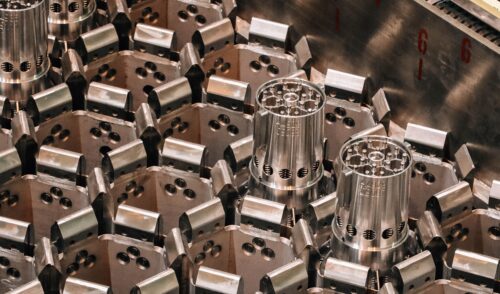
The technical design for the Arktika was developed by the Aisberg Central Design Bureau in 2009. The key difference from earlier designs was the use of the newest RITM-200 reactor unit with a thermal capacity of 175 MW. Scientists and engineers from OKBM Afrikantov developed it specifically for this icebreaker. The main feature of this reactor unit is its integral layout: the steam generators are housed in the same vessel as the reactor. Thanks to this solution, the RITM-200 is almost twice as light and compact as its predecessors, making the icebreaker more maneuverable and taking up less space on the vessel. As a result, its operation is more cost-effective.
The second feature of the Arktika is its dual draft capability: the icebreaker can change its draft and operate not only in Arctic seas but also in the mouths of rivers like the Yenisei and Ob. The third feature is its higher level of automation compared to predecessors. This reduced personnel requirements and simplified control of the reactor unit. Watch duty on the Arktika is now only maintained on the navigation bridge and central control post, with no watch stations at local posts. Engines and other mechanisms in the engine room — a huge four-level space — are monitored with instruments and through regular rounds.
Having the length of 173.3 m and draft of 10.5 m / 9.03 m, the Arktika icebreaker is capable of breaking through the ice of up to 3 m thick and needs refueling once every 7 years. Its designed service life is 40 years, and the crew consists of 54 people.
Arktika’s cabins — sailors’ home where they rest between watches during the voyages that might last several months — resemble cozy and comfortable hotel rooms. They have all the necessities, including a private bathroom with a shower, work area with a desk, TV, small refrigerator, sleeping area, relaxation couch, and storage space for personal belongings. A popular spot on the icebreaker is a large gym, where crew members can play indoor soccer, basketball, volleyball, and even hold table tennis tournaments. There is also a separate weight room for strength training enthusiasts. The icebreaker features a sauna, swimming pool, and tanning booth.
Construction and operation timeline
The decision to build the Arktika icebreaker was made in 2012. It was laid down in November 2013 and launched on June 16, 2016. The nuclear-powered vessel was named after the legendary icebreaker Arktika, which became the first-ever surface vessel to reach the North Pole (on August 17, 1977).
The ceremonial raising of the state flag on the new Arktika took place on October 21, 2020, in Murmansk. “The nuclear icebreaker fleet is a clear competitive advantage for Russia. And, of course, its expansion represents powerful investment in the future. Above all, it is an impulse for economic development of both Russia and the region,” Russian Prime Minister Mikhail Mishustin said at the time.
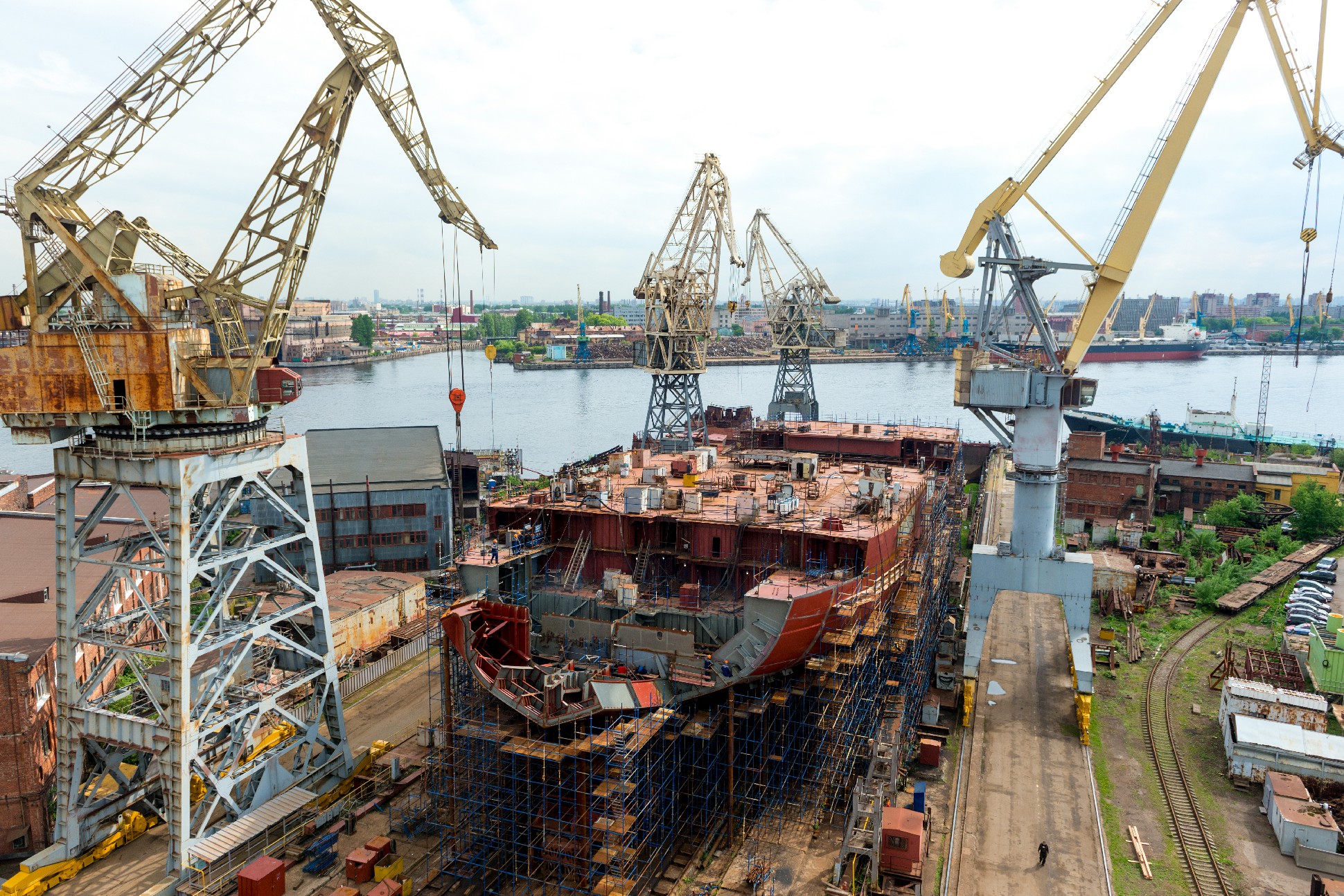
On November 14, the icebreaker departed on its first working voyage and has since spent five years escorting ship convoys on the ice-covered Northern Sea Route, supporting Arctic projects. Since construction, Arktika has traveled 126,166 miles through ice and escorted 677 vessels (as of early October 2025).
Mass-produced reactors for icebreakers and small-scale generation
Arktika initiated the serial construction of Project 22220 icebreakers. The same-design icebreakers — Sibir, Ural, and Yakutia — are already operating on the Northern Sea Route. The first two entered service in 2022, the third in 2024. Another one, Chukotka, is nearing completion. Two more icebreakers of the same Project 22220 design will soon join the ranks: Leningrad is currently under construction, with preparations ongoing to lay the keel for Stalingrad.
Importantly, RITM-200 reactors are now mass-produced. Rosatom is confidently offering its customers small-scale nuclear power plants in both onshore and offshore versions, featuring modifications of these same reactors. Russian engineers have developed a more powerful reactor, RITM-400, with a thermal capacity of 315 MW, surpassing all existing marine reactors by a wide margin. Two such reactors will power the new Project 10510 icebreaker Rossiya. For their power, these reactors will even have their own names, Ilya Muromets and Dobrynya Nikitich, after the main characters of Russian epic poetry. The first RITM-400 was manufactured in May of this year, and the second in September.
Photo by: Baltic Shipyard, Atomflot, Strana Rosatom newspaper