Developing nuclear energy is one of Armenia’s top priorities. This was stated by Prime Minister Nikol Pashinyan in his address at the World Atomic Week (WAW) international forum organized by Rosatom. Armenia’s participation in the forum was also marked by the active involvement of young professionals and the country’s women’s community.
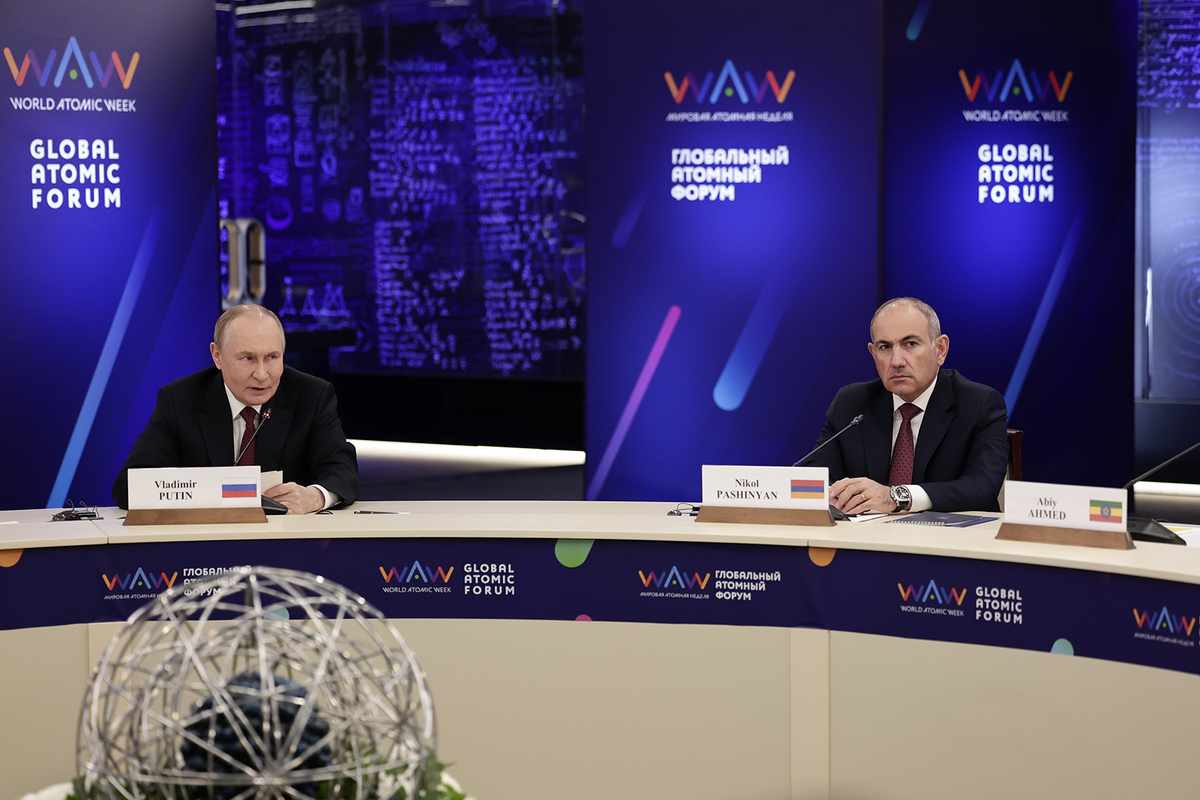
Prime Minister Nikol Pashinyan took part in the Global Nuclear Forum, one of the central events of the World Atomic Week. The discussion also featured Russian President Vladimir Putin, leaders of Belarus, Uzbekistan, Myanmar, Ethiopia, and Iran, IAEA Director General Rafael Grossi, heads of relevant ministries from partner countries, and representatives of international organizations. The session was moderated by Rosatom Director General Alexey Likhachev.
Discussions at the forum were focused, among other things, on the contribution of civil nuclear technology to the planet’s long-term development. “Nuclear energy plays a vital role in ensuring reliable and sustainable power supply. It helps reduce carbon emissions and achieve low-carbon development goals,” said Nikol Pashinyan, emphasizing that nuclear power would become a key component of a sustainable energy mix in the future.
Pashinyan recalled that around 30% of electricity in Armenia was generated by the Armenian Nuclear Power Plant (ANPP). “The Armenian government has adopted a policy to maintain the nuclear power plant as a cornerstone of the country’s energy mix,” the Prime Minister said. He stressed that adhering to the highest safety standards was an absolute priority. This is the approach that underpinned the plant’s large-scale upgrade effort, enabling its operational life to be extended until 2026. Building on this experience, Armenia has decided to further extend the ANPP’s operation through 2036. “The modernization and life extension program for the Armenian NPP is not merely a technical undertaking — it is a model of effective collaboration between the Republic of Armenia, Rosatom, and other international partners,” Pashinyan pointed out.
The Prime Minister also congratulated the Russian nuclear industry on its 80th anniversary, calling it an important milestone in scientific and technological advancement and the result of commitment from brilliant professionals.
Bilateral cooperation was further discussed during Pashinyan’s meeting with Vladimir Putin in the Kremlin. The Prime Minister noted that Yerevan was working with Rosatom across several areas, including exploring the potential for small modular reactor projects.
Youth Declaration on Nuclear Cooperation
Armenian representatives played a prominent role in the WAW youth agenda: they were among the authors of the first Youth Declaration on Nuclear Cooperation and presented the document to nuclear industry leaders and IAEA representatives. One of the speakers was Gagik Arutyunyan from Armenia, a member of Impact Team 2050 and project manager at the Yegvard Youth Environmental Organization.
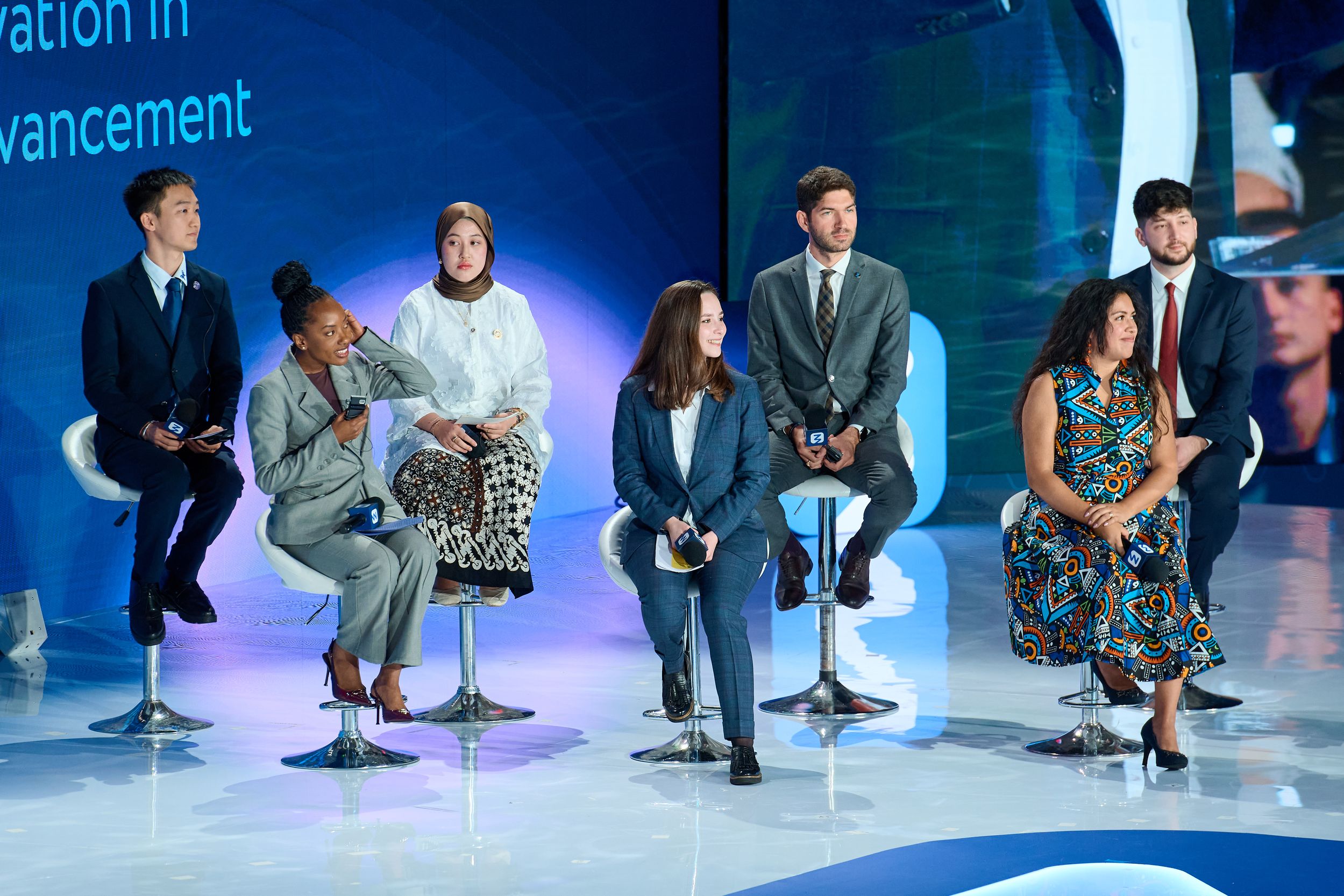
A total of 100 young leaders from 33 countries, including nuclear professionals, scientists, healthcare experts, and representatives of international organizations, collaborated on the declaration. The document outlines seven core principles, ranging from nuclear safety to equal access to education and technology. It emphasizes that nuclear science must serve humanity by helping address global challenges in medicine, environment, and industry. According to its authors, the sector’s future hinges on open international cooperation built on mutual trust and responsible use of technology.
Industry leadership endorsed the declaration and pledged support. “We will do everything we can to assist you in implementing your strategic goals and ensure this vision takes root across continents, countries, and individual projects. But none of this will matter unless your generation surpasses ours, becoming more knowledgeable, more professional, and more capable of cooperation. You must outpace us, and we will only be happy about that,” said Rosatom Director General Alexey Likhachev.
Engagement in the women’s agenda
Armenia was also an active contributor to the international review of best practices for supporting women in the nuclear industry. The review was presented at WAW 2025. Armenian representatives shared national experience for the document and took part in discussions with other participating countries and the IAEA. Speakers from Russia, Armenia, Kazakhstan, Uzbekistan, the Philippines, Morocco, and the IAEA exchanged approaches to expanding women’s participation in the nuclear and related sectors.
The review was prepared by the International Council for the Support and Development of Women in Technology and Industry established on Rosatom’s initiative, and features best practices from 16 countries, including Armenia as one of the Council’s member states. Participants highlighted the initiative’s importance for advancing the women’s agenda in high-tech sectors. “Work on this document will continue on an annual basis, with new chapters added as more countries join,” noted Tatyana Terentyeva, Deputy Director General for HR at Rosatom.
Photo by: Rosatom State Corporation, Rosatom Corporate Academy, primeminister.am