The potential of nuclear power, the role of local companies in constructing the El Dabaa Nuclear Power Plant, strategic partnerships, and the future of nuclear medicine — these were just a few of the topics discussed by the Egyptian delegation at the World Atomic Week (WAW) international forum held in Moscow at the end of September. The forum demonstrated that the nuclear industry is a driver of comprehensive development across a wide range of sectors.
Speaking at the WAW opening ceremony, Egypt’s Minister of Electricity and Renewable Energy, Mahmoud Mostafa Kamal Esmat, emphasized that the El Dabaa NPP project was being implemented under the umbrella of Egypt-Russia strategic partnership. According to the minister, the nuclear project reflects the depth of historical ties and strong connections between the two countries and their peoples. Mahmoud Mostafa Kamal Esmat highlighted the high level of coordination, cooperation, and interaction between the Egyptian and Russian teams.
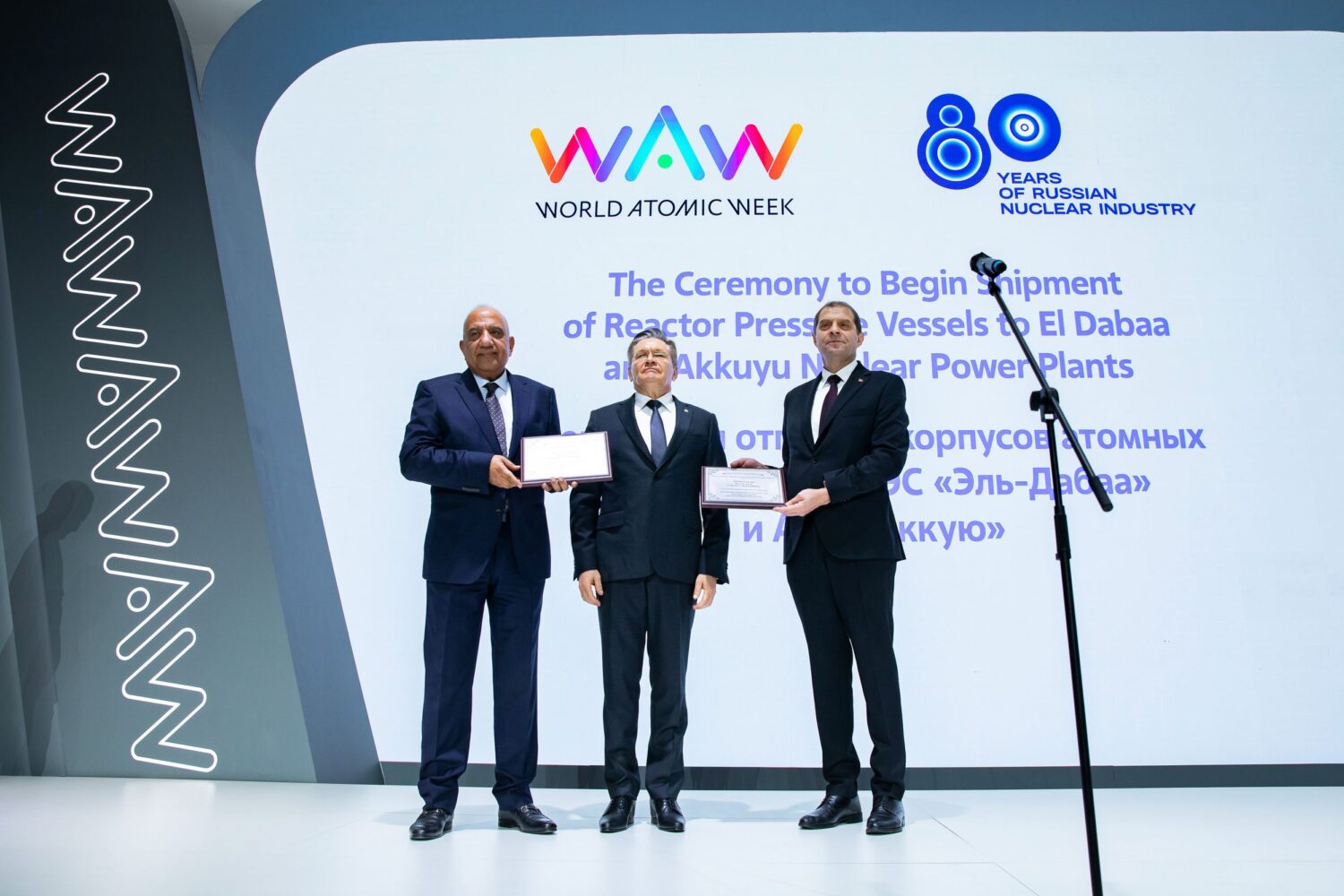
This was followed by a ceremonial shipment of the reactor pressure vessels for Unit 4 of Türkiye’s Akkuyu and Unit 1 of Egypt’s El Dabaa. The truck convoys carrying the equipment departed from Russian factories, with the live coverage broadcast during WAW. The green light for the departure was given by Mahmoud Mostafa Kamal Esmat, Turkish Deputy Minister of Energy and Natural Resources Zafer Demircan, and Rosatom Director General Alexey Likhachev.
Prior to the ceremony, the reactor vessels were wrapped in decorative covers featuring quantum mechanical models of atoms stylized as traditional Russian “Khokhloma” folk painting.
The reactor for El Dabaa Unit 1 is the 80th such reactor exported by Russian manufacturers. Symbolically, it begins its journey to the installation site during the celebration of the 80th anniversary of the Russian nuclear industry. This reactor is scheduled to be installed in its final position as early as November of this year.
In addition to participating in the WAW business program, forum guests eagerly explored the exhibition dedicated to the El Dabaa project. They learned about key project milestones and also discovered Egyptian culture and traditions. Furthermore, the visitors had the chance to sample dishes from traditional Egyptian cuisine in the Nuclear Power Countries’ Cuisines themed zone.
Local production and development
Building a nuclear power plant is not just one of the largest industrial projects for any country but also a critical catalyst for its economic growth and human capital development. Participants in the roundtable titled “Localizing the Global: Partnerships and National Content” discussed how collaboration among vendors, global partners, and local stakeholders delivers cutting-edge technological solutions. Increasing local content in international projects transforms the lives of thousands of people in the host country, who become involved in the project both directly and indirectly. Given that any nuclear plant operates for decades, these changes often impact multiple generations. However, overseas construction projects place special demands on vendors: they must fully align with the requirements of the customer country.
Sherif El Digaidi, NPP Project Manager at Egypt’s Petrojet, noted that El Dabaa was the largest energy project in the country. A vast number of Egyptian companies are involved in its delivery. Each local contractor undergoes certification according to Russian standards and is also certified by the Egyptian nuclear regulator. Being involved in the project, local companies acquire exclusive competencies and significantly improve the quality of their products.
Next-level medicine
Healthcare development, specifically the capabilities of nuclear medicine, was one of the key topics at the forum. During one of the sessions, delegates discussed the status and prospects of producing and using radiopharmaceuticals, as well as opportunities for institutional and international cooperation to expand the range of nuclear medicine services. Russian Deputy Health Minister Evgeny Kamkin noted that the range of diseases treated with nuclear medicine methods had significantly grown in recent decades, primarily encompassing oncology and cardiovascular diseases, as well as endocrine, neurological, and other conditions.
Ahmed El Sobky, Chairman of the Egypt Healthcare Authority, shared that Egypt aimed to develop its medical infrastructure and enhance early disease detection methods, including through nuclear medicine technologies. He emphasized the importance of cooperation with Russia, particularly within the upcoming project to establish mobile diagnostic infrastructure to improve access to early cancer screening.
Leaders of the nuclear future
On the final day of WAW, a closing ceremony was held for the second session of the [In]Visible Force international women’s leadership program run by Rosatom’s Corporate Academy. This year, the six-day educational intensive was completed by 27 young female professionals from the nuclear industry, representing 16 countries including Egypt, Algeria, Brazil, India, Kazakhstan, Kenya, China, Nigeria, Türkiye, South Africa, and European nations. They visited the world’s first nuclear power plant and leading nuclear companies, and took part in group mentoring sessions and career development workshops.
Top-tier safety
As part of the forum program, a visit to the Kalinin NPP (Tver Region, Russia) was organized for Egyptian journalists within an international press tour that brought together 45 media representatives from eight countries — Vietnam, Egypt, Indonesia, Malaysia, Myanmar, Brazil, Türkiye, and Uzbekistan. The journalists visited Kalinin’s Public Information Center, toured the Unit 3 control room and turbine hall, and received detailed briefings from the plant management on safety systems, electricity output, environmental monitoring activities, and the plant’s contribution to the regional economy.
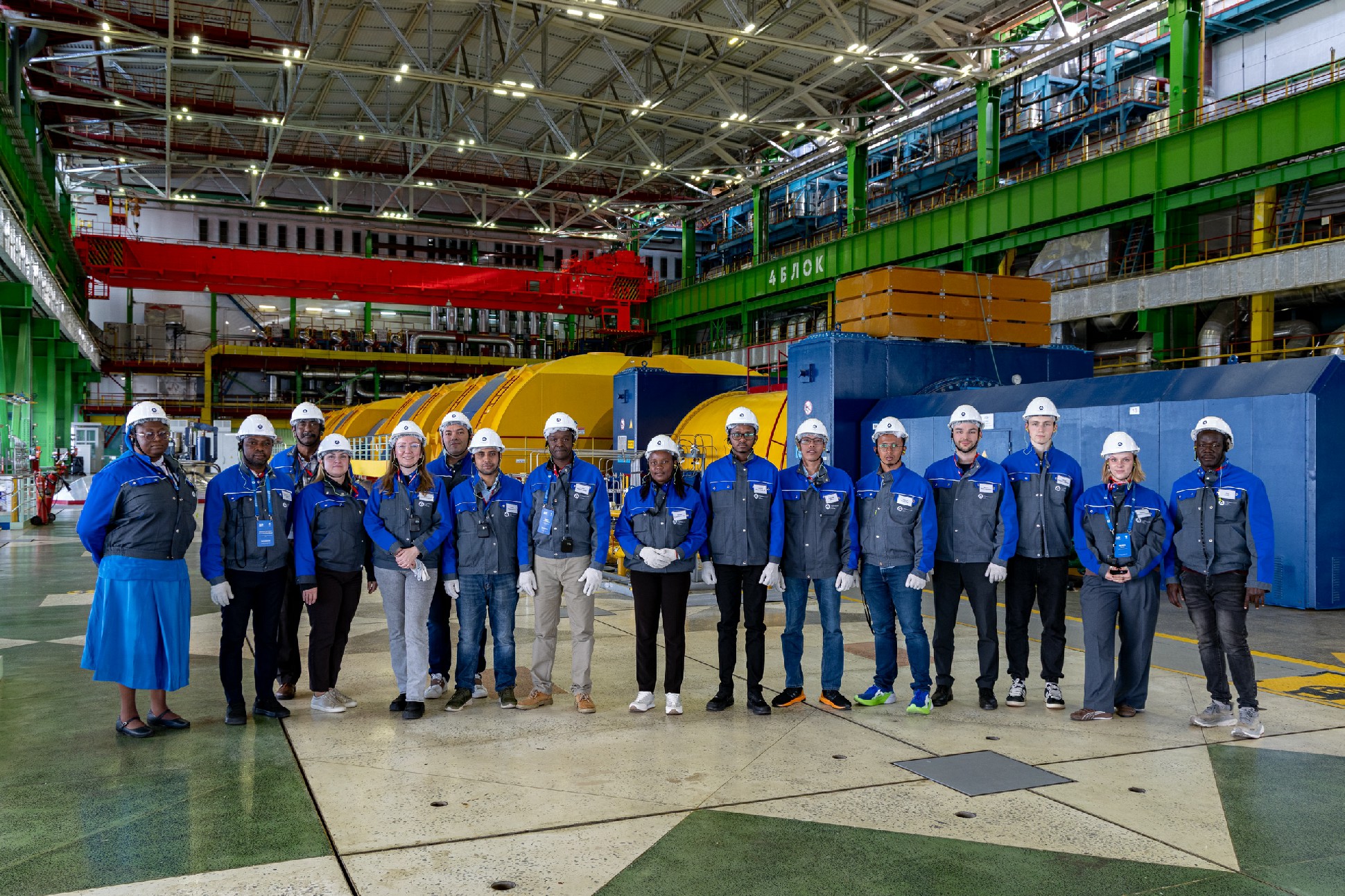
“Safety is the absolute priority in the design and operation of nuclear power facilities,” said Ruslan Alyev, Chief Engineer at the Kalinin NPP. He noted that the plant’s performance metrics confirmed the effectiveness of its safety culture principles: for over 40 years, the Kalinin NPP has operated reliably as part of the Russian national power grid. Ruslan Alyev added that Kalinin generated 82% of all electricity in the Tver Region and 14% of the electricity produced in the Central Federal District of Russia; it accounts for approximately 15% of total output by RosEnergoAtom (Rosatom’s nuclear plant operator). This nuclear plant is also a major employer in its host community.
The press tour continued with a visit to the Kalinin Data Center. This high-tech facility, connected to a reliable source of power, provides secure and uninterrupted data services to hundreds of clients. The media representatives also visited the cooling pond located one kilometer from the nuclear plant. Radiation levels were measured in their presence: readings on land and at the water’s edge remained well within permissible limits.
Photo by: Strana Rosatom newspaper, Kalinin NPP