Delegations from Africa participated in the World Atomic Week (WAW) international forum held in Moscow. Niger proposed that Rosatom build two reactors in the country, while Rosatom and Ethiopia signed an action plan to advance the nuclear power plant project in Ethiopia. The dialogue between Russian and African nuclear professionals continued at African Energy Week 2025 in South Africa.
Speaking at WAW, Niger’s Minister of Mines, Ousmane Abarchi, announced his country’s readiness to develop nuclear energy in partnership with Russia. “We understand that the energy sector is the engine of progress, which is why we have designed a national energy development program. We would like to construct two nuclear reactors with a total capacity of 2,000 megawatts on our territory. This is the Republic of Niger’s proposal to Rosatom,” Ousmane Abarchi said.
The minister emphasized that Niger’s abundant uranium resources positioned the country as a key contributor to global energy security. “Our nation is a major uranium producer. In this way, we support the energy security of many countries, but those countries have not always been grateful to us for this. Electricity must be accessible to everyone on this planet; it should not be a privilege. I am firmly convinced that uranium mining is not just about technology—it is also about responsibility. Consumers, investors, and future generations depend on us. As a uranium producer, Niger contributes to the energy security of the entire planet,” Abarchi added.
Cooperation with Ethiopia
Rosatom and the Ethiopian Electric Power Corporation signed an action plan to advance the country’s nuclear power plant project at the World Atomic Week. The plan includes establishing a dedicated working group to refine the nuclear plant construction project, developing a roadmap leading to a feasibility study, and signing an intergovernmental agreement. It also provides for supporting the development of Ethiopia’s nuclear infrastructure and joining efforts to train scientific and technical personnel for peaceful uses of nuclear technology.
During the Ethiopian delegation’s visit to Russia, Russian President Vladimir Putin held bilateral talks with Ethiopian Prime Minister Abiy Ahmed. The leaders discussed prospects and next steps for launching the nuclear power plant project in Ethiopia.
“Our economy is one of the fastest-growing in the world, and we have big ambitions, which requires energy. We want to transform our country, so we must go beyond what seems possible. Nuclear energy opens new opportunities for us as it brings new knowledge to our students and creates prospects for our farmers and medical professionals,” said Abiy Ahmed.
Russia–Ethiopia cooperation in civil nuclear technology began in 2017 with the signing of a framework memorandum. This was followed by the approval of a joint plan to build a nuclear power plant and a nuclear science and technology center. In late 2024, a contract was signed in Addis Ababa to develop a feasibility study for such a center.
“We have established strong partnership relations with Ethiopia, and we are eager to assist this fast-developing nation in setting up a reliable and clean energy source. With the signing of the action plan for the nuclear power plant project, we are moving closer to building Ethiopia’s first nuclear generating facility. Rosatom is ready to share its most advanced technologies, support workforce training, and help build the necessary infrastructure. It is a great honor for us to participate in a project that will secure a sustainable energy future for the country and the entire region,” said Rosatom Director General Alexey Likhachev.
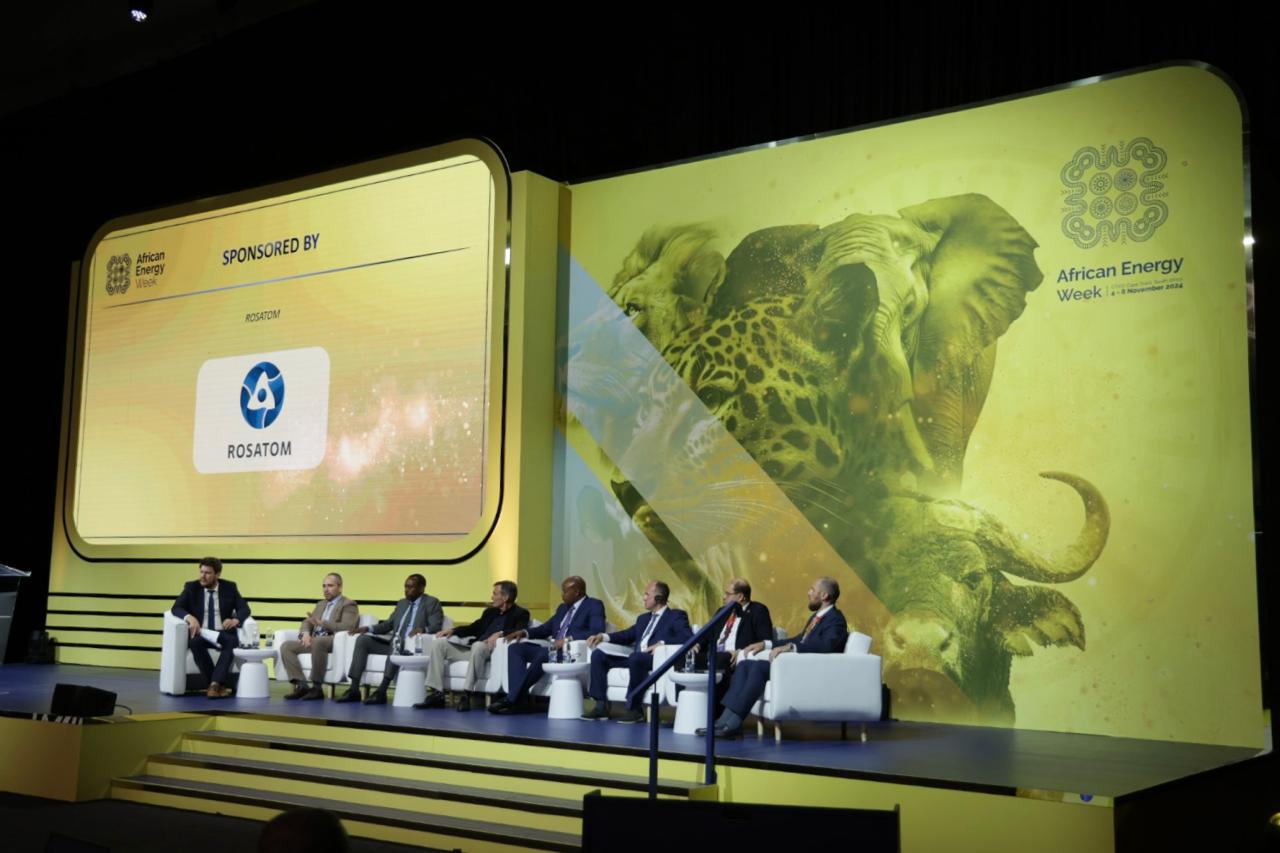
African Energy Week 2025
Rosatom also took part in African Energy Week 2025 held in South Africa. The event brought together over 5,000 government officials, investors, and energy sector leaders to discuss innovative approaches to ensuring Africa’s energy security and sustainable development.
Vladimir Aptekarev, Deputy Director General for Shipbuilding, Floating Power Units and Marine Engineering at Rosatom’s Mechanical Engineering Division, noted that many African countries were incorporating nuclear energy into their national development strategies.
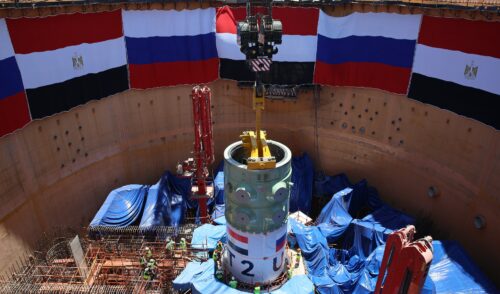
Kirill Komarov, First Deputy Director General for Corporate Development and International Business at Rosatom, participated in the forum’s key nuclear discussion. “Meeting Africa’s growing energy demand requires innovative solutions and long-term partnerships,” he stressed during the discussion. “Our experience in Egypt demonstrates that nuclear technologies—backed by investments in human capital, infrastructure, and open dialogue—can strengthen national energy security and drive sustainable development. Rosatom is proud to work alongside our African colleagues to shape a resilient energy mix, share expert knowledge, and build a sustainable low-carbon economy for future generations.”
Photo by: Strana Rosatom newspaper, AEC Week