The IAEA has published its World Fusion Outlook 2025 presenting key projects and recent advancements in technology, regulation and strategies, along with the first financial assessment of fusion energy’s costs and impact on the global energy sector and economics. The most important trend is the transition from research and development to construction and practical application. Russia, a world leader in fusion energy, is shaping these trends through the participation in international projects and launch of its own initiatives.
Key trends
“The fusion energy landscape continues to develop at an extraordinary pace. What was once confined to experimental research and long-term aspirations is now rapidly becoming a cornerstone of national energy strategies and industrial planning,” says IAEA Director General Rafael Grossi in the foreword to the World Fusion Outlook report.
The main trends can be summarized as follows: countries are formulating dedicated fusion policies. Companies are selecting sites and designing the first generation of power plants. According to the IAEA, over 160 fusion facilities are planned, under construction, or in operation worldwide. Regulatory bodies are beginning to issue tailored guidance, with nearly 40 countries already having dedicated fusion energy programs. End-users are discussing power purchase agreements, utilities are forming strategic alliances with fusion technology developers, and major industries (automotive, conventional power generation, aerospace, and digital technology) are incorporating fusion advancements into their long-term energy portfolios. Global private investment in the related technologies has exceeded USD 10 billion.
“This convergence of scientific progress, commercial interest and policy attention marks a decisive shift: fusion energy is entering a new phase of real-world implementation,” Rafael Grossi comments.
In 2024, the IAEA established the World Fusion Energy Group to bring together public and private stakeholders, research institutions, academia and regulatory authorities. The purpose of the group is to share experience and build connections and mutual understanding.
Progress in controlled fusion
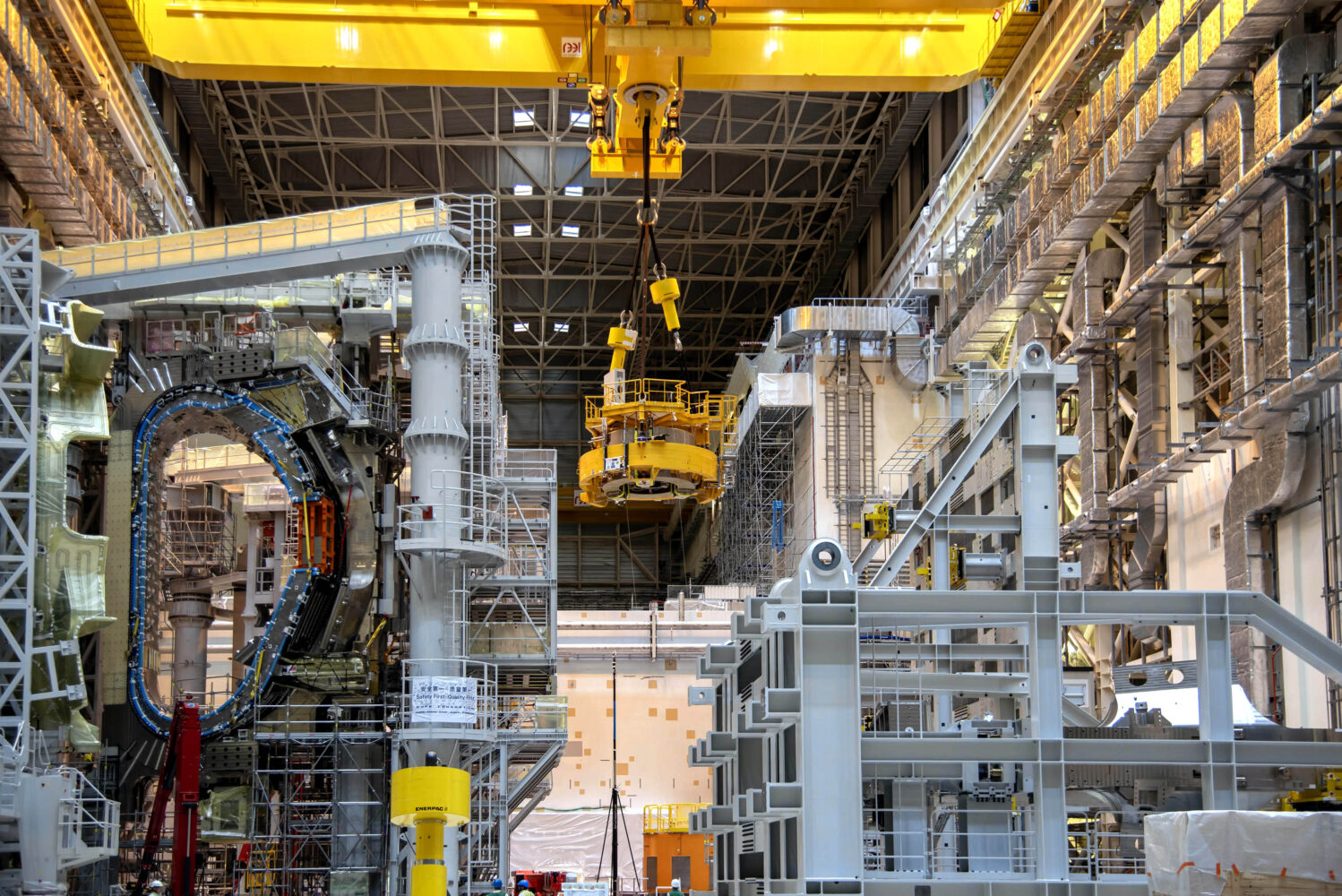
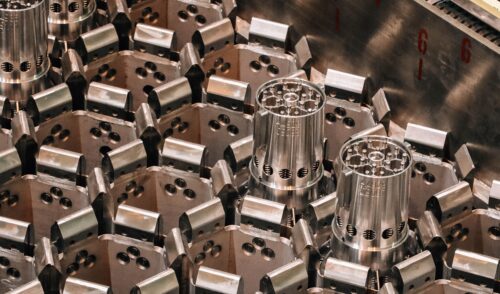
The International Thermonuclear Experimental Reactor (ITER) is the world’s mainstream fusion project. Russia is both a project initiator and a key contributor. Russian engineers are currently preparing to manufacture first-wall panels from tungsten (previously planned to be made from beryllium) and are developing technologies for applying to them a boron carbide coating intended to prevent impurities from entering the plasma. Russian research institutes are planning cyclic thermal tests using electron beams and quality checks on the coating through irradiation with pulsed plasma clusters. For ITER, these are critically important studies that directly impact the project’s future. The Russian party fulfills all of its obligations regarding the supply of equipment for ITER within its responsibility.
The report lists ongoing fusion projects in various countries, such as the joint Japanese-European JT-60SA, China’s EAST, America’s SPARC and NIF, Germany’s W7-X, and others. Experiments on these facilities have already yielded important results, including plasma temperature and confinement time records.

National strategies
As noted in the IAEA’s World Fusion Outlook, many countries have updated their fusion energy strategies over the past year, now expanding them beyond pure research programs and into the components of energy, industrial, and foreign policies. “This reflects a broader recognition that fusion energy is progressing towards practical viability. With an eye on the opportunities that lie ahead, governments are making investments and developing policies to support future deployment,” the authors of the report note.
For instance, Russia is working on the Thermonuclear Fusion Technologies federal program as part of its national umbrella-like New Nuclear and Energy Technologies project. Its primary goal is to conduct necessary research and develop fundamental technologies for future fusion energy solutions.
Russia
Russia operates several fusion facilities, such as the T-15MD and T-11M tokamaks and the Globus-M2 spherical tokamak.
Russian engineers have prepared the preliminary design for a next-generation tokamak, the so-called Tokamak with Reactor Technologies (TRT). Construction is planned to begin in the coming years. Based on decades of national experience in magnetic confinement fusion, the TRT project is expected to lay the foundation for national research, which in turn will contribute to global fusion advancement. The TRT is anticipated to facilitate plasma physics experiments and advanced material tests and will be integrated into international research collaborations.
Legal framework
“Although there is currently no globally harmonized definition of a fusion power plant, many jurisdictions recognize the need to establish clear regulatory frameworks for fusion machines intended to produce electricity or heat for commercial use,” the authors of the World Fusion Outlook write.
Countries are actively exploring approaches to regulating fusion energy. Some have already introduced regulatory norms for research-purpose fusion facilities. These serve as a basis and precedent for establishing a legal framework and can be applied to future fusion power plants directly or after necessary modifications.
The IAEA’s report, likely due to timing constraints, does not include recent changes in Russian fusion energy regulations. On August 1, the Russian President signed Federal Law No. 342-FZ comprising amendments to the Law on the Use of Atomic Energy. According to the amendments, the legal foundations and principles regulating the use of nuclear energy and related aspects now extend to the fusion facilities under design or in operation, including those containing nuclear materials, specific non-nuclear materials, and radioactive substances intended for thermonuclear fusion reactions involving light atoms. The amendments will come into force on January 1, 2027.
High-temperature superconductors
A special section in the IAEA’s World Fusion Outlook is dedicated to high-temperature superconductors (HTS). “By enabling higher magnetic field strengths in more compact geometries, HTS materials offer new pathways for accelerating fusion development and developing economically attractive final products,” the report says. The document outlines the challenges faced in manufacturing, installing, and using HTS magnets. For instance, higher magnetic fields generate larger electromagnetic stresses, and tighter geometries increase plasma heat fluxes to the inner surface of the machine in the absence of mitigation. Nevertheless, the authors note the growing number of public and private projects using HTS magnets to reduce device size, construction costs, and development timelines.
Impact of fusion technologies on the energy sector and economy
Fusion technologies have advanced to a level where global assessments of fusion power plant costs have begun. For instance, the World Fusion Outlook cites another report, The Role of Fusion Energy in a Decarbonized Electricity System, prepared by the MIT Energy Initiative in collaboration with the MIT Plasma Science and Fusion Center and adapted for the IAEA publication.
The researchers acknowledge that future costs of fusion-based electricity generation are difficult to determine, so they assessed the impact of assumed cost ranges, also considering the learning curve. They used estimates of capital costs per kW of installed capacity, reflecting the costs of fusion power plants in the USA. The researchers noted that these would differ in other countries and depend on electricity prices, labor costs, and capital investment.
In the base case (USD 8,000/kW), electricity generation from fusion is estimated to grow from 2 TWh in 2035 to 375 TWh in 2050 and to 25,000 TWh by 2100. The share of fusion energy in global electricity production in the base case would reach 15% by 2075 and 27% by 2100.
The researchers also modeled the potential economic benefit of fusion energy: “Compared to a decarbonization scenario without fusion electricity, cumulative global GDP would be 0.4% higher in the base case (with fusion cost in 2050 at USD 8,000/kW) and 0.9% higher in the lower-cost (USD 5,600/kW) case. These results indicate that investments in developing and deploying fusion technology can create value for the global economy and support efforts to achieve decarbonization goals over the course of this century.”
Photo by: ITER Organization, NIIEFA JSC, ChMZ JSC