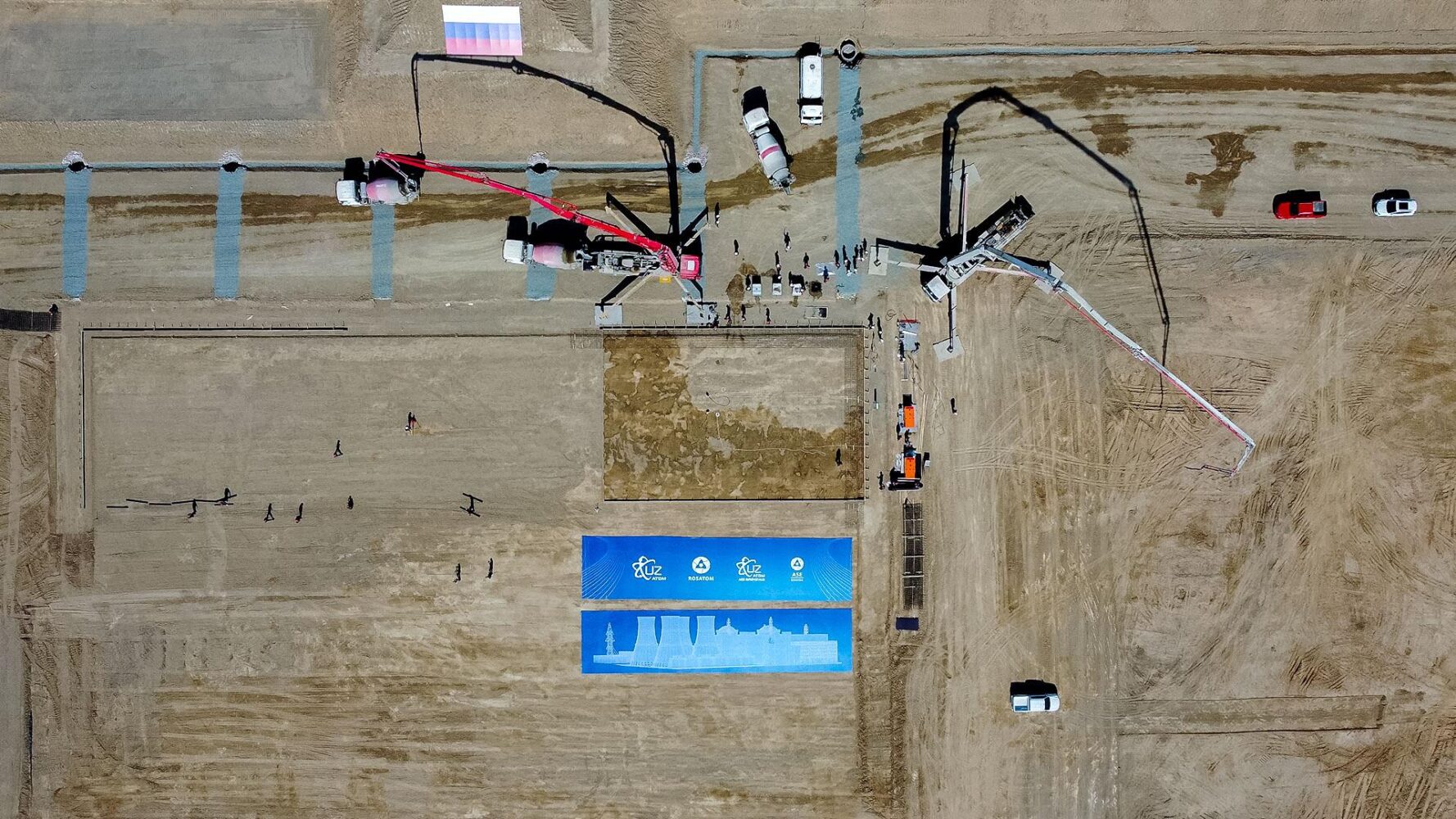
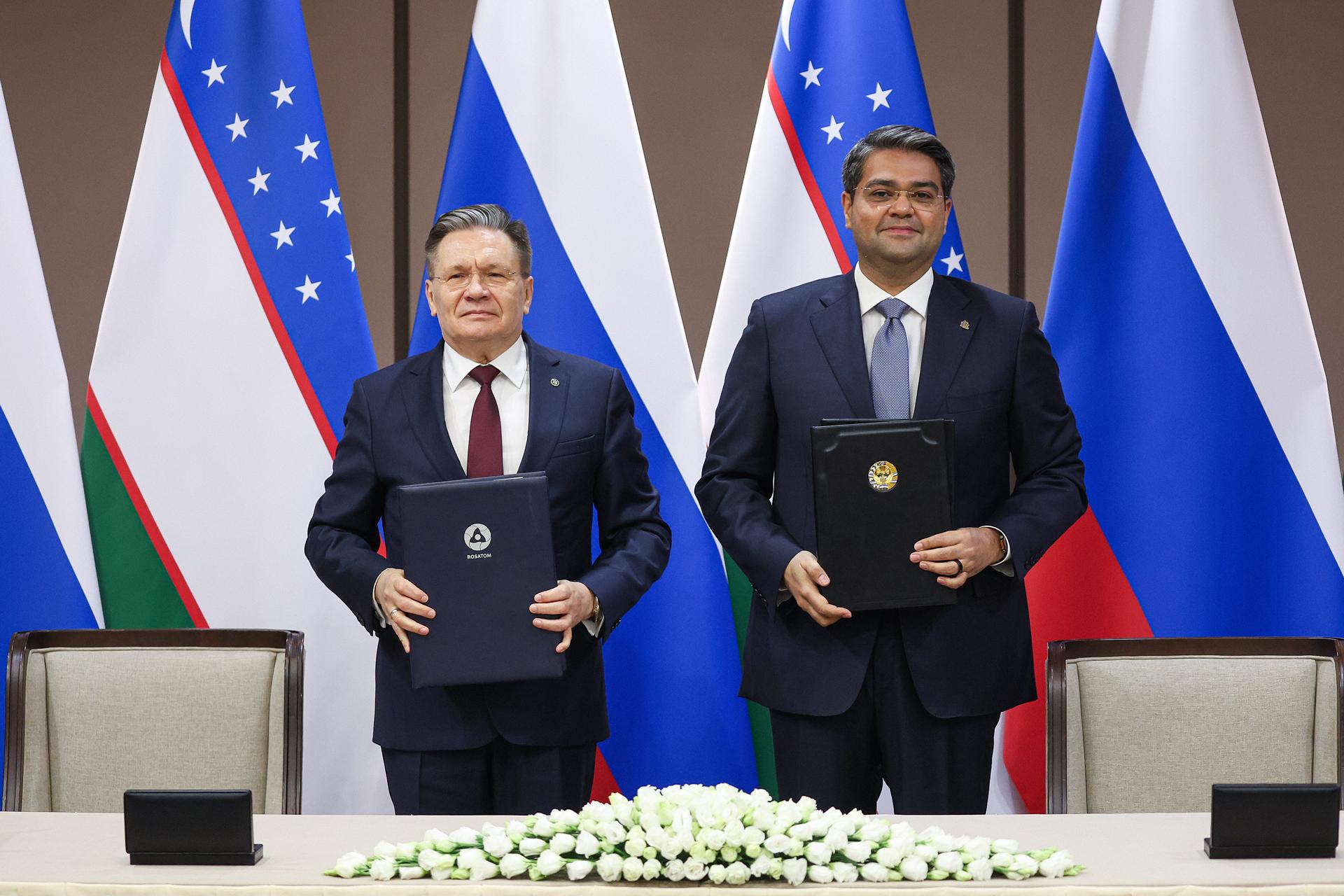
On March 24, concrete bedding works began at the site of Uzbekistan’s nuclear power plant to prepare the foundation for the official start of construction. On the same day, Rosatom Director General Alexey Likhachev and Uzatom Director Azim Akhmedkhadjaev signed documents expanding cooperation between Uzbekistan and Rosatom.
Concrete bedding works commenced at the construction site in the Farish District of the Jizzakh Region for the first power unit to be equipped with a RITM-200N small modular reactor (SMR). Workers are leveling the base and installing waterproofing and grounding systems. Around 900 cubic meters of concrete will be laid during this stage. Previously, Uzatom received a site license for the placement of two RITM-200N reactors. First concrete for the foundation slab of the nuclear island buildings is expected to be poured later this year. The reactor is being manufactured in parallel.
The nuclear power plant in Uzbekistan will be the first in the world to host two different types of power units on a single site: two 1,000 MW units with VVER-1000 reactors and two 55 MW units with RITM-200N SMRs. This configuration is formalized in an addendum to the nuclear power plant construction contract. It was signed by Rosatom Director General Alexey Likhachev and Uzatom Director Azim Akhmedkhadjaev on the day the preparations for concrete bedding began.
When operating at full capacity, the four units will generate around 17.2 billion kWh per year, covering up to 14% of Uzbekistan’s total power consumption. This is nearly enough to supply electricity to Tashkent, Samarkand, and Bukhara, the country’s major cities. The combination of units with different capacities will cover both baseload and peak demand. The shared plant infrastructure will reduce capital and operating costs.
More than just a nuclear plant
Alexey Likhachev and Azim Akhmedkhadjaev also signed a roadmap for cooperation in the nuclear and related sectors. It outlines the key areas of bilateral collaboration during the nuclear plant construction, namely personnel training, the establishment of a nuclear host town adjacent to the plant, and public awareness campaigns on present-day nuclear technologies. On the same day, the construction of the nuclear power plant was discussed over the phone by the presidents of both countries.
Along with building a comfortable, modern town near the nuclear plant, Rosatom proposes turning it into a hub for the development of nuclear medicine, materials science, and irradiation solutions for the treatment of seeds, food products, and medical devices. A memorandum of cooperation for the establishment of multifunctional irradiation centers was signed in June 2025.
Uzbekistan has a long history of cooperating with Rosatom across various fields of interest. For instance, a branch of the National Nuclear Research University (MEPhI), Rosatom’s flagship university, opened in Tashkent in 2019, and this year marked the first internship for Uzbek graduates at the Rosatom Technical Academy. The Fuel Division of the Russian nuclear corporation supplies fuel for the research reactor installed at the Nuclear Physics Institute of the Uzbekistan Academy of Sciences. They also collaborate in nuclear decommissioning and radioactive waste management. Furthermore, the institute has joined the international consortium that will operate the MBIR Generation IV multipurpose research reactor, which Rosatom is building in Dimitrovgrad.
Successful VVER track record
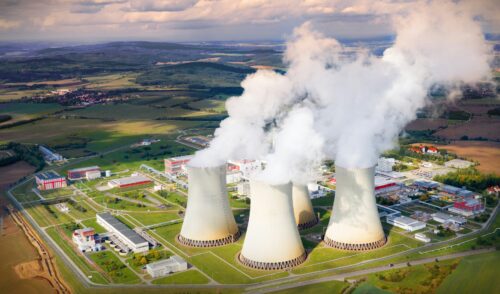
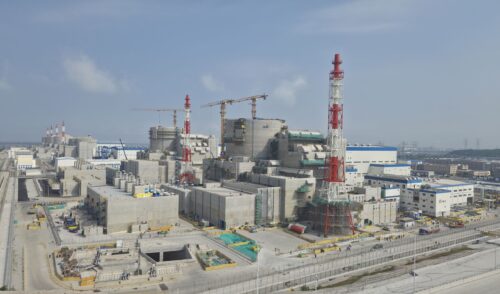
VVER-1000 reactor units with a capacity of 1,000 MW have proved efficient and reliable in Russia and a number of foreign countries. For example, the four commissioned power units at China’s Tianwan NPP have repeatedly been recognized as the safest in the world across certain parameters. The first two VVER-1000 units at India’s Kudankulam NPP have already fed 100 billion kWh of electricity into the country’s national power grid, demonstrating beyond-design efficiency.
The RITM-200N reactor belongs to the RITM-200 reactor family developed for nuclear icebreakers, floating power units, and land-based small nuclear power plants. The RITM-200 design features an integrated steam-generating section with reduced dimensions, an innovative higher-energy core, and a steam generator with a compact heat-exchange surface. Its I&C and safety systems meet the latest standards, offering inherent safety, environmental compliance, ease of maintenance, and other user-friendly features.
Photo by: Atomic Energy Agency under the Cabinet of Ministers of the Republic of Uzbekistan, Rosatom State Corporation, Electric Power Division of Rosatom State Corporation